In a randomized trial published in the Journal of the International Society of Sports Nutrition in 2019, 63 active men took 250 mg of standardized shilajit, 500 mg, or a placebo every day for eight weeks, and the benefit for strength retention after a fatiguing workout appeared only at 500 mg. For anyone choosing a shilajit brand, that sets the priority: a product deserves attention only if it states exactly how much of a defined, tested material each serving contains.
The supplement shelf makes this harder than it sounds. Hundreds of products share the same name, and their most prominent label words, such as “Himalayan,” “pure” or “gold grade,” cannot be checked by a buyer. The real task is finding products that can be matched to the research on paper.
What Did the Shilajit Trials Actually Test?
The best-known human trials of shilajit tested a purified, standardized extract at fixed daily doses, mostly between 250 and 500 mg, taken without a break for weeks or months. A randomized, placebo-controlled trial published in Phytomedicine in 2022 is a clear example: 60 postmenopausal women with osteopenia took 250 mg, 500 mg or a placebo daily for 48 weeks. Bone mineral density kept falling in the placebo group, while in both shilajit groups the loss was smaller, and smaller still at the higher dose. Independent databases that grade the best shilajit brands apply the same logic, asking whether a product’s label and lab paperwork would let a researcher recognize it as comparable material.
Two details from these studies rarely reach product pages. The first is dose dependence. In both trials the higher dose did measurably more, and in the strength study 250 mg performed no better than placebo. The second is duration. Eight weeks was the short end and 48 weeks the long one, with participants on the same extract throughout. A shopper who buys whichever listing is discounted this month is changing the material every few weeks, which is precisely the variable the researchers held constant. Staying with one well-documented product for a full course sits much closer to what was studied.
Resin, Capsules or Gummies: How Form Changes the Comparison
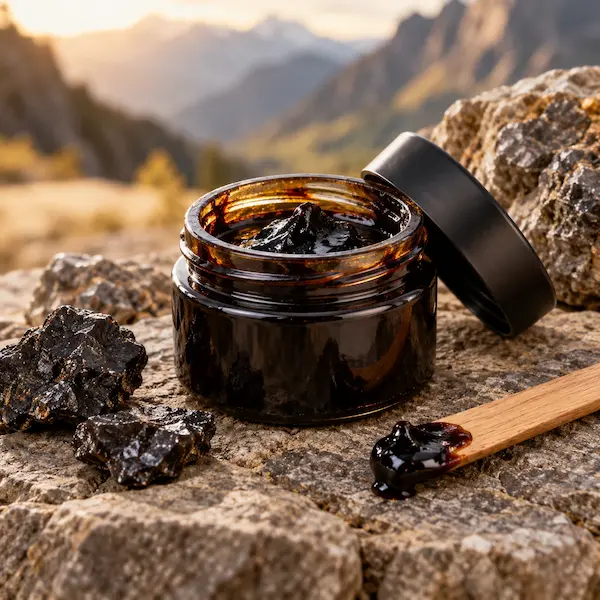
Form determines how much of the product is actually shilajit, and therefore how much a certificate of analysis (COA, the lab report for one specific production lot) can reveal. Resin is the least processed option. There is nothing else in the jar, so its lab report describes the material that ends up in the cup. Once a buyer settles on this form, a ranked list of the best shilajit resin sorted by lab disclosure narrows the field far faster than reading packaging claims.
Capsules can hold a standardized extract cleanly, provided the label names the extract and states its dose. The open questions are fillers, flow agents and whether the COA covers the raw extract or the finished capsule. Gummies are the hardest case. The shilajit is a minor ingredient in a base of sugar or syrup, gelling agent and acid, so a lab report on the finished gummy mostly measures the base, and per-piece amounts tend to sit well below the 250 to 500 mg range used in research.
Which Shilajit Brand Signals Match the Research?
The useful signals are the ones that connect a jar to a study: a stated amount of shilajit per serving, a disclosed fulvic acid percentage, and a batch-specific COA from a named, independent laboratory. A serious brand can document most of the following without hesitation:
- Milligrams of shilajit per serving, listed on their own instead of being folded into a proprietary blend.
- Fulvic acid content as a percentage, since fulvic acid is the standard marker of shilajit identity and concentration.
- A COA whose lot number matches the lot printed on the package that arrives.
- A heavy metals panel covering lead, arsenic, cadmium and mercury, along with microbial limits.
- The name of the testing lab, ideally one accredited under ISO/IEC 17025, the international standard for testing laboratories.
- The country of manufacture and compliance with GMP (Good Manufacturing Practice).
Most brands stumble at the item that takes the most effort: a public, lot-matched COA. Some offer one only “on request,” and what arrives is not always tied to a specific batch. A certificate that cannot be linked to the lot in hand says little about the contents of that jar. Origin stories count for even less. Altitude, harvesting rituals and region names are unverifiable, and nothing in the clinical literature suggests they predict quality better than a lab report.
One last filter sits outside the label entirely. Shilajit is not suitable for everyone: people with iron overload conditions or elevated uric acid, those who are pregnant or breastfeeding, and anyone taking prescription medication should speak with a doctor before starting. A well-documented brand makes that conversation easier, because the physician can see the exact dose and the contaminant limits involved. Before ordering, it is reasonable to email the company, request the COA for the current lot, and treat a slow or vague reply as an answer in itself.
Did you find this helpful? Check out our other helpful articles on our website.
Read Also
- How to Choose a Shilajit Brand Based on the Research
 In a randomized trial published in the Journal of the International Society of Sports Nutrition in 2019, 63 active men took 250 mg of standardized shilajit, 500 mg, or a placebo every day for eight weeks, and the benefit for strength retention after a fatiguing workout appeared only at 500 mg. For anyone choosing a… Read more: How to Choose a Shilajit Brand Based on the Research
 - How to Incorporate Relaxation into Your Busy ScheduleFinding balance when you have a packed daily agenda often feels out of reach. Between work duties, family obligations, and personal projects, personal rest usually gets pushed to the bottom of the list. Small, intentional shifts in daily habits can help restore calm without requiring hours of extra free time. Continue reading to discover everything… Read more: How to Incorporate Relaxation into Your Busy Schedule
- Red Light Therapy for Skin and Wellness: Meet Vital Red Light TherapyModern wellness is not always about complicated treatments or long routines. Many people are now looking for simple, convenient ways to support their skin, recovery, and overall wellness at home. One technology getting more attention is red light therapy. Red light therapy uses specific wavelengths of red and near-infrared light to support the body’s natural… Read more: Red Light Therapy for Skin and Wellness: Meet Vital Red Light Therapy
- Managing Shock Loss After a Hair Transplant: The Financial and Clinical Imperative of Post-Op CareIn the rapidly evolving landscape of private healthcare, executive leadership within cosmetic and restorative surgery clinics faces a dual challenge: maintaining strict clinical standards while maximizing patient lifetime value (LTV) and brand advocacy. As the global medical tourism and elective procedure markets expand, clinical outcome quality alone is no longer the sole differentiator for premium… Read more: Managing Shock Loss After a Hair Transplant: The Financial and Clinical Imperative of Post-Op Care
- Transform Your Skin Health: Premier Gluta IV Therapy in DubaiThis comprehensive guide explores how modern intravenous wellness treatments can help revitalize your complexion, boost immune function, and support overall cellular health. By incorporating modern IV therapy Dubai services into a routine health regimen, individuals can achieve direct nutrient absorption for optimal results. Selecting a customized gluta IV drip Dubai treatment provides targeted antioxidant defense,… Read more: Transform Your Skin Health: Premier Gluta IV Therapy in Dubai
- The Evolution of Dental Prosthetics: Innovation in Oral HealthDental replacements have improved a lot over time. Smiling, chewing, and speaking depend on having healthy teeth. When teeth break or go missing, today’s options can restore both function and confidence. Modern techniques make these replacements feel and look completely natural. Ancient Roots Of Tooth Replacement People have tried to replace lost teeth for thousands… Read more: The Evolution of Dental Prosthetics: Innovation in Oral Health
- How to Support a Loved One with Mental Health IssuesWatching someone you care about struggle with their mental health is difficult: you might feel helpless, confused, or even frustrated. You cannot cure a mental health condition with a simple conversation or a hug, no matter how much you wish you could. Your support can be the difference between them feeling isolated and feeling understood.… Read more: How to Support a Loved One with Mental Health Issues
- Understanding Endometriosis: Causes, Symptoms, and Treatment OptionsMillions of people around the world deal with pelvic health problems. Many spend years looking for answers about ongoing pain or fertility issues. Understanding your health can help you speak up and get better care. Managing pelvic pain starts with knowing the causes and treatment options. Learning about symptoms also helps you decide when to… Read more: Understanding Endometriosis: Causes, Symptoms, and Treatment Options