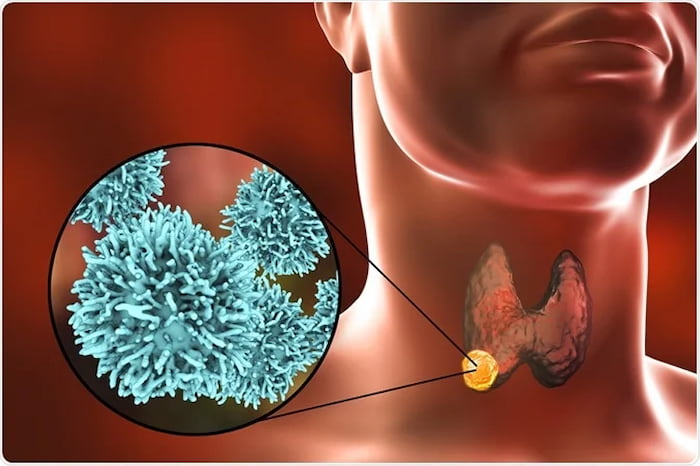
No matter the type, cancer sounds extremely frightening. Thyroid cancer, basically affects the thyroid gland cells and can become dangerous if it enters an aggressive stage of the disease.
Do not worry, though; thyroid cancer is among the most treatable types of cancer. There are some things you should be aware of.
Let’s start with the basics of thyroid cancer!
What is Thyroid Cancer?
According to studies from the American Cancer Society, thyroid cancer forms malignant (cancerous) lump cells that grow in the thyroid gland.
The thyroid gland is butterfly-shaped in front of the neck. It produces hormones and regulates metabolism, determining how your body uses energy.
The exact cause is often unknown, but when your thyroid is linked to inherited conditions or cells begin to change or mutate in DNA. As a result, cancerous cells grow and multiply uncontrollably, eventually forming a tumor.
There are several types of thyroid cancer that most thyroid doctors research may find, including:
– Approximately 80% of thyroid cancer cases are papillary thyroid cancer, making it the most prevalent type. It typically grows slowly and has a favorable diagnosis.
– Unlike papillary thyroid cancer, follicular thyroid cancer accounts for 10 to 15% of cases and is typically more aggressive.
– The thyroid’s C cells, which create the hormone calcitonin, are where Medullary Thyroid Cancer—a rarer form of the disease—begins. In some cases, it is hereditary.
– Anaplastic Thyroid Cancer is the most deadly and rare type of thyroid cancer. It spreads quickly and has a poor prognosis.
– Thyroid lymphoma is a rare kind of thyroid cancer that develops from immune system cells within the thyroid gland.
As you are aware, the exact cause of thyroid cancer is frequently unknown; however, certain risk factors, including radiation exposure, family history, particular genetic syndromes, and age, can raise the risk.
The Symptoms of Thyroid Cancer
Thyroid cancer impairs the production of hormones, which disrupt metabolism and lower energy levels. Because thyroid cancer is a less common type of cancer than the others.
However, only in the United States it is estimated that 43,720 people have thyroid cancer, and 2,120 of them will pass away from it in 2023. Women are more likely than men to experience thyroid disorders, so this is not news. Even women’s hormonal effects tend to cause them to develop thyroid cancer three times more.
However, in its earliest stages, thyroid cancer may go undetected. The following symptoms, however, could appear as the cancer worsens in some people:
– A painless lump grows in the neck below Adam’s apple.
– Thyroid cancer can change the voice, making it hoarse.
– If the lump gets bigger, it presses on the breathing tube, making swallowing hard and painful.
– A growing lump in the throat can cause neck, jaw, or ear pain.
– The cancerous cells might make nearby nodes bigger and easier to feel.
– Big lumps can make it hard to breathe, especially when lying down.
– Some might have a long-lasting cough that doesn’t go away with normal treatments.
– Tiredness has many causes; some people with thyroid cancer might feel very tired without a clear cause.
The Risk Factors of Thyroid Cancer
Regarding understanding the risk factors for thyroid cancer, it’s true that many uncertainties exist. However, there are certain identifiable risk factors that play a crucial role in both recognizing thyroid cancer early and potentially preventing its progression.
This proactive approach not only increases the likelihood of successful outcomes but also contributes to lowering the risk of mortality in this disease.
Some of the common risk factors for thyroid cancer include:
– Gender: Thyroid cancer is very common in women than in men. The reason is that women experience more hormonal changes than men do, including menstruation, pregnancy, and other factors that have a significant impact on the development of thyroid cancer.
– Age: Although thyroid cancer can develop at any age, it is typically detected in patients between the ages of 25 and 65.
– Family history: Having a first-degree relative (parent, sibling, or child) who has thyroid cancer or other related diseases like familial medullary thyroid cancer syndrome or multiple endocrine neoplasia (MEN) syndromes can increase the risk.
– Radiation Exposure: Thyroid cancer risk is increased by high radiation exposure, particularly in early life. This might be the result of things like radiation treatment for other cancers, nuclear accidents, or specific medical procedures.
– Personal History of Thyroid Disease: People who have a history of certain thyroid conditions, such as goiter (enlarged thyroid) or thyroid nodules, may be at a slightly higher risk.
– Iodine Levels: Iodine is required for thyroid hormone production. Both lower and higher intakes of iodine in diets have a higher thyroid cancer risk.
– Obesity: According to some studies, obesity raises the risk of thyroid cancer, especially the more aggressive forms.
– Diet: If your diet is rich in processed foods and low in fruits and vegetables, carried a slight risk of causing this disease.
The Treatment Options for Thyroid Cancer
Thyroid cancer treatment depends on cancer type, stage, and health. Here are the key options for treating thyroid cancer :
Surgery
Lobectomy: A lobectomy is a surgery that removes the part of the thyroid lobe with cancer, often with the isthmus (a bridge between the lobes). It’s mostly used to treat small papillary or follicular thyroid cancers that haven’t spread beyond the thyroid.
Thyroidectomy: It is the standard surgical treatment for the majority of thyroid cancers. It entails removing a portion or all from thyroid gland and any affected lymph nodes in the neck.
Lymph Node Dissection: A lymph node dissection is performed in some cases, particularly when cancer has spread to nearby lymph nodes.
Radioactive Iodine Therapy
Some thyroid cancer cell types, such as thyroid remnants or metastases, may still exist in the body after a thyroidectomy. Radioactive iodine (RAI) can treat thyroid cancer by targeting thyroid cells.
The thyroid is the organ that absorbs the majority of it, and it kills any thyroid or cancer cells there may be. This increases the life expectancy of people with papillary or follicular thyroid cancer. However, the benefits of RAI are less certain if the cancer is small and can be removed surgically.
External Beam Radiation Therapy
External beam radiation therapy uses high-energy rays (X-rays) to kill or slow cancer cells. It’s often for medullary and anaplastic thyroid cancer or when iodine therapy isn’t working effectively.
It’s used when cancer has spread beyond the thyroid. Treatments are painless and given several times a week for a few weeks. Setup takes more time than the actual treatment.
Targeted Drug Therapy
Targeted drug therapy is a precise treatment that focuses on cancer growth signals. It’s used for advanced thyroid cancer when other methods don’t work.
Kinase inhibitors like lenvatinib and sorafenib interfere with cancer cell growth signals. They slow down growth and can improve survival. Not all cases use this therapy; doctors decide based on cancer type, stage, and health.
Chemotherapy
Chemotherapy uses strong drugs given through the veins or mouth. It’s systemic, flowing through the body to kill cancer cells. For thyroid cancer, chemo isn’t commonly used, except for aggressive types or when other treatments stop working.
Overall, The greater your chance of survival, the earlier thyroid cancer is discovered.
Final Words
Do not worry if you have found thyroid cancer; your fighting spirit will help you get through it.
Just keep doing regular check-ups and open communication with your thyroid doctor about any worries is crucial for early detection and effective treatment when required.
Read Also
- Essential Hygiene Products for High-Traffic Fitness Spaces
 Fitness centers have many visitors each day. People use machines, locker rooms, and other shared areas from morning to night. Because so many people come and go, dirt and germs can build up fast. Good hygiene products help keep the space clean and safe. A clean gym makes a good first impression. Members notice clean… Read more: Essential Hygiene Products for High-Traffic Fitness Spaces
 - What Makes Patients Choose a Dentist in the Digital AgeIn today’s fast-paced world, the digital age changes how we communicate and pick our healthcare providers, like dentists. With a wealth of information at our fingertips, patients are empowered to make informed decisions about their dental care. Factors such as trust, convenience, and online visibility play pivotal roles in influencing patient choices. Knowing what influences… Read more: What Makes Patients Choose a Dentist in the Digital Age
- Comparing Home Hair Treatments With Clinical ProceduresMost people dealing with hair loss or thinning hair eventually face the same question: should I try fixing this at home, or is it time to see a professional? It sounds simple, but the answer depends on more than just budget or convenience. It depends on what’s actually causing the problem — and whether the… Read more: Comparing Home Hair Treatments With Clinical Procedures
- Why Combination Protocols Are Becoming the Standard in Modern Hair-Restoration ClinicsWalk into a hair-restoration consultation today and you are unlikely to be sold a single procedure. You are more likely to be handed a plan. That shift, from one technique doing all the work to several steps layered together, has quietly become one of the bigger changes in the field. And for the clinics themselves,… Read more: Why Combination Protocols Are Becoming the Standard in Modern Hair-Restoration Clinics
- Why Care Home Labels Are Essential for Organisation and Resident ComfortIn a busy care home environment, organisation plays an important role in daily routines, hygiene, and resident wellbeing. From clothing and bedding to personal items and medical accessories, belongings can easily become misplaced when many residents share communal laundry and living spaces. Clear labelling helps care teams manage items more efficiently while giving residents and… Read more: Why Care Home Labels Are Essential for Organisation and Resident Comfort