Difficult terrain, unpredictable threats and long deployments have driven modern militaries to reconsider how they create safe, reliable spaces in the field. Rigid wall shelters and container-based structures are becoming the quiet backbone of operations, offering durability, mobility and real comfort for the troops and support teams.
When most people think of military bases, they envision sprawling compounds lined with permanent buildings. On active operations, however, that’s a rare luxury for the troops. They need deployments that can be moved around, set up and secured without wasting a minute. That’s where hardened shelters come into play.
Over the last decade, these systems have evolved far beyond those old canvas tents. Rigid wall shelters and container-based facilities today are more like pop-up command centers, clinics or housing units that can take a beating while still protecting the people and equipment inside. For folks working in healthcare or business, the growth of this field is actually pretty fascinating, because at its core, it’s about how to make essential services work in unpredictable environments.
Why the military is leaning into rigid wall shelters
Built to survive the harsh stuff
Rigid wall shelters are just what they sound like: Structures with solid walls engineered to hold firm in extreme weather, sudden temperature shifts and rough terrain. Whether troops operate in blistering desert heat or freezing winds, a shelter creates stable environments where people can work, sleep and treat injuries without concern for the elements.
Unlike soft-wall tents, rigid shelters can support repeated setup and teardown cycles. They don’t sag, warp or collapse easily, which is a major win when a mission lasts months instead of days. The military likes them because they provide real-world durability without sacrificing speed.
More than a place to sleep
These shelters have become miniature hubs for everything that keeps a mission running. Many are used for:
- Tactical operations centers.
- Medical wards.
- Mess halls.
- Mobile laboratories.
- Maintenance shops.
- Storage of supplies.
Having a controlled and clean space is particularly critical in healthcare-focused operations. Medical teams can more safely stabilize injuries, store temperature-sensitive supplies or conduct diagnostics than in older tent-style set-ups. On the business side, companies supplying, maintaining and customizing these shelters see demand spread into disaster relief, energy projects and humanitarian missions, proving the military isn’t the only place needing rugged pop-up infrastructure.
The role of containerized facilities
The rise of the military’s favorite box
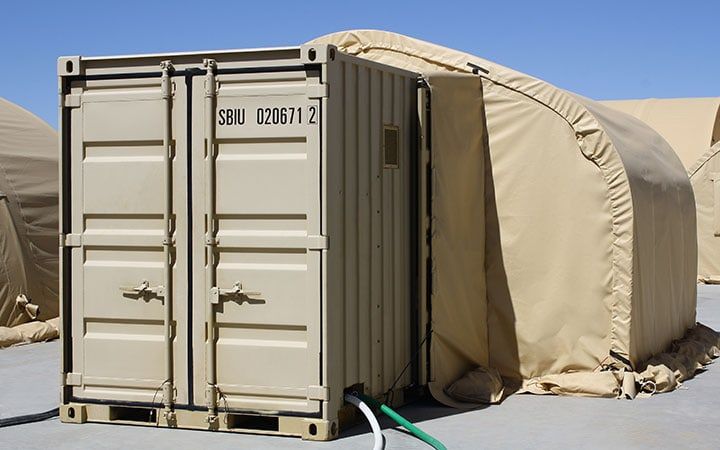
While rigid wall shelters handle one part of the job, a containerized facility brings another level of practicality. Because these structures start as standardized shipping containers, they’re incredibly easy to transport by land, sea or air. Once on the ground, they’re modified into everything from sleeping quarters to high-tech operations rooms.
The interior build-outs are actually quite impressive: Walk into one, and it may have climate control, power distribution, reinforced flooring and integrated storage and communication systems. Others are configured as medical treatment centers or hygiene stations, necessities for keeping troops healthy on long deployments.
This is also where companies like AlaskaDefense.com come into play. Specializing in advanced military shelter systems and turnkey base camps, their product line involves everything from small shelter systems to hygiene facilities, tactical operations centers and medical shelter systems. The company stresses speed of manufacturing and certified test reports while providing an extensive line-up for military needs. When discussing their offerings, the term containerized facility comes up naturally, because many of their best solutions are built exactly that way-rugged, self-contained and ready for rapid deployment.
Why containerized structures matter in healthcare
For medical teams, predictability is priceless. Container structures give them clean, climate-controlled and sealed environments for triage, surgery preparation or even basic wound care. They are also easier to sanitize than tent systems, which is a big plus, since infections can spread fast in the field.
These units are sometimes repurposed as mobile clinics or labs in humanitarian missions. Businesses working in global health, private military contracting or emergency management increasingly rely on them, because you can drop one into remote territory and have a functional facility within hours.
Speed and scalability are the secret weapons
Rapid deployment saves more than time
When disaster strikes, minutes are critical. Military members often invest in shelters whose assembly requires minimal tools and personnel. Some models using rigid walls rely on folding systems that expand into shape much like giant suitcases. Other container-based models may not need anything more than a flat pad to sit upon. This fast deployment model is especially valuable for:
- Medical response teams trying to stabilize casualties.
- Command units that require rapid deployment for communication systems.
- Logistics crews supporting large troop movements.
- Overseas training missions where infrastructure is limited
Businesses see the value too, particularly those in energy, exploration and emergency response. The ability to ship a fully outfitted facility to an offshore site or disaster zone can make all the difference between weeks of down time and immediate operational readiness.
Customization keeps missions on track
One of the most underrated parts of modern shelter systems is their customizability. They can be equipped with HVAC, water purification systems, advanced communications, heavy-duty power systems or specialized medical equipment.
Many suppliers offer modular add-ons, so a command center can grow into a full tactical complex or a small clinic can expand into a multi-room medical hub. For healthcare-focused users, this level of scalability is a game-changer, letting them build field hospitals in places where permanent construction isn’t possible.
Did you find this helpful? Check out our other helpful articles on our website.
Read Also
- Top Trends Shaping the Future of Mental Health Care
 Mental health care is moving fast to meet daily human needs. People want direct care that fits modern life. Clinics respond by creating flexible options that make healing easier to reach. Providers look past rigid habits to give people solid care. From smart tools to body wellness, these changes help people find relief when life… Read more: Top Trends Shaping the Future of Mental Health Care
 - Full-Arch Dental Tourism: Why UK Patients With Severe Bone Loss Are Looking AbroadDental implants have become one of the fastest-growing segments of private dentistry. Within that market, one patient group behaves very differently from the rest: people who have been told they do not have enough upper jawbone for conventional implants. For these patients, the choice is rarely between one clinic and another. It is between a… Read more: Full-Arch Dental Tourism: Why UK Patients With Severe Bone Loss Are Looking Abroad
- Levels of Mental Health Care and When to Seek SupportMental health care can range from occasional outpatient appointments to 24-hour hospital treatment. The appropriate level depends on safety, symptom severity, daily functioning, medical needs, available support, treatment history and personal preferences. A licensed clinician should assess these factors rather than relying on a symptom list alone. Need help now? In the United States, call… Read more: Levels of Mental Health Care and When to Seek Support
- How to Choose a Shilajit Brand Based on the ResearchIn a randomized trial published in the Journal of the International Society of Sports Nutrition in 2019, 63 active men took 250 mg of standardized shilajit, 500 mg, or a placebo every day for eight weeks, and the benefit for strength retention after a fatiguing workout appeared only at 500 mg. For anyone choosing a… Read more: How to Choose a Shilajit Brand Based on the Research
- How to Incorporate Relaxation into Your Busy ScheduleFinding balance when you have a packed daily agenda often feels out of reach. Between work duties, family obligations, and personal projects, personal rest usually gets pushed to the bottom of the list. Small, intentional shifts in daily habits can help restore calm without requiring hours of extra free time. Continue reading to discover everything… Read more: How to Incorporate Relaxation into Your Busy Schedule
- Red Light Therapy for Skin and Wellness: Meet Vital Red Light TherapyModern wellness is not always about complicated treatments or long routines. Many people are now looking for simple, convenient ways to support their skin, recovery, and overall wellness at home. One technology getting more attention is red light therapy. Red light therapy uses specific wavelengths of red and near-infrared light to support the body’s natural… Read more: Red Light Therapy for Skin and Wellness: Meet Vital Red Light Therapy
- Managing Shock Loss After a Hair Transplant: The Financial and Clinical Imperative of Post-Op CareIn the rapidly evolving landscape of private healthcare, executive leadership within cosmetic and restorative surgery clinics faces a dual challenge: maintaining strict clinical standards while maximizing patient lifetime value (LTV) and brand advocacy. As the global medical tourism and elective procedure markets expand, clinical outcome quality alone is no longer the sole differentiator for premium… Read more: Managing Shock Loss After a Hair Transplant: The Financial and Clinical Imperative of Post-Op Care
- Transform Your Skin Health: Premier Gluta IV Therapy in DubaiThis comprehensive guide explores how modern intravenous wellness treatments can help revitalize your complexion, boost immune function, and support overall cellular health. By incorporating modern IV therapy Dubai services into a routine health regimen, individuals can achieve direct nutrient absorption for optimal results. Selecting a customized gluta IV drip Dubai treatment provides targeted antioxidant defense,… Read more: Transform Your Skin Health: Premier Gluta IV Therapy in Dubai