

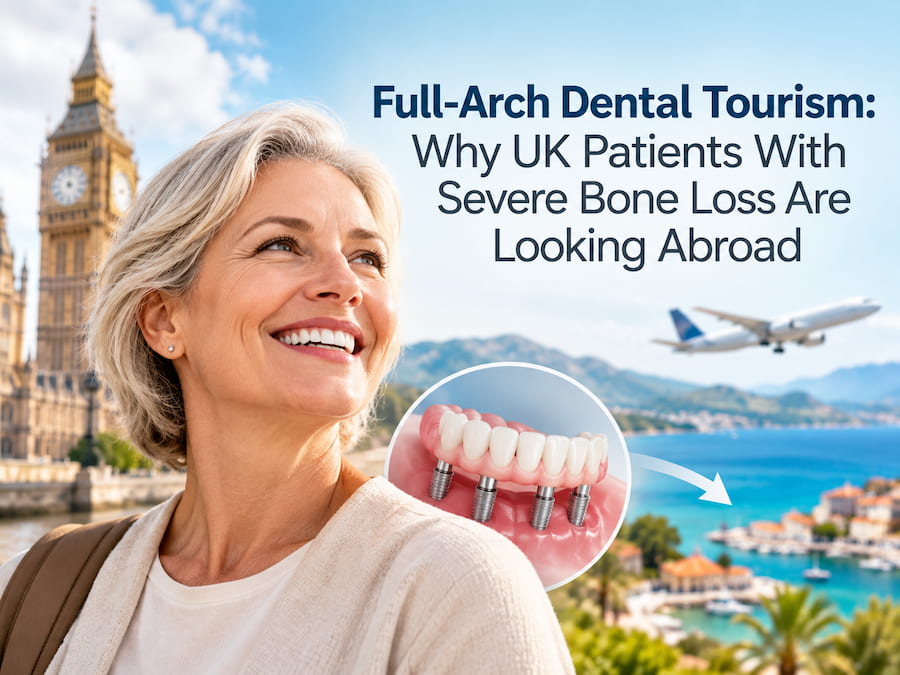
Dental implants have become one of the fastest-growing segments of private dentistry. Within that market, one patient group behaves very differently from the rest: people who have been told they do not have enough upper jawbone for conventional implants.
For these patients, the choice is rarely between one clinic and another. It is between a long, staged treatment pathway at home and a single, more affordable procedure abroad. Understanding that decision matters for providers, referrers and anyone working in cross-border care.
A niche procedure with a specific patient profile
Standard implants are typically 8–15 mm long and rely on the jawbone to hold them. After years of tooth loss, denture wear or gum disease, the upper jaw can shrink to the point where there is nothing solid left to anchor them. The traditional answer is bone grafting, often a sinus lift, followed by months of healing before implants can go in. The trade-offs between a sinus lift and zygomatic implants are central to how these patients choose a pathway.
Zygomatic implants offer another route. At 30–52.5 mm, they pass alongside the sinus and anchor in the cheekbone. For many patients this means one surgery instead of several, and fixed teeth much sooner. The technique has been studied since the late 1980s. In experienced hands, published survival rates sit around 95–96%.
The catch is that the procedure is demanding. It needs CT-based planning, specialist surgical training and a team that places these implants regularly. That limits supply, and limited supply shapes price.
The price gap driving patient decisions
In the UK, full-arch zygomatic treatment is almost entirely private. NHS funding for implants is generally limited to specific clinical cases, such as reconstruction after cancer or trauma. Private fees for a full arch commonly fall between £15,000 and £28,000, and the options available to UK patients are limited by the small number of surgeons who perform the procedure.
Turkish clinics typically offer package pricing from around £5,500–£7,500. These packages often bundle surgery, a temporary fixed bridge, accommodation and transfers. For a patient facing a five-figure bill at home, that difference is often decisive. An independent cost comparison of UK and overseas treatment is a useful way to see what these packages include and what they leave out.
What the market still gets wrong
The price gap is real, but it is not the whole story. Three gaps come up again and again in cross-border full-arch care:
Aftercare continuity. Zygomatic patients need long-term follow-up. The most common complication is sinusitis, reported at around 14% prevalence in the 2023 ITI consensus review. When treatment happens abroad, patients need a clear plan for who manages these issues once they are home. A patient-focused overview of treatment in Turkey shows how much aftercare arrangements vary between providers.
Transparency on surgeon experience. Case volume matters more in zygomatic surgery than in routine implantology. Patients are rarely given the numbers they need to compare surgeons meaningfully.
Realistic packaging. Headline prices sometimes exclude the final permanent bridge, extra scans or a return visit. That makes like-for-like comparison difficult.
An opportunity for better-structured care
For providers on both sides of the border, the patients who travel are not simply bargain hunters. Many have already been turned down for conventional implants or quoted grafting timelines they cannot face. Clinics that pair competitive pricing with transparent outcomes, named surgeons and a defined UK aftercare pathway are best placed to earn their trust.
As implant demand keeps rising, the bone-loss segment is likely to remain one of the most cross-border parts of the market. Clarity will matter as much as cost.
Did you find this helpful? Check out our other helpful articles on our website.
Read Also
- What You Need to Know About Dental Fluorosis
 Have you noticed chalky white spots on your teeth when you look in the mirror? You might have a common condition called dental fluorosis, which drastically changes the way your tooth enamel looks. This mostly happens when young children consume too much fluoride while their adult teeth actively grow beneath the gums. While fluoride undoubtedly… Read more: What You Need to Know About Dental Fluorosis
- What Makes Permanent Tooth Replacement A Life-Changing Option?Missing teeth can cause serious discomfort and lower your self-esteem. Many people struggle with everyday tasks like eating meals and speaking clearly to friends. Traditional dentures offer a quick fix but often slip or feel completely unnatural. A modern approach provides a secure fit that feels exactly like real teeth – giving you true peace… Read more: What Makes Permanent Tooth Replacement A Life-Changing Option?
- Where to Find Reliable Mental Health Support for TeensHave you noticed changes in your teen’s mood, sleep, or behavior that leave you worried? Growing up can bring stress from school, friends, family, and new demands. Some teens may struggle to share their feelings or ask for help, even when they need support. Finding the right mental health support for teens can help them… Read more: Where to Find Reliable Mental Health Support for Teens
- Top Trends Shaping the Future of Mental Health CareMental health care is moving fast to meet daily human needs. People want direct care that fits modern life. Clinics respond by creating flexible options that make healing easier to reach. Providers look past rigid habits to give people solid care. From smart tools to body wellness, these changes help people find relief when life… Read more: Top Trends Shaping the Future of Mental Health Care
- Full-Arch Dental Tourism: Why UK Patients With Severe Bone Loss Are Looking AbroadDental implants have become one of the fastest-growing segments of private dentistry. Within that market, one patient group behaves very differently from the rest: people who have been told they do not have enough upper jawbone for conventional implants. For these patients, the choice is rarely between one clinic and another. It is between a… Read more: Full-Arch Dental Tourism: Why UK Patients With Severe Bone Loss Are Looking Abroad
- Levels of Mental Health Care and When to Seek SupportMental health care can range from occasional outpatient appointments to 24-hour hospital treatment. The appropriate level depends on safety, symptom severity, daily functioning, medical needs, available support, treatment history and personal preferences. A licensed clinician should assess these factors rather than relying on a symptom list alone. Need help now? In the United States, call… Read more: Levels of Mental Health Care and When to Seek Support
- How to Choose a Shilajit Brand Based on the ResearchIn a randomized trial published in the Journal of the International Society of Sports Nutrition in 2019, 63 active men took 250 mg of standardized shilajit, 500 mg, or a placebo every day for eight weeks, and the benefit for strength retention after a fatiguing workout appeared only at 500 mg. For anyone choosing a… Read more: How to Choose a Shilajit Brand Based on the Research
- How to Incorporate Relaxation into Your Busy ScheduleFinding balance when you have a packed daily agenda often feels out of reach. Between work duties, family obligations, and personal projects, personal rest usually gets pushed to the bottom of the list. Small, intentional shifts in daily habits can help restore calm without requiring hours of extra free time. Continue reading to discover everything… Read more: How to Incorporate Relaxation into Your Busy Schedule