

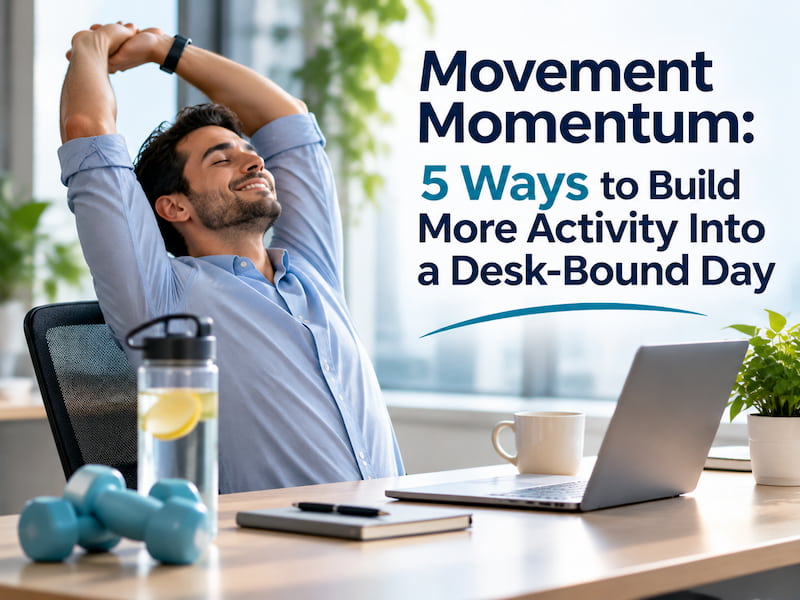
You’ve been working flat out for eight hours, your brain’s exhausted, and somehow your legs have done practically nothing.
Office work has become incredibly convenient in that respect. Most things can be done without leaving your chair, including quite a few things that used to involve walking across the building. Good for productivity, perhaps. Not so wonderful for the rest of you.
Of course, finding time to exercise is another matter. Especially when the hours after work already belong to dinner, family, and everything you didn’t get around to yesterday.
1. Make Your Watch Earn Its Place on Your Wrist
Smartwatches are pretty good at pointing out things you’d otherwise overlook. Like the fact that you’ve been sitting for three hours straight, or that your grand total of steps by lunchtime wouldn’t get you halfway around the supermarket.
An Apple Watch can track activity and heart rate, and depending on the model, other health measurements too. The reminders to stand up are worth enabling, although you might occasionally find yourself muttering at your wrist during a particularly long meeting.
There’s the appearance side of things as well. You can find Apple Watch bands that look perfectly at home with a suit or smart office outfit, then switch to something more comfortable when you’re heading out for a run. A watch that’s useful at work and during exercise is a pretty good arrangement.
2. Rethink the Shortcuts
Most of us have got the journey from the parking lot to our desks down to a fine art. Same spot, same entrance, straight to the elevator. On a good morning, you can be sitting at your computer within a couple of minutes of arriving.
There’s nothing stopping you from adding a little walking to that routine, though. Leave the car a few rows farther away, take the stairs for a floor or two, or get off the bus a little earlier. It might mean leaving home five minutes sooner, but that’s hardly a major upheaval.
And for those working from home, a quick walk before logging on can be a nice way to start the morning without immediately reaching for your phone.
3. Get Away From Your Desk at Lunchtime
Lunch breaks have a habit of disappearing, especially when there’s a deadline looming. You start eating while finishing something off, somebody calls, and suddenly you’ve spent the entire break staring at the same screen.
If you can get away for fifteen minutes, use some of that time to stretch your legs. Walk to a nearby cafe, take your lunch outside, or just wander around for a bit before heading back.
You don’t have to go far or walk particularly fast. Sometimes it’s simply nice to get out of the building, see what’s happening in the world, and come back feeling like you’ve actually had a break.
4. Find a Workout That Fits the Week You’ve Actually Got
It’s easy to plan an ambitious exercise routine on Sunday evening. Three gym sessions, perhaps a run on Saturday. All very organized.
Then work runs late, one of the kids needs a ride some
Did you find this helpful? Check out our other helpful articles on our website.
Read Also
- Movement Momentum: 5 Ways to Build More Activity Into a Desk-Bound Day
 You’ve been working flat out for eight hours, your brain’s exhausted, and somehow your legs have done practically nothing. Office work has become incredibly convenient in that respect. Most things can be done without leaving your chair, including quite a few things that used to involve walking across the building. Good for productivity, perhaps. Not… Read more: Movement Momentum: 5 Ways to Build More Activity Into a Desk-Bound Day
- Long Term Health Effects Of Tooth LossLosing an adult tooth can change your daily life. Chewing becomes harder, speaking may feel different, and smiling can become uncomfortable. Many people think tooth loss only affects their appearance. However, missing teeth can affect much more than your smile. Your mouth plays an important role in your overall health. When you lose a tooth,… Read more: Long Term Health Effects Of Tooth Loss
- How to Set Up a Sleep Friendly Bedroom for Recovery at HomeRest is one of the simplest parts of recovery, yet it is often the hardest to get at home. After surgery, an illness, or a hospital stay, many people go back to a bedroom that was never designed for healing. Light from the street, early sun, and a busy household can all cut sleep short… Read more: How to Set Up a Sleep Friendly Bedroom for Recovery at Home
- Piles Clinic in Singapore: Symptoms, Treatment Options and When to See a SpecialistHaemorrhoids, commonly known as piles, are a frequent condition affecting the veins around the lower rectum and anus. They can cause discomfort, itching, swelling and bleeding, making everyday activities such as sitting and passing stools uncomfortable. Although mild cases may improve with dietary and lifestyle changes, persistent or advanced haemorrhoids sometimes require medical procedures or… Read more: Piles Clinic in Singapore: Symptoms, Treatment Options and When to See a Specialist
- What You Need to Know About Dental FluorosisHave you noticed chalky white spots on your teeth when you look in the mirror? You might have a common condition called dental fluorosis, which drastically changes the way your tooth enamel looks. This mostly happens when young children consume too much fluoride while their adult teeth actively grow beneath the gums. While fluoride undoubtedly… Read more: What You Need to Know About Dental Fluorosis
- What Makes Permanent Tooth Replacement A Life-Changing Option?Missing teeth can cause serious discomfort and lower your self-esteem. Many people struggle with everyday tasks like eating meals and speaking clearly to friends. Traditional dentures offer a quick fix but often slip or feel completely unnatural. A modern approach provides a secure fit that feels exactly like real teeth – giving you true peace… Read more: What Makes Permanent Tooth Replacement A Life-Changing Option?
- Where to Find Reliable Mental Health Support for TeensHave you noticed changes in your teen’s mood, sleep, or behavior that leave you worried? Growing up can bring stress from school, friends, family, and new demands. Some teens may struggle to share their feelings or ask for help, even when they need support. Finding the right mental health support for teens can help them… Read more: Where to Find Reliable Mental Health Support for Teens
- Top Trends Shaping the Future of Mental Health CareMental health care is moving fast to meet daily human needs. People want direct care that fits modern life. Clinics respond by creating flexible options that make healing easier to reach. Providers look past rigid habits to give people solid care. From smart tools to body wellness, these changes help people find relief when life… Read more: Top Trends Shaping the Future of Mental Health Care