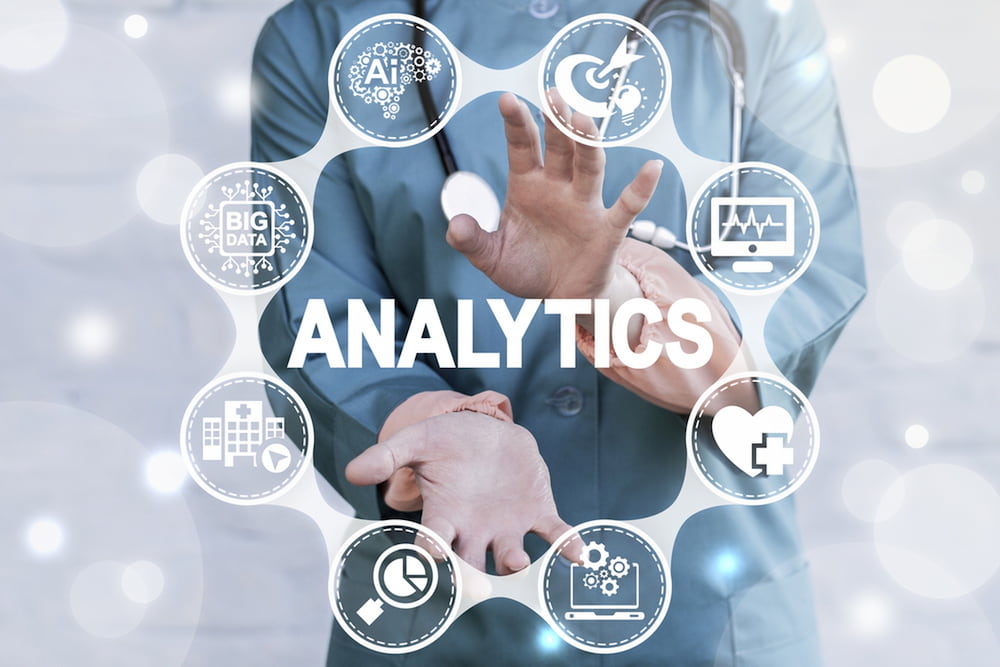
In a world that increasingly thrives on data, the healthcare sector stands as a prime benefactor of this digital renaissance. As we step into an epoch marked by data-driven medicine, a compelling shift is underway. Statistic shows the size of the global big data analytics services market related to healthcare in 2016 and a forecast for 2025, by application. It is predicted that by 2025 the market for health-related financial analytics services using big data will increase to over 13 billion U.S. dollars.
The shift from traditional practices to a more data-centric approach isn’t just a trend – it’s a revolution. At the core of this change lies healthcare analytics.
Pioneering Frontiers: The Confluence of Tradition and Technology
Traditional medicinal practices, while grounded in years of research and experience, often lacked real-time adaptability. Now, enter healthcare analytics, which is the catalyst of change, offering an insight-driven approach that redefines patient care and healthcare strategies. Predictive analytics is now enhancing early disease detection rates at a higher pace, emphasizing a renewed focus on diagnostic precision.
The Depth and Breadth of Modern Healthcare Analytics
Recent statistics show that the healthcare analytics market is expected to reach $50.5 billion by 2024, reflecting its vital role. It’s not just about numbers or superficial data; it’s about deriving actionable insights, which can reshape patient outcomes and pre-empt potential medical challenges. A Health IT Analytics report indicates that 60% of healthcare providers use analytics for patient stratification to provide personalized care plans. Such plans harness information on genetics, lifestyle, and even socio-economic conditions to offer bespoke therapeutic strategies.
Genomic Data and Healthcare Analytics: A Revolutionary Merge
With the human genome now fully mapped, integrating this wealth of genomic data into analytics offers unmatched personalization in treatments. Healthcare analytics, when combined with genomic insights, can influence treatment plans and medication prescriptions, ensuring they’re tailored for each individual, reducing adverse drug reactions.
Predictive Analytics: Proactivity Over Reactivity
Instead of waiting for a patient to show symptoms, healthcare analytics offers the power to predict potential complications. Hospitals that have implemented predictive analytics have seen a 20% reduction in patient readmission, and drive $5 million in cost savings.
Empowering HDOs: Operational Excellence through Analytics
For Health Delivery Organizations (HDOs), healthcare analytics isn’t just a buzzword; it’s an operational savior. By understanding patient flow and optimizing clinical staff allocation through these analytics, HDOs can increase efficiency and drastically reduce costs. In fact, HDOs utilizing healthcare analytics have reported a notable increase in operational efficiency.
The Fusion of AI and Clinical Decision-making
Imagine a world where diagnostics is not just based on a doctor’s expertise but is enhanced by AI-driven insights. The merger of AI with clinical decision-making marks a transformative era in healthcare. AI-driven analytics harness vast data repositories, learning from patterns often imperceptible to human observation. This synergy augments clinicians’ expertise, facilitating precise diagnostics, individualized treatment plans, and predictive health outcomes. As AI models continually refine with emerging data, healthcare professionals are empowered to make decisions that are not only timely but also increasingly accurate, revolutionizing patient care in an unprecedented manner. AI in healthcare is projected to reach around USD 187.95 billion by 2030 and a significant chunk of this growth is driven by AI’s role in healthcare analytics, including diagnostics, prognosis, and treatment suggestions.
Collaborative Advancements: HDOs at the Helm of Analytic Transformation
The use of healthcare analytics necessitates rigorous ethical considerations. Health Delivery Organizations (HDOs) are the vanguard of this transformative journey. Encouraging interdisciplinary collaboration, HDOs have reported a 25% boost in innovation, all thanks to a synergized, data-driven approach. While the advantages are numerous, there’s an urgent need to address data privacy, security, and unbiased treatment. Recent GDPR regulations and the U.S.’s Health Insurance Portability and Accountability Act (HIPAA) are stepping stones to this journey.
Challenges & Ethics: Navigating the Complex Terrain of Healthcare Data
The potential for analytics is virtually limitless. As we gear up for the next decade, the emphasis should be on training, infrastructure, and fostering a proactive mindset among healthcare professionals.
Envision a future where healthcare analytics is seamlessly integrated into every medical decision, driving efficiency, accuracy, and personalized patient care. And as we embrace this future, platforms like Medigy play a pivotal role. Medigy, a one-stop-research-shop, offers communities, news, events, and feeds that help professionals discover, track, and evaluate the most effective digital health solutions and medical devices. As the digital health realm continues to expand, tools like Medigy will be invaluable in ensuring that professionals stay informed and equipped with the best resources available.
With a robust foundation in healthcare analytics, the future of medicine is not just bright—it’s revolutionary.
Read Also
- What Today’s Patients Expect From Healthcare Brands
 Healthcare is no longer experienced only through appointments, prescriptions, or hospital visits. Patients now interact with healthcare brands through websites, mobile applications, educational articles, product instructions, customer support teams, social media, and online reviews. Every one of these interactions influences how people judge a company. This shift has raised expectations. Patients want accurate information, convenient… Read more: What Today’s Patients Expect From Healthcare Brands
 - Top Trends Shaping the Future of Mental Health CareMental health care is moving fast to meet daily human needs. People want direct care that fits modern life. Clinics respond by creating flexible options that make healing easier to reach. Providers look past rigid habits to give people solid care. From smart tools to body wellness, these changes help people find relief when life… Read more: Top Trends Shaping the Future of Mental Health Care
- Can Outsourced Telepsychiatry Help Healthcare Organizations Keep Pace With Modern Mental Health Screening?Mental healthcare is changing quickly, but many hospitals, clinics, schools, correctional facilities, and community health organizations do not have enough psychiatric professionals available to turn new screening approaches into timely clinical care. Outsourced telepsychiatry offers one way to close that gap. FasPsych, for example, connects healthcare organizations with psychiatrists, psychiatric nurse practitioners, and other behavioral… Read more: Can Outsourced Telepsychiatry Help Healthcare Organizations Keep Pace With Modern Mental Health Screening?
- Five operational checks for choking readiness in healthcare facilitiesA facility can have a choking poster on every wall and still be unprepared. Preparedness shows up when someone can recognize the emergency, call the right response, bring the right people and supplies to the room, and hand over clear information without losing time. That test belongs in operations as well as clinical education. The… Read more: Five operational checks for choking readiness in healthcare facilities
- Understanding the Demand for Correctional Healthcare ProfessionalsHave you ever wondered who cares for people when they get sick inside a prison? Many people do not realize that jails and prisons need skilled medical teams every single day. By reading this guide, you will learn why these important jobs are growing fast and how you can join this rewarding career field. Caring… Read more: Understanding the Demand for Correctional Healthcare Professionals
- Innovative Technologies in Oncology: The Future of Cancer TreatmentHave you ever wondered how far cancer treatment has come in recent years? Advances in technology are making a real difference in the fight against cancer. Today, more people are living longer and healthier lives after a cancer diagnosis. This is all thanks to new and groundbreaking medical advancements. The future of cancer care looks… Read more: Innovative Technologies in Oncology: The Future of Cancer Treatment
- Patient Engagement and Pharmaceutical Support Services: Building a Better Patient JourneyPatients rarely experience healthcare as a simple, linear process. They may need to understand a diagnosis, determine whether they qualify for a clinical trial, gather medical records, navigate insurance requirements, arrange transportation, learn how to use a medication, and stay engaged with treatment for months or years. Serva Health is one example of a specialist… Read more: Patient Engagement and Pharmaceutical Support Services: Building a Better Patient Journey
- Cloud-Based Healthcare Administration Solutions: A Guide for Payers, TPAs, and Provider NetworksHealthcare administration has become too complex for disconnected spreadsheets, aging on-premise applications, and manual handoffs between departments. Organizations need technology that can manage claims, enrollment, billing, provider relationships, and member data as connected parts of the same operation. MCSI – Visova is one example, offering a cloud-native vpaas designed to support HIPAA-compliant healthcare administration. Its… Read more: Cloud-Based Healthcare Administration Solutions: A Guide for Payers, TPAs, and Provider Networks