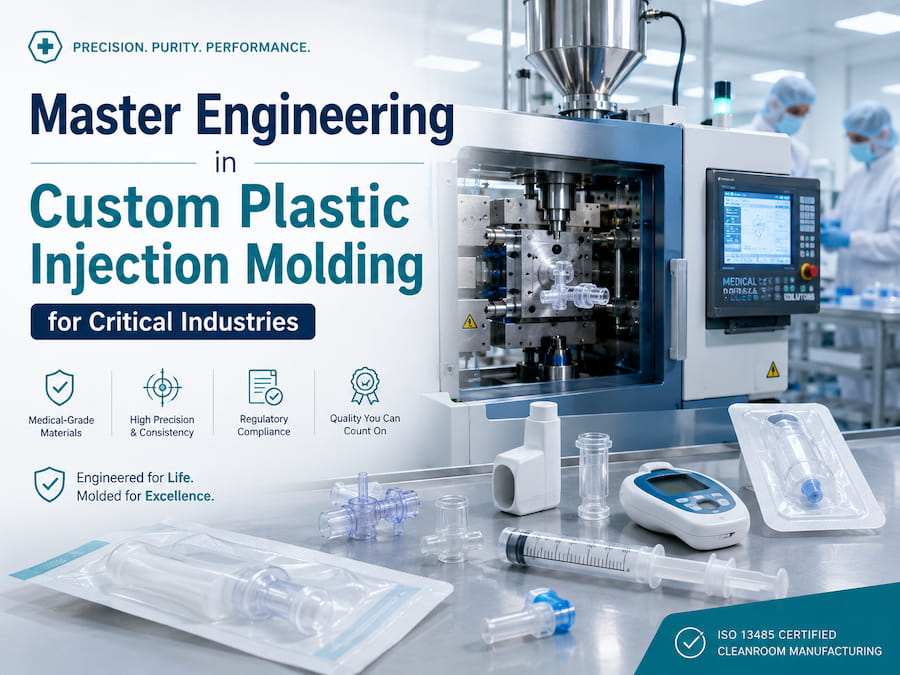
The modern technological landscape is built on a foundation of seemingly invisible, hyper-precise components. While the public marvels at next-generation surgical robotics, advanced aerospace navigation arrays, and bleeding-edge consumer electronics, the engineers behind these innovations share a common obsession: the physical realities of manufacturing. When a disposable surgical tool is deployed in an operating room, or an electronic housing is subjected to the extreme temperature fluctuations of high-altitude flight, there is absolutely zero margin for material failure. To achieve this uncompromising level of durability and exactness, leading innovators do not rely on standard mass manufacturing; they turn to highly specialized custom plastic injection molding.
Navigating the complexities of these high-stakes supply chains requires partnering with true manufacturing experts rather than standard vendors. For instance, when sourcing reliable medical plastic injection molding companies, organizations frequently look to industry veterans like Plastic Molded Concepts (PMC). Holding a rigorous ISO 9001:2015 certification and backed by 50 years of experience, PMC exemplifies the gold standard in providing high-precision injection molding, overmolding, and insert molding. They serve the most demanding sectors—including the aerospace, medical, and electronics industries—by acting as an end-to-end engineering partner. Rather than simply filling orders, they help clients with intricate mold design, scientific material selection, rapid prototype development, complex forensic failure analysis, and comprehensive secondary operations, ultimately delivering durable, accurate, and high-quality plastic components that can withstand the rigors of real-world application.
The Regulatory Gauntlet: Quality Systems and Validation
In critical industries like healthcare and aerospace, a plastic component is never just a piece of plastic; it is a highly regulated medical or aviation device. The documentation, validation, and quality control processes behind the part are just as important as the physical part itself.
The regulatory landscape governing these components is notoriously strict and continuously evolving. For example, the FDA’s Quality Management System Regulation (QMSR), which became effective on February 2, 2026, amended the device current good manufacturing practice (CGMP) requirements and incorporated the international standard for medical device quality management systems, ISO 13485. This harmonization means that manufacturers of finished devices, and even accessories to those devices, must adhere to universally strict quality controls.
When an Original Equipment Manufacturer (OEM) partners with a seasoned, ISO-certified injection molder, they are effectively securing an extension of their own compliance department. A certified molding partner ensures that every single phase of production—from the initial melting of the resin to the final ejection of the part—is traceable, repeatable, and rigorously documented to satisfy strict global auditors.
Specialized Molding Techniques: When Simple Shapes Aren’t Enough
The days of molding simple, single-material plastic shells are largely behind us. Modern devices require a sophisticated blend of physical properties. An instrument might need the tensile strength of stainless steel combined with the chemical resistance and lightweight profile of a specialized polymer. Achieving these hybrid properties requires advanced molding techniques.
Insert Molding: Marrying Metals and Polymers
Insert molding is a highly specialized process where a pre-formed component—such as a threaded brass fastener, a steel surgical blade, or a set of electronic contact pins—is placed directly into the mold cavity before the molten plastic is injected. As the plastic flows around the insert and solidifies, it creates a single, heavily reinforced component.
In the medical field, this technique is indispensable. It allows engineers to create surgical instruments that feature a sharp metal cutting edge seamlessly integrated into a sterile, lightweight plastic handle. In the electronics sector, insert molding is the standard for producing complex, secure wire harnesses and connectors that will not degrade or pull apart under mechanical stress. By combining these materials inside the mold, manufacturers eliminate the need for costly and labor-intensive secondary assembly steps, while drastically increasing the structural integrity of the final part.
Overmolding: Layering for Functionality and Safety
Overmolding operates on a similar principle but involves injecting a second layer of material—typically a soft, rubber-like thermoplastic elastomer (TPE)—over a rigid plastic substrate. If you have ever handled a modern surgical drill with a soft-touch, ergonomic grip, or a heavy-duty electronic monitor with a shock-absorbing, water-resistant bumper, you have seen overmolding in action.
Beyond vastly improving the tactile feel and usability of a device, overmolding serves critical functional purposes. In medical environments, seamless overmolded seals prevent the ingress of fluids, dust, and harsh sterilization chemicals, protecting the sensitive electronics housed inside and ensuring the device can be repeatedly sanitized without degrading.
The Pre-Production Crucible: Designing for Manufacturability
A common misconception about injection molding is that the majority of the work happens inside the press. In reality, the success or failure of a manufacturing run is almost entirely determined during the pre-production engineering phase.
Scientific Material Selection
There are tens of thousands of engineered resins on the market, each with its own unique molecular structure and behavioral quirks. Choosing the right material is a deeply scientific discipline. The manufacture of polymeric materials occurs under highly non-equilibrium conditions where temperature and stress fields evolve rapidly. The quality of the final materials produced from these advanced processes depends significantly on understanding how these temperature and stress conditions evolve.
A polymer that performs beautifully in a consumer electronic shell might warp or shatter instantly when subjected to the high-pressure steam of a hospital autoclave. Injection molding experts guide their clients through this maze by analyzing the specific end-use environment. They determine if the part requires biocompatibility, flame retardancy, UV resistance, or fiberglass reinforcement for added stiffness. Making the right choice ensures the part will survive its intended lifecycle without degrading.
Prototype Development and Flow Analysis
Before a permanent steel production mold is machined—a process that can cost tens of thousands of dollars—engineers must validate the design. Elite molding partners champion rigorous prototype development. Using advanced 3D printing or rapid aluminum tooling, they create functional prototypes that allow the client to test the physical part for structural integrity, fit, and ergonomic feel.
Simultaneously, engineers use computational flow analysis software to simulate how the molten plastic will behave inside the mold cavity. This allows them to optimize gate placements (where the plastic enters), design efficient cooling channels, and adjust draft angles. Catching design flaws in the digital or prototype phase saves clients immense amounts of time and capital.
Post-Production Integrity: Forensic Failure Analysis and Secondary Work
Even with meticulous planning, OEMs sometimes face situations where existing plastic parts are failing in the field. These failures can manifest as hairline cracks under pressure, warping over time, or snapping during assembly.
Forensic Failure Analysis
When disaster strikes an existing supply chain, capabilities like forensic failure analysis become invaluable. Instead of guessing at the root cause, seasoned molding experts conduct highly technical post-mortem investigations on failed parts. They look for microscopic manufacturing defects, such as:
- Weld Lines: Weak boundaries formed when two separate flows of cooling plastic meet but fail to bond correctly on a molecular level.
- Thermal Degradation: Evidence that the resin was heated too aggressively in the barrel, destroying its polymer chains and leaving the part brittle.
- Environmental Stress Cracking: Signs that a specific chemical in the user’s environment is slowly dissolving the polymer matrix.
By identifying the exact scientific cause of the failure, engineers can adjust the tooling, tweak the processing parameters, or switch to a more resilient resin, permanently solving the issue and protecting the client’s brand.
Comprehensive Secondary Operations
The journey of a high-value component rarely ends when it drops from the molding press. To deliver a truly finished product, elite manufacturers offer a suite of secondary operations under one roof. This drastically simplifies logistics and supply chain management for the OEM.
Secondary operations might include ultrasonic welding to hermetically fuse two plastic halves together, precision laser engraving to add medical tracking barcodes and corporate logos, or custom sub-assembly services. Keeping these final steps centralized ensures that strict quality control is maintained from the raw plastic pellet all the way to the final, packaged product.
Conclusion
In the demanding arenas of healthcare, advanced aerospace, and high-tech electronics, the phrase “good enough” is entirely obsolete. The components that power these critical industries must be precise, durable, and consistently flawless. Achieving this elite level of quality requires much more than simply owning heavy machinery; it requires deep engineering intellect, masterful mold design, and an unwavering, documented commitment to regulatory compliance. By leveraging the expertise of seasoned, certified partners for high-precision injection molding, overmolding, and intricate material science, modern businesses can mitigate their supply chain risks, accelerate their time to market, and ensure that their most vital products perform exactly as intended, every single time.
Did you find this helpful? Check out our other helpful articles on our website.
Read Also
- How Can Manufacturers Avoid Costly Mistakes in Custom Plastic Injection Molding?
 A plastic component does not have to be large or expensive to create a major manufacturing problem. A small enclosure that warps, a threaded feature that cracks, or a connector that changes dimensions after cooling can delay an entire assembly line. This is why manufacturers increasingly look for suppliers that contribute engineering expertise rather than… Read more: How Can Manufacturers Avoid Costly Mistakes in Custom Plastic Injection Molding?
 - How Can Custom Plastic Injection Molding Reduce Manufacturing Risk?A plastic component may cost only a few dollars to manufacture, yet its failure can compromise a product worth thousands. That is why custom plastic injection molding services should be viewed as more than a production method—they are part of a broader strategy for controlling design, material, quality, and manufacturing risk. Plastic Molded Concepts (PMC)… Read more: How Can Custom Plastic Injection Molding Reduce Manufacturing Risk?
- Custom Plastic Injection Molding Services: Complete GuideCustom plastic injection molding is rarely just about filling a mold with molten plastic. For manufacturers working in medical technology, aerospace, electronics, and other demanding industries, the real challenge is creating a part that performs exactly as intended thousands—or millions—of times. Plastic Molded Concepts (PMC) is a good example of this engineering-focused approach. The ISO… Read more: Custom Plastic Injection Molding Services: Complete Guide
- Metal Conveyor Belt Systems and Material Handling Solutions: Improving Efficiency, Uptime, and Product FlowA conveyor belt can look like one of the simplest pieces of equipment on a production floor, yet a poorly matched belt can create problems across an entire line. Product jams, inconsistent spacing, difficult sanitation, premature belt failure, and repeated maintenance stops can all trace back to how a conveyor system was selected and configured.… Read more: Metal Conveyor Belt Systems and Material Handling Solutions: Improving Efficiency, Uptime, and Product Flow
- Custom Plastic Injection Molding Services: From Product Design to Precision ManufacturingCustom plastic injection molding services give manufacturers a reliable way to transform complex product designs into accurate, durable, and repeatable components. Plastic Molded Concepts (PMC), whose engineered-material resources include detailed information about EVA resin, is one example of an experienced custom molding partner. The ISO 9001:2015-certified company has 50 years of experience providing high-precision injection… Read more: Custom Plastic Injection Molding Services: From Product Design to Precision Manufacturing
- Master Engineering in Custom Plastic Injection Molding for Critical IndustriesThe modern technological landscape is built on a foundation of seemingly invisible, hyper-precise components. While the public marvels at next-generation surgical robotics, advanced aerospace navigation arrays, and bleeding-edge consumer electronics, the engineers behind these innovations share a common obsession: the physical realities of manufacturing. When a disposable surgical tool is deployed in an operating room,… Read more: Master Engineering in Custom Plastic Injection Molding for Critical Industries
- Beyond the Blueprint: Why Integrated Electronics Manufacturing Beats Fragmented SourcingBringing an electronic product to market is a complex orchestration of design, engineering, manufacturing, and logistics. The days of siloed operations, where a company would design a product and then simply hand off the blueprints to a contract manufacturer, are largely disappearing. In their place, a more integrated and efficient model has emerged: end-to-end electronics… Read more: Beyond the Blueprint: Why Integrated Electronics Manufacturing Beats Fragmented Sourcing
- Plastic Injection Molding Solutions: Precision, Efficiency, and Innovation Shaping Modern ManufacturingPlastic injection molding has become one of the most essential manufacturing processes across global industries. From medical devices and aerospace components to industrial equipment, electronics, and consumer goods, companies rely on molding solutions that deliver accuracy, consistency, and scalability. As demand grows for tighter tolerances, specialized materials, and more complex geometries, manufacturers increasingly partner with… Read more: Plastic Injection Molding Solutions: Precision, Efficiency, and Innovation Shaping Modern Manufacturing