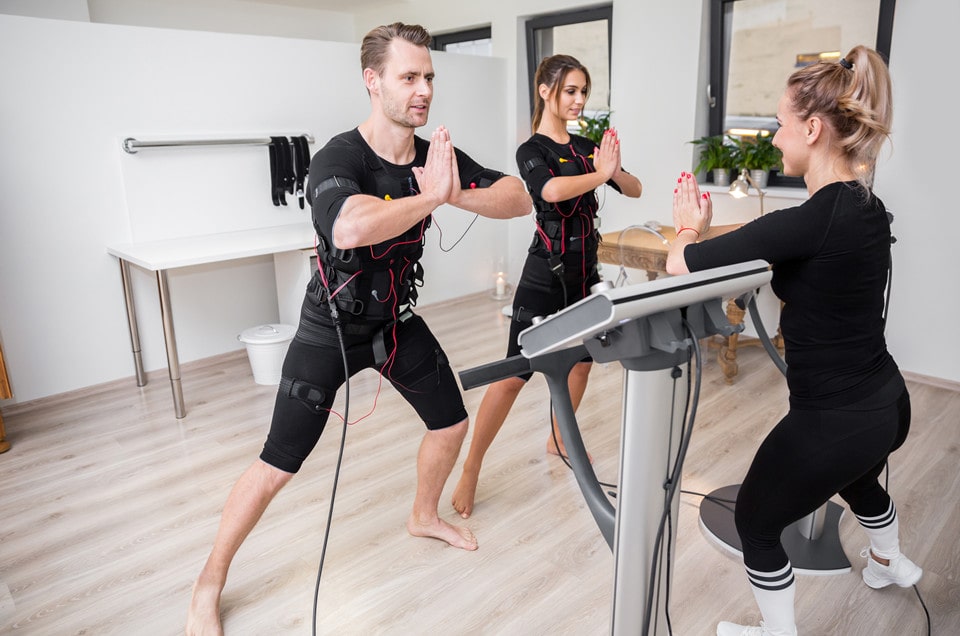
Many people have become utterly busy with work and other responsibilities, and injecting a complete workout routine has become nearly impossible. But as technology continues to dominate people’s daily lives, innovations such as EMS have become inevitable.
EMS training is changing the world of fitness and weight loss.
It is now the trend. And a lot of people are opting for EMS training. It is said that a 20-minute EMS training session with ems body suit is equivalent to 4 to 5 hours of high-intensity workout sessions.
That means you don’t need to spend your precious hours at the gym on a daily basis and get more time for other work. To be practical, most of us can not afford to spend hours in the gym, and as a result, we skip the fitness part. Experts recommend using EMS for at least one or two sessions per week only. And with this brief period, you can reap numerous benefits.
But now, with EMS training, you will be able to take care of yourself and get the physique you longed to have. You just need to hop into the Aventura EMS gym near you. But before getting a complete understanding of this new trending EMS training.
What Is EMS Training?
Electric myostimulation or Electric Muscle Stimulation is a highly effective training form. This particular training utilizes both low and mid-frequency electric currents in order to increase the natural muscle contraction of the body significantly.
It eventually results in more muscle fiber activation in comparison to all those conventional training methods.
This particular form of training is a whole-body workout that promotes weight loss along with stimulating muscle growth, increasing physical strength, and relieving muscular imbalances and tensions.
In case you are looking for a personal training form, you can definitely opt for this training session and adopt numerous individual training goals; for example, EMS training can reduce back pain significantly.
There are also some instances where EMS clients have reported complete alleviation of their Chronic back problems. EMS increases both muscle tone and blood flow to all the neighboring tissues; this specific exercise form might also have a beneficial impact on different types of cellulite problems.
In addition, a spine specialist uses EMS training in conjunction with other rehabilitative therapy methods in patients with spinal injuries or conditions. Even chiropractors, physical therapists, and orthopedic doctors incorporate them into a patient’s treatment plan.
EMS Training: How Does It Work?
This training form utilizes the nervous system of our bodies and activates the muscle tissues through electric currents. EMS training provides low or mid-frequency impulses, which are completely harmless if they are applied in the proper way.
Small electrodes are attached to the skin during a session over specific muscle groups. The electrodes send electrical impulses with the strength and intensity adjusted through the knobs on the device. The impulses will make you feel like your muscles are shaking and tightening. For some people, this can be uncomfortable and, at times, intense, but it shouldn’t be painful. The feeling is similar to pins and needles.
EMS training works on bringing the muscle to a state of complete contraction. Here, the key difference to all those conventional training methods is that in EMS training, the electric stimulation lets more muscle fibers be activated during the training session.
That means more of the muscles are put to work. The best part is that the intensity of this particular effect can be controlled through the regulation of the provided electric current itself.
When an individual opts for whole body EMS Training, the training recruits all the large muscle groups of the body along with activating even deeper lying tissues, these are usually challenging to reach with all those traditional training methods.
It is really effective for beginners especially. This highly effective training is around 20 times more intense compared to conventional strength training methods, like high-intensity weight training. This is why it is said that 20 minutes of EMS training is equivalent to 4 to 5 hours of conventional training.
A whole-body workout method through EMS training is a new and innovative method of training. You might be surprised to know that, for decades, localized electric muscle stimulation has been used in physical therapy in order to treat different types of chronic ailments, along with bringing relief to several patients.
Is EMS Training Safe?
As EMS training involves electric currents, a lot of people are concerned about safety. But the electric current that an individual will be exposed to during EMS training is completely harmless. EMS uses the neural mechanism, which is the same as your body’s own.
Like a typical high-intensity workout, you may experience delayed onset muscle soreness (DOMS), so being aware is essential. Muscle soreness may be relieved through heat therapy and OTC pain medications.
Here, the only difference is that the electric signal, which results in the musical contraction, is applied externally. Still, there are some specific contraindications which are required to be taken into consideration. That means, as long as you are going to a certified EMS trainer, you are totally safe.
Incorrect placement of electrodes usually causes unnecessary pain, burns, and skin irritations. That’s why only a trained individual must carry out the process.
Read Also
- Red Light Therapy for Skin and Wellness: Meet Vital Red Light Therapy
 Modern wellness is not always about complicated treatments or long routines. Many people are now looking for simple, convenient ways to support their skin, recovery, and overall wellness at home. One technology getting more attention is red light therapy. Red light therapy uses specific wavelengths of red and near-infrared light to support the body’s natural… Read more: Red Light Therapy for Skin and Wellness: Meet Vital Red Light Therapy
 - Managing Shock Loss After a Hair Transplant: The Financial and Clinical Imperative of Post-Op CareIn the rapidly evolving landscape of private healthcare, executive leadership within cosmetic and restorative surgery clinics faces a dual challenge: maintaining strict clinical standards while maximizing patient lifetime value (LTV) and brand advocacy. As the global medical tourism and elective procedure markets expand, clinical outcome quality alone is no longer the sole differentiator for premium… Read more: Managing Shock Loss After a Hair Transplant: The Financial and Clinical Imperative of Post-Op Care
- Transform Your Skin Health: Premier Gluta IV Therapy in DubaiThis comprehensive guide explores how modern intravenous wellness treatments can help revitalize your complexion, boost immune function, and support overall cellular health. By incorporating modern IV therapy Dubai services into a routine health regimen, individuals can achieve direct nutrient absorption for optimal results. Selecting a customized gluta IV drip Dubai treatment provides targeted antioxidant defense,… Read more: Transform Your Skin Health: Premier Gluta IV Therapy in Dubai
- The Evolution of Dental Prosthetics: Innovation in Oral HealthDental replacements have improved a lot over time. Smiling, chewing, and speaking depend on having healthy teeth. When teeth break or go missing, today’s options can restore both function and confidence. Modern techniques make these replacements feel and look completely natural. Ancient Roots Of Tooth Replacement People have tried to replace lost teeth for thousands… Read more: The Evolution of Dental Prosthetics: Innovation in Oral Health
- How to Support a Loved One with Mental Health IssuesWatching someone you care about struggle with their mental health is difficult: you might feel helpless, confused, or even frustrated. You cannot cure a mental health condition with a simple conversation or a hug, no matter how much you wish you could. Your support can be the difference between them feeling isolated and feeling understood.… Read more: How to Support a Loved One with Mental Health Issues
- Understanding Endometriosis: Causes, Symptoms, and Treatment OptionsMillions of people around the world deal with pelvic health problems. Many spend years looking for answers about ongoing pain or fertility issues. Understanding your health can help you speak up and get better care. Managing pelvic pain starts with knowing the causes and treatment options. Learning about symptoms also helps you decide when to… Read more: Understanding Endometriosis: Causes, Symptoms, and Treatment Options