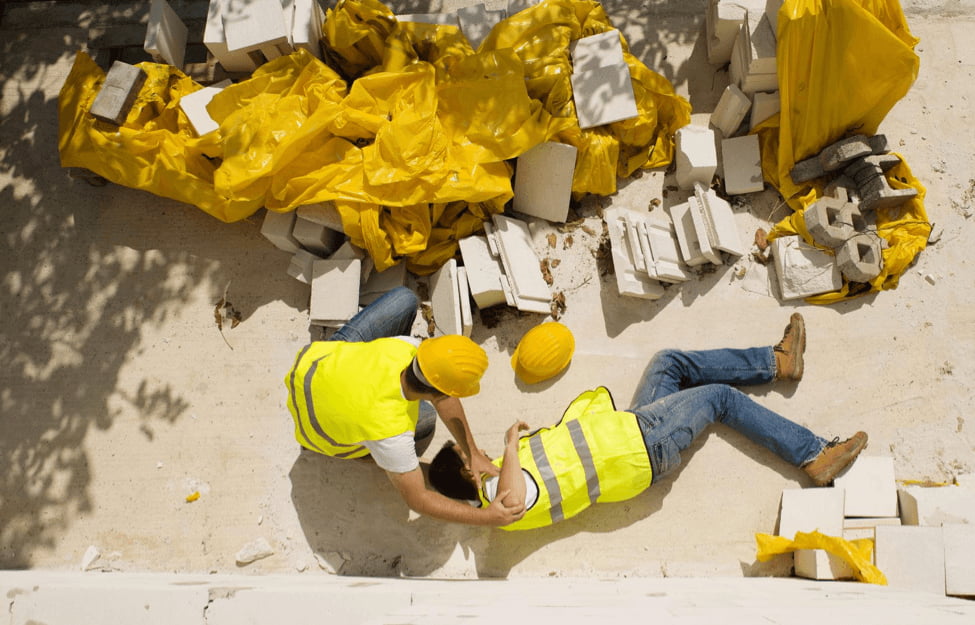
Despite the fact that the rate of serious workplace accidents and injuries is decreasing with a heightened awareness of PPE and good health and safety practices, it’s still crucial for construction workers to stay safe on site. Construction has been identified by the HSE as the most dangerous sector in the UK, with 40 workers losing their lives due to fatal workplace accidents in the period 2019-2020. With site safety in mind, what are the most common injuries and health problems experienced by construction industry workers, and what can we do to prevent these?
Musculoskeletal Injuries
Because workers in the construction sector often perform repetitive and labour-intensive physical tasks, they’re more prone to back pain and sprains, strains and tearing of the ligaments and muscles. Over time, this can lead to musculoskeletal disorders including carpal tunnel syndrome, tendinitis, ‘carpet layers’ knee’, Raynaud’s syndrome, thoracic outlet syndrome and degenerative disc disease. Musculoskeletal injuries of the hand, arms, shoulders and neck may be worsened by failing to wear appropriate PPE such as proper work gloves when using manual tools and equipment. Ensure that you can access the necessary PPE – avoid excessive muscular strain and take a break when you need a rest.
Cuts and Lacerations
Many construction workers use heavy machinery and potentially dangerous raw materials, so it’s no surprise that cuts and lacerations are also common injuries in the sector. Any sharp object can cause a cut or laceration, which could be a potentially life-threatening injury – if you’re a business owner in the construction trade, conduct regular risk assessments to bolster the safety of your sites and reduce the chances of an accident. While it may seem like ‘just a scratch’, a sharp edge could lead to a fatality on site.
Sensory Issues
Construction workers are often exposed to loud noises, which can lead to hearing loss and deafness over time – for this reason, it’s essential that your crew have access to hearing protection when they’re working with heavy machinery or exposed to harmful noise. You must also ensure that your workers select the necessary eye protection to avoid eye damage caused by flying debris, dust and building materials.
Respiratory Disease
Workers in the construction trade may have a higher incidence of respiratory diseases such as silicosis and chronic obstructive pulmonary disease (COPD), which can cause breathing difficulties and damage the lungs. This is often due to inhaling hazardous substances such as chemicals, sawdust and construction dust.
Mental health
Male construction industry workers are more likely to suffer from mental health problems or commit suicide than those in other sectors. Promote well-being in your crew and don’t be afraid to talk about mental health.
Although the rate of accidents and injuries in the construction sector is still relatively high, employers and employees can significantly reduce their likelihood by sticking to health and safety guidelines, following training and making use of the necessary PPE, especially when carrying out potentially dangerous work.
Read Also
- Day Treatment for Mental Health in Pasadena: A Vital Resource
 Key Takeaways In Pasadena, day treatment programs offer a flexible alternative to hospitalization, with approaches tailored to enhance recovery based on the needs of each individual. By focusing on personal strengths and vulnerabilities, personalized care strategies can significantly improve treatment outcomes. This active participation in treatment planning empowers clients in their recovery journeys. Participants in… Read more: Day Treatment for Mental Health in Pasadena: A Vital Resource
 - Childhood Allergies and Asthma: Signs, Triggers, and When to See a PediatricianAllergies and asthma are two of the most common chronic conditions of childhood, and they often travel together. For parents, the challenge is that their signs — coughing, congestion, itchy eyes, wheezing — overlap with ordinary colds, which makes it easy to under-recognize a pattern that deserves attention. Understanding what to watch for helps you… Read more: Childhood Allergies and Asthma: Signs, Triggers, and When to See a Pediatrician
- Newborn Care in the First Weeks: A Practical Guide for New ParentsBringing a newborn home is one of life’s great joys — and, for most parents, one of its most disorienting stretches. The first few weeks are a blur of feeding, diapering, and very little sleep, punctuated by a hundred small questions. A little grounding in the basics makes those weeks less overwhelming and helps you… Read more: Newborn Care in the First Weeks: A Practical Guide for New Parents
- Achilles Tendon Pain: From Tendinitis to Rupture and When to Get HelpThe Achilles is the strongest tendon in the body, and it takes an enormous load with every step, jump, and push-off. It’s also one of the most commonly injured — ranging from a nagging tendinitis that builds over weeks to a sudden, dramatic rupture. Understanding where your pain falls on that spectrum, and when it… Read more: Achilles Tendon Pain: From Tendinitis to Rupture and When to Get Help
- Diabetic Foot Care: Protecting Your Feet and Preventing Serious ComplicationsFor most people, a small blister or a minor cut on the foot is a non-event. For someone living with diabetes, that same small problem can become a serious one — quietly, and faster than expected. Diabetic foot care isn’t about anxiety; it’s about a few consistent habits and knowing which warning signs to never… Read more: Diabetic Foot Care: Protecting Your Feet and Preventing Serious Complications