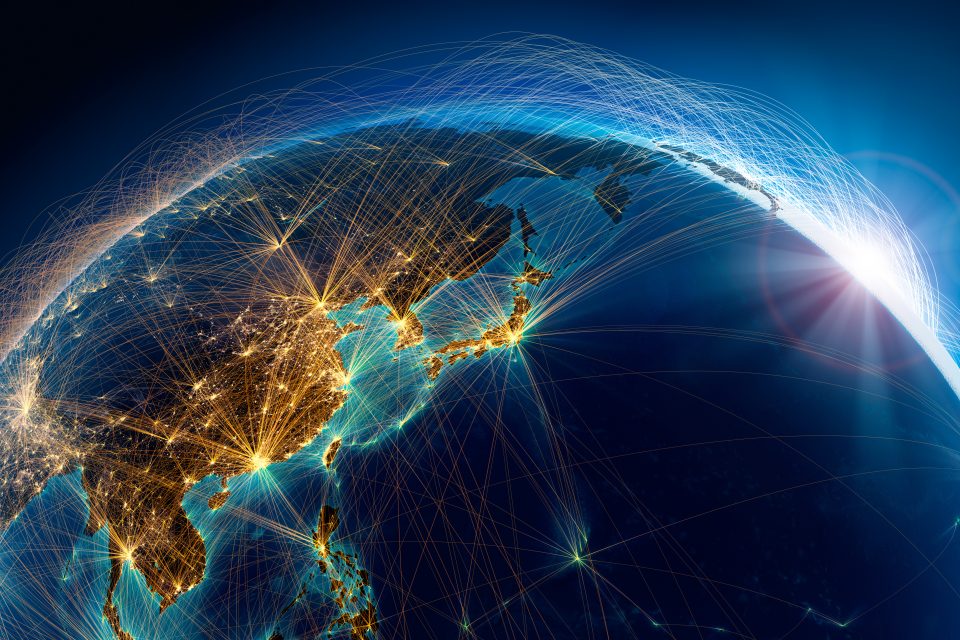
Today, the world is moving towards digitization more rapidly than ever. The digital versions of tools and techniques have replaced the conventional ones. Digital maps have become very prevalent in recent years. The world is using them to know the distance and time needed to reach a certain destination from one point. Nowadays, maps are also accessible on phones with the help of the Internet.
On the other hand, access is very easy; the user never understands how they operate behind the scenes. With the growing prevalence of smartphones across the globe, the MRFR research documents predict that the global digital maps market is anticipated to bolster substantially during the assessment era from 2022 to 2030 at a healthy growth rate of approximately 16 %. The reports further state that the market will likely attain a size of around USD 4,679 Million by the end of 2030.
Digital Map: Definition
A digital map is a real-world digital image coupled with topography. The map is electronic, where you can see all the geographical characteristics, even the man-made characteristics such as roads, with the help of GUI. Moreover, these maps require a massive amount of data accumulated over the years. Then the collected data is converted into a virtual image using software.
The History
Before the rise of internet, paper maps were considered being only choice to find directions or get a look at the geographical features of a certain region. An easy landscape view was offered by these maps. The key concern with these maps is that they are real-time ones. Thus, one can’t see live traffic or roadblocks with these maps. Therefore, paper maps lack certain details about the region. Just like that, if one can get a map of a certain region but cannot zoom into it.
Apart from that, the user can’t upgrade physical maps unless they buy a new version of it. Meanwhile, digital maps keep upgrading using an update offered by the company servers or similarly by synchronization. With the growing prevalence of mobile computing across the globe in recent years, it has become much simpler to find a map of any region with the help of mobile phone along with the internet. So, basically everyone has the accessibility to the maps these days. The world has witnessed a fascinating journey of maps from physical to digital. The easy availability of digital maps is making people’s lives simpler. At present, digital maps operate in conjunction with GPS and the Internet. The user can find their exact location in real time, which is impossible in the case of physical maps.
Apart from that, the present day’s maps are more advanced. The user can discover places of interest right on their phones using maps. They can even find Famous landmarks, Hotels, ATMs, and nearly everything from the real world. These digital maps are also known to offer various views like hybrid view, virtual view, and satellite view. Advanced maps are known to be more user-friendly than physical ones. Likewise, the user can also make a 3D map using the software.
The data
Digital or electronic maps require a massive volume of data. It requires several systems like GIS and remote sensing. It also requires massive satellite descriptions. It is also clear that these maps need a massive number of images gathered by the satellite over the period along with the huge street-level data.
Moreover, the process is not done when the accretion is finished. Constant updating of the collected data is also very important, as the real world changes daily. So, it is very important to update the data regularly. Otherwise, the maps won’t make any sense. These maps should precisely display changing road conditions.
Conclusion
The future possible use cases for these digital maps are yet unknown but seem lucrative. Technology is believed to have limitless application areas and is likely to change the way of living in the future.
Read Also
- Innovative Technologies in Oncology: The Future of Cancer Treatment
 Have you ever wondered how far cancer treatment has come in recent years? Advances in technology are making a real difference in the fight against cancer. Today, more people are living longer and healthier lives after a cancer diagnosis. This is all thanks to new and groundbreaking medical advancements. The future of cancer care looks… Read more: Innovative Technologies in Oncology: The Future of Cancer Treatment
 - Cloud-Based Healthcare Administration Solutions: A Guide for Payers, TPAs, and Provider NetworksHealthcare administration has become too complex for disconnected spreadsheets, aging on-premise applications, and manual handoffs between departments. Organizations need technology that can manage claims, enrollment, billing, provider relationships, and member data as connected parts of the same operation. MCSI – Visova is one example, offering a cloud-native vpaas designed to support HIPAA-compliant healthcare administration. Its… Read more: Cloud-Based Healthcare Administration Solutions: A Guide for Payers, TPAs, and Provider Networks
- How Intelligent Invoice Processing Is Reshaping Healthcare AP WorkflowsWhat happens when healthcare invoice volumes outpace the AP team’s ability to review, validate, and route them, while cost per invoice keeps rising? That gap is pushing finance leaders past basic digitization. Supplier invoices across formats, systems, departments, and approval paths, and holding speed, accuracy, compliance, and visibility together gets harder at scale. Intelligent invoice… Read more: How Intelligent Invoice Processing Is Reshaping Healthcare AP Workflows
- From 1905 to 2026: How German Legacy Manufacturers Power Deutsche Dental Technologien’s SuccessFrom 1905 to 2026: How Busch & Co.’s Legacy Powers Deutsche Dental Technologien’s Success In an era where dental technology advances at breakneck speed, few companies embody the perfect blend of historic craftsmanship and modern business agility quite like Busch & Co. and its strategic partner Deutsche Dental Technologien. What began as a small dental bur factory in… Read more: From 1905 to 2026: How German Legacy Manufacturers Power Deutsche Dental Technologien’s Success
- Why the Future of Healthcare Administration is Cloud-NativeThe operational demands placed on modern healthcare administrators have officially outpaced the capabilities of traditional IT infrastructure. While clinical medicine continues to advance at breakneck speed, the back-office systems required to support it often remain painfully stagnant. Today’s insurers, Third-Party Administrators (TPAs), and provider networks are forced to navigate an avalanche of daily claims, aggressive… Read more: Why the Future of Healthcare Administration is Cloud-Native