
ENT (Ear, Nose, and Throat) surgeons have specialization in diagnosing and treating head and neck conditions.
Compared to the past, otorhinolaryngology procedures have become much easier and less painful, and all credit goes to advanced techniques and equipment.
During a procedure, ENT professionals have to use multiple instruments. One essential tool in their kit is the alligator forceps. This specialized instrument has revolutionized the field of otolaryngology.
Here, we will discuss how advanced alligator nasal forceps have made the job easier for ENT surgeons.
So keep reading to learn something interesting!
Multiple Applications of Advanced Alligator Forceps
Advanced alligator ENT forceps are helpful in a range of ENT procedures.
Primarily, these forceps are used for
- Tissue manipulation
- Extraction of foreign bodies
- Retrieval of small objects
Whether it’s removing polyps, nasal packing, or even extracting earwax, alligator nasal forceps have become indispensable tools for ENT surgeons.
The adaptability and multifunctionality of these forceps have significantly simplified surgical techniques.
In the same context, they have reduced the need for multiple instruments, saving valuable time and making procedures convenient.
Enhanced Maneuverability and Access
The design of advanced alligator forceps provides ENT surgeons with improved maneuverability and access during a procedure.
These forceps feature a long, slender shaft that allows professionals to reach deep within the nasal or throat cavities easily.
The jaws of the forceps can be angled and rotated to access tight spaces, facilitating precise tissue manipulation and foreign object extraction.
As a result, the enhanced maneuverability aids in performing delicate procedures with minimal tissue trauma and reduced risk to surrounding bodily structures.
Better Visualization Of the Surgical Site
Another key advantage of advanced alligator forceps is the incorporation of fiber-optic technology.
Some modern forceps models have built-in lighting systems. Basically, the fiber-optic light source illuminates the surgical area, enhancing visibility for surgeons.
This feature is particularly beneficial in procedures involving confined spaces or when dealing with obscured anatomical structures.
As a result, this advanced technology enables surgeons to work with greater precision and accuracy.
Minimized Trauma and Improved Patient Comfort
Compared to traditional ENT surgical instruments, alligator forceps help minimize trauma and improve patient comfort during an ENT procedure.
The slim design of these forceps allows surgeons to perform procedures with minimal disruption to the surrounding tissues.
This reduces postoperative pain, quickens recovery, and enhances patient satisfaction.
Apart from that, the gentle grip of the forceps minimizes tissue damage.
So these are ideal for delicate procedures in sensitive areas such as the sinuses or ear canal.
Efficient Handling of Delicate ENT Structures
ENT surgeons require careful handling while manipulating delicate structures during otorhinolaryngology procedures.
In such cases, advanced alligator nasal forceps ensure controlled pressure on tissues without causing any damage.
With the adjustable jaws of these forceps, surgeons can grasp and manipulate delicate structures, such as a nasal septum or vocal cords, with improved precision and care.
Overall, the procedures become more efficient and less traumatic.
Easy to Sterilize and Maintain
Modern alligator ENT forceps are made from high-quality materials that can withstand sterilization processes without compromising their functionality.
Owing to this characteristic, ENT surgeons can maintain a sterile environment during procedures, reducing the risk of infections.
Moreover, the ease of sterilization also allows for reusability, making these forceps a cost-effective and sustainable option for healthcare facilities.
Example of Premium-quality Alligator Nasal Forceps
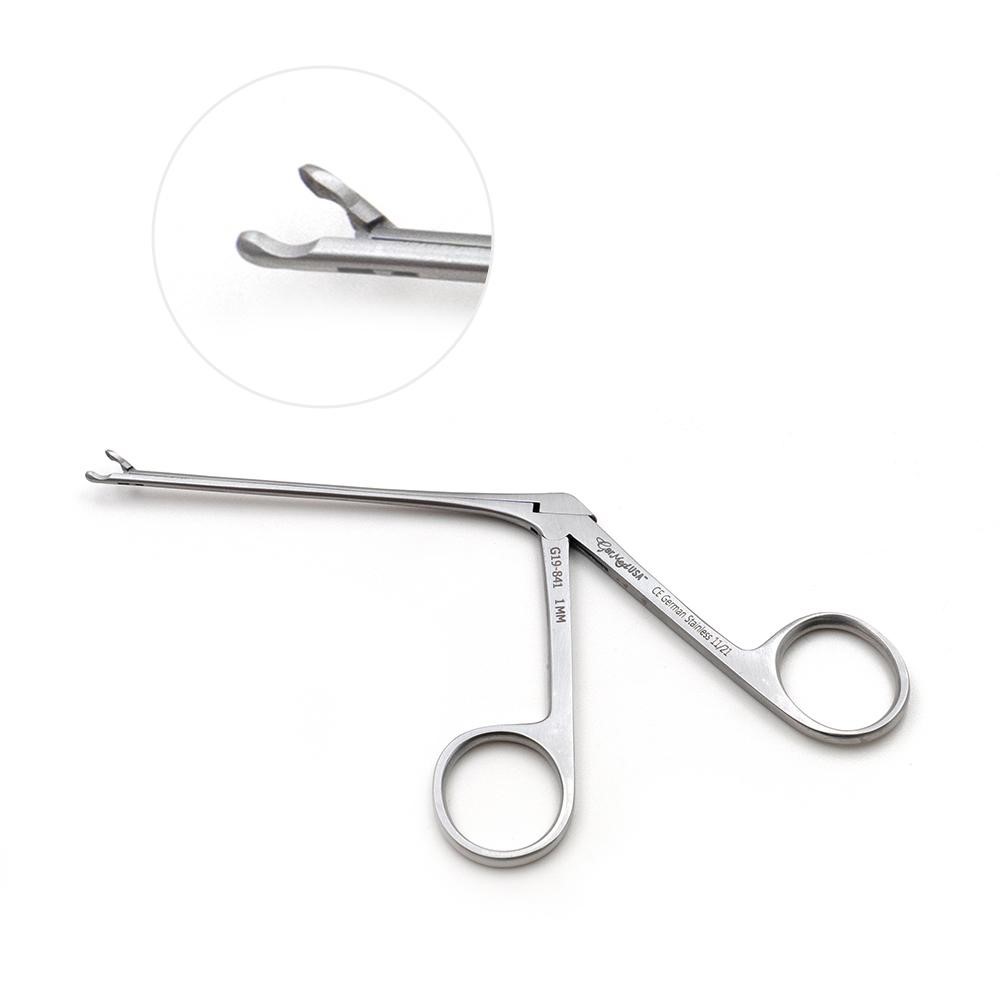
The perfect example of ergonomic design Alligator ear forceps is GerMedUSA Alligator Forceps 3 ¼” Cup. These forceps feature cup-shaped jaws at the end of an angled shank.
Their finger ring handle comfortably fits the ENT surgeon’s hand, providing improved control during the procedure. These are made of medical-grade stainless steel.
Moreover, these forceps are lightweight as compared to previous versions. ENT professionals can use them multiple times with proper upkeep.
Above all, these forceps are available with various jaw sizes to meet the different requirements of otorhinolaryngology specialists.
Buy from Reputable Manufacturers!
The above discussion clearly states that advanced alligator forceps have transformed the field of otolaryngology.
These specialized instruments have minimized trauma and improved the handling of delicate ENT structures and overall surgical efficiency.
However, no matter how advanced the instrument is, if it is made of substandard material or has poor craft.
So buying any kind of surgical instrument from reputable manufacturers and suppliers is crucial.
If you need a surgical tool, don’t miss out on exploring the catalog of GerMedUSA Inc. They have every single instrument with multiple variations to meet the needs of medical professionals. Quality and craft are their priorities.
FAQs
How are advanced alligator forceps different from traditional surgical instruments?
As compared to traditional surgical instruments, advanced alligator forceps have a long, slender shaft, fiber-optic technology, and can be angled and rotated, improving the overall efficiency of ENT procedures.
What are the primary uses of alligator forceps?
In ENT surgeries, these forceps are primarily used for tissue manipulation, extraction of foreign bodies, and retrieval of small objects. Moreover, these are helpful in polyp removal, nasal packing, or earwax extraction.
Are alligator nasal forceps sterilizable for reuse?
Yes, advanced alligator forceps are typically made from high-quality stainless steel. So they are reusable and can withstand sterilization processes. Reusability makes these forceps a cost-effective and sustainable option for healthcare facilities.
Read Also
- Innovative Technologies in Oncology: The Future of Cancer Treatment
 Have you ever wondered how far cancer treatment has come in recent years? Advances in technology are making a real difference in the fight against cancer. Today, more people are living longer and healthier lives after a cancer diagnosis. This is all thanks to new and groundbreaking medical advancements. The future of cancer care looks… Read more: Innovative Technologies in Oncology: The Future of Cancer Treatment
 - Patient Engagement and Pharmaceutical Support Services: Building a Better Patient JourneyPatients rarely experience healthcare as a simple, linear process. They may need to understand a diagnosis, determine whether they qualify for a clinical trial, gather medical records, navigate insurance requirements, arrange transportation, learn how to use a medication, and stay engaged with treatment for months or years. Serva Health is one example of a specialist… Read more: Patient Engagement and Pharmaceutical Support Services: Building a Better Patient Journey
- Cloud-Based Healthcare Administration Solutions: A Guide for Payers, TPAs, and Provider NetworksHealthcare administration has become too complex for disconnected spreadsheets, aging on-premise applications, and manual handoffs between departments. Organizations need technology that can manage claims, enrollment, billing, provider relationships, and member data as connected parts of the same operation. MCSI – Visova is one example, offering a cloud-native vpaas designed to support HIPAA-compliant healthcare administration. Its… Read more: Cloud-Based Healthcare Administration Solutions: A Guide for Payers, TPAs, and Provider Networks
- Industrial Container Recycling and Waste Management Services: A Practical Guide for BusinessesIndustrial container recycling is an essential part of responsible waste management for manufacturers, warehouses, laboratories, automotive businesses, chemical companies, food processors, and other organizations that regularly handle bulk materials. A strong example is Kelly Drums, a Mid-Atlantic provider of reconditioned drums and comprehensive container management solutions. The company specializes in the pickup, recycling, reconditioning, and… Read more: Industrial Container Recycling and Waste Management Services: A Practical Guide for Businesses
- How Intelligent Invoice Processing Is Reshaping Healthcare AP WorkflowsWhat happens when healthcare invoice volumes outpace the AP team’s ability to review, validate, and route them, while cost per invoice keeps rising? That gap is pushing finance leaders past basic digitization. Supplier invoices across formats, systems, departments, and approval paths, and holding speed, accuracy, compliance, and visibility together gets harder at scale. Intelligent invoice… Read more: How Intelligent Invoice Processing Is Reshaping Healthcare AP Workflows