Table of Content
Understanding Major Challenges in Healthcare Claim Denial Management
- Discrepancy In Documentation
- Lack Of Trained Staff Members
- Services already claimed
- Obsolete or Outdated Billing Systems
- Uncovered Service Claim
Financial Impact of Healthcare Claim Denials
Optimizing the procedure
Important Strategies for Managing and Resolving Denials
- Monitor Denials Using a Data-Driven Process
- Manage Denials by Setting Clearly Defined Priorities
- Set KPIs and Share with the Team
- Offer Training On Denial Prevention Training or Outsource
Understanding Major Challenges in Healthcare Claim Denial Management
Healthcare Claim Denials have become a major challenge for healthcare providers and administrators. Such denials not only delay payments but also result in a significant loss in overall revenue, ultimately resulting in financial instability.
If you are a healthcare provider, it is important to understand these challenges because overcoming them will be the first step toward improving efficiency and maximizing healthcare revenue.
This post will not only help you understand the major challenges faced in healthcare claim denial management but also provide actionable strategies to manage and resolve claim denials to help businesses streamline their medical claims denial management.
Let’s understand a few challenges in more detail.
Incorrect or Missing Information
Most health claims denials are caused by inaccurate or missing patient data. For example, a blank field, missing social security number, incorrect plan code, or missing modifier. Such type of missing or incorrect information leads to claim denial.
Lack of Trained Staff Members
Healthcare staff members generally have different roles to fulfill and many administrative tasks to manage. This can lead to paying less attention to the claim denial management process. Most healthcare organizations hand over claim-related tasks to untrained staff members who are not trained in the healthcare claim management process. While entertaining any claim-related queries, these unskilled staff might make certain errors while proceeding with documents, which leads to claim denial.
Coding Errors
Coding errors are one of the leading causes of claim denials in healthcare. These errors occur when incorrect, incomplete, or mismatched codes are used for procedures (CPT), diagnoses (ICD-10), or modifiers. Such inaccuracies can happen due to human error, outdated coding knowledge, or misinterpreting medical records. Even minor mistakes in coding can result in claims being rejected or delayed, impacting revenue and requiring additional time for resubmission and correction.
Obsolete or Outdated Billing Systems
Many healthcare organizations still rely on manual or paper-based processes. These are far less efficient and organized than the latest software. Even today, several healthcare providers still depend on the manual claim denials management process.
The latest billing systems adhere to the most recent insurance standards or billing codes, such as ICD and CPT. These codes play an important role in the claim settlement procedure.
Complexity in Insurance Policies
It might be challenging to understand the complicated and changing rules of insurance programs. The claim may be rejected if it does not satisfy all the particular requirements imposed by the insurer.
Uncovered Service Claim
One of the common reasons for claim denials, after missing information, is submitting claims for services not covered under the patient’s insurance policy. These denials often occur due to a lack of verification or understanding of the specific policy terms and conditions before providing care. Insurance policies frequently include exclusions or limitations on certain services, and without proper checks, healthcare providers may unknowingly bill for uncovered treatments.
Financial Impact of Healthcare Claim Denials
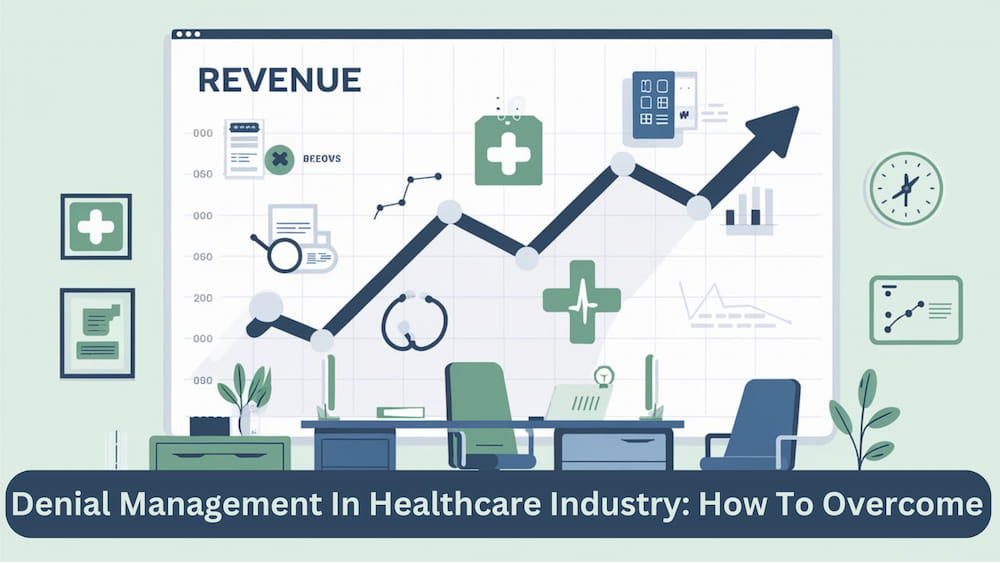
The Healthcare Industry has a significant effect of Claim denials on the financial stability of healthcare providers. In 2022, almost 15% of all claims submitted to private insurers faced initial denial, resulting in significant revenue loss. This process frequently involves a lot of evaluations, which can postpone payments for up to six months, leading to revenue flow interruptions. Furthermore, around 60% of denied claims are never resubmitted, causing additional financial challenges.
How to Optimize the Procedure?
Implementing a denial management system within the healthcare organization could create a systematic approach to tracking rejected claims. This provides a systematic approach to tracking, analyzing, and addressing rejected claims. After analyzing the denial data, the organizations can successfully identify the patterns, such as recurring errors or any payer-related issues, and take corrective action to resolve them. This would help healthcare providers categorize denials based on their primary causes- whether they occur from coding errors, missing information, or payer guidelines.
Moreover, integrating automation tools within the denial management process can significantly improve the overall efficiency of the denial management process. Automated systems can figure out errors before claims are submitted, reducing the chances of rejections and enhancing the overall claims management workflow.
Important Strategies for Managing and Resolving Denials
Effective denial management is the key to improving revenue flow and maintaining financial stability in the long run. But how to do that?
Below are a few strategies businesses can adopt to reduce the rate of claim denials and resolve them quickly.
1. Monitor Denials Using a Data-Driven Process
Healthcare providers can spot trends and reoccurring problems by using data to track claim denials. For example, monitoring which insurance companies deny claims more frequently or which claim types are denied most frequently might help identify areas that require improvement.
Ensuring that each denial is effectively recorded, examined, and handled in a data-driven workflow lowers the possibility of recurring mistakes.
2. Manage Denials by Setting Clearly Defined Priorities
All claim denials are not the same. Some might involve high-value claims that require immediate attention, while others may be much easier to resolve. Prioritizing claims based on factors like revenue impact and complexity helps your team pay more attention to the most critical issues first. This ensures no important claims are overlooked and helps speed up the resolution process.
3. Set KPIs and Share with the Team
Denial management progress is monitored using Key Performance Indicators (KPIs). The overall time it takes to resolve denials, the proportion of refused claims that are successfully resolved, or the overall amount of recovered claims are a few examples.
By sharing these KPIs with your revenue cycle management team, you can ensure that everyone is aware of the goals and is working together to achieve them.
4. Offer Training on Denial Prevention Training
Training is the most important part when it comes to claim denial management. With appropriate training, the staff learns how to avoid mistakes. Major aspects like understanding billing coding such as CPT and ICD, comprehending insurance policies, and preventing documentation errors can be covered in training sessions.
By doing so, healthcare providers can lower the number of claims that are rejected.
5. Outsourcing Denial Management
Managing claim denials in-house can be time-consuming, and for businesses with limited staff or experts, it can be more difficult. Outsourcing denial management to a professional service provider can save time, reduce the chances of errors, and improve efficiency.
Outsourcing denial management has expert teams with specialized knowledge related to claim denial management. With the latest tools and software, the reasons for denial can be easily identified and resolved quickly.
Conclusion
Keeping a healthy revenue cycle in the healthcare industry requires effective handling of medical claims denials. Providers can streamline their procedures and guarantee timely reimbursements by addressing typical challenges with healthcare claims and putting efficient solutions in place. Taking proactive measures is essential to optimizing healthcare revenue, whether outsourcing denial management, modernizing systems, or investing in training.
Did you find this helpful? Check out our other helpful articles on our website.
Read Also
- What Today’s Patients Expect From Healthcare Brands
 Healthcare is no longer experienced only through appointments, prescriptions, or hospital visits. Patients now interact with healthcare brands through websites, mobile applications, educational articles, product instructions, customer support teams, social media, and online reviews. Every one of these interactions influences how people judge a company. This shift has raised expectations. Patients want accurate information, convenient… Read more: What Today’s Patients Expect From Healthcare Brands
 - Top Trends Shaping the Future of Mental Health CareMental health care is moving fast to meet daily human needs. People want direct care that fits modern life. Clinics respond by creating flexible options that make healing easier to reach. Providers look past rigid habits to give people solid care. From smart tools to body wellness, these changes help people find relief when life… Read more: Top Trends Shaping the Future of Mental Health Care
- Can Outsourced Telepsychiatry Help Healthcare Organizations Keep Pace With Modern Mental Health Screening?Mental healthcare is changing quickly, but many hospitals, clinics, schools, correctional facilities, and community health organizations do not have enough psychiatric professionals available to turn new screening approaches into timely clinical care. Outsourced telepsychiatry offers one way to close that gap. FasPsych, for example, connects healthcare organizations with psychiatrists, psychiatric nurse practitioners, and other behavioral… Read more: Can Outsourced Telepsychiatry Help Healthcare Organizations Keep Pace With Modern Mental Health Screening?
- Five operational checks for choking readiness in healthcare facilitiesA facility can have a choking poster on every wall and still be unprepared. Preparedness shows up when someone can recognize the emergency, call the right response, bring the right people and supplies to the room, and hand over clear information without losing time. That test belongs in operations as well as clinical education. The… Read more: Five operational checks for choking readiness in healthcare facilities
- Understanding the Demand for Correctional Healthcare ProfessionalsHave you ever wondered who cares for people when they get sick inside a prison? Many people do not realize that jails and prisons need skilled medical teams every single day. By reading this guide, you will learn why these important jobs are growing fast and how you can join this rewarding career field. Caring… Read more: Understanding the Demand for Correctional Healthcare Professionals
- Patient Engagement and Pharmaceutical Support Services: Building a Better Patient JourneyPatients rarely experience healthcare as a simple, linear process. They may need to understand a diagnosis, determine whether they qualify for a clinical trial, gather medical records, navigate insurance requirements, arrange transportation, learn how to use a medication, and stay engaged with treatment for months or years. Serva Health is one example of a specialist… Read more: Patient Engagement and Pharmaceutical Support Services: Building a Better Patient Journey
- Industrial Container Recycling and Waste Management Services: A Practical Guide for BusinessesIndustrial container recycling is an essential part of responsible waste management for manufacturers, warehouses, laboratories, automotive businesses, chemical companies, food processors, and other organizations that regularly handle bulk materials. A strong example is Kelly Drums, a Mid-Atlantic provider of reconditioned drums and comprehensive container management solutions. The company specializes in the pickup, recycling, reconditioning, and… Read more: Industrial Container Recycling and Waste Management Services: A Practical Guide for Businesses
- BCBA & RBT Salary by State 2026 | Behavior Analyst PayPay in applied behavior analysis is harder to pin down than in almost any other healthcare field. Two professionals with the same certification can earn $40,000 apart for no reason other than the state line between them. So before you accept an offer, ask for a raise, or relocate for a bigger paycheck, it helps… Read more: BCBA & RBT Salary by State 2026 | Behavior Analyst Pay