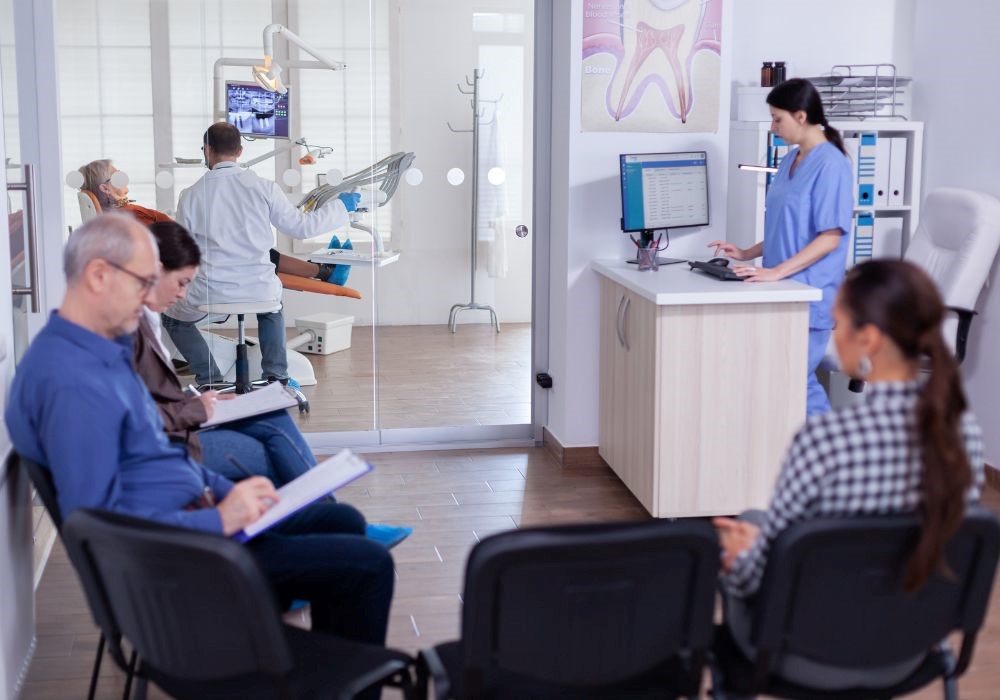
Does your current waiting room make a good first impression? All patients deserve a comfortable waiting area before their appointment. Luckily, you don’t need to remodel the entire space; try these ways to improve your dental office waiting room.
Greet Every Patient
Once a patient steps inside the facility, front desk staff should greet them with a warm and friendly smile and a “hello.” It makes guests feel welcome in a sometimes difficult or stressful environment.
Even if you’re in the middle of booking another appointment or on the phone, acknowledge the patient’s presence by saying something like “be right with you” or “hold on for a moment.” Guests don’t want to feel ignored, so be sure to greet them as soon as they come in.
Choose Comfortable Furniture
No patient wants to sit on uncomfortable furniture while they wait for their appointment. If you don’t enjoy the couch and chairs, why would you expect someone else to? Pick out comfortable furniture such as waiting area chairs, and ensure there’s enough space for everyone to move around comfortably.
Also, choose furniture and flooring that’s easy to clean and maintain. After all, patients don’t want to sit on chairs covered in mystery stains.
Include Personality and Color
Don’t paint all the walls stark white or beige. That’s boring! A bold accent wall can add depth and personality to the space. You could try a shade of blue for a calming effect on patients. Or add a mural of your favorite flower for extra pizazz. Patients appreciate things to admire and view while sitting in the waiting area.
Add decals to the waiting room walls if you’re a pediatric dental office. Kids love animals, trucks, bugs, princesses, dinosaurs, and more. Go above and behind and give each room in the office a theme!
Play Soft Tunes
Soft music helps drown out the sounds of the dental tools in the back. It can help patients feel relaxed. Avoid playing anything too harsh or rough; jazz music or soft pop are two great options to have floating through the speakers. Ensure the music selection is relaxing and tasteful, and avoid playing anything offensive.
Don’t play the speaker system too loudly, either. Professionals need to focus, and patients could be working on something or reading in the waiting area. Search for an ad-free playlist that will continuously play without you having to do a thing.
Be Diligent About Cleaning
No patient will make another appointment at an office littered with trash or dirt. Wipe down all flat surfaces to keep germs at bay. Vacuum before opening the office and after closing to eliminate all outside elements. Also, empty the garbage at the end of the day.
Maintain a thorough and consistent cleaning schedule to stay on top of tasks. Patients will appreciate the clean waiting area.
Add Technology
Use technology to your advantage in the office. Implement messaging technology to remind and confirm patients about appointments to reduce wait times. You can also add a digital screen in the area. Indoor LED screens can bring plenty of benefits to any business, including your dental office. Display any material on a clear, vibrant screen for all customers to read while waiting.
Adding these dental office waiting room improvements can boost business and make patients comfortable. You won’t regret these upgrades.
Read Also
- What Today’s Patients Expect From Healthcare Brands
 Healthcare is no longer experienced only through appointments, prescriptions, or hospital visits. Patients now interact with healthcare brands through websites, mobile applications, educational articles, product instructions, customer support teams, social media, and online reviews. Every one of these interactions influences how people judge a company. This shift has raised expectations. Patients want accurate information, convenient… Read more: What Today’s Patients Expect From Healthcare Brands
 - Top Trends Shaping the Future of Mental Health CareMental health care is moving fast to meet daily human needs. People want direct care that fits modern life. Clinics respond by creating flexible options that make healing easier to reach. Providers look past rigid habits to give people solid care. From smart tools to body wellness, these changes help people find relief when life… Read more: Top Trends Shaping the Future of Mental Health Care
- Can Outsourced Telepsychiatry Help Healthcare Organizations Keep Pace With Modern Mental Health Screening?Mental healthcare is changing quickly, but many hospitals, clinics, schools, correctional facilities, and community health organizations do not have enough psychiatric professionals available to turn new screening approaches into timely clinical care. Outsourced telepsychiatry offers one way to close that gap. FasPsych, for example, connects healthcare organizations with psychiatrists, psychiatric nurse practitioners, and other behavioral… Read more: Can Outsourced Telepsychiatry Help Healthcare Organizations Keep Pace With Modern Mental Health Screening?
- Five operational checks for choking readiness in healthcare facilitiesA facility can have a choking poster on every wall and still be unprepared. Preparedness shows up when someone can recognize the emergency, call the right response, bring the right people and supplies to the room, and hand over clear information without losing time. That test belongs in operations as well as clinical education. The… Read more: Five operational checks for choking readiness in healthcare facilities
- Understanding the Demand for Correctional Healthcare ProfessionalsHave you ever wondered who cares for people when they get sick inside a prison? Many people do not realize that jails and prisons need skilled medical teams every single day. By reading this guide, you will learn why these important jobs are growing fast and how you can join this rewarding career field. Caring… Read more: Understanding the Demand for Correctional Healthcare Professionals
- Patient Engagement and Pharmaceutical Support Services: Building a Better Patient JourneyPatients rarely experience healthcare as a simple, linear process. They may need to understand a diagnosis, determine whether they qualify for a clinical trial, gather medical records, navigate insurance requirements, arrange transportation, learn how to use a medication, and stay engaged with treatment for months or years. Serva Health is one example of a specialist… Read more: Patient Engagement and Pharmaceutical Support Services: Building a Better Patient Journey
- Industrial Container Recycling and Waste Management Services: A Practical Guide for BusinessesIndustrial container recycling is an essential part of responsible waste management for manufacturers, warehouses, laboratories, automotive businesses, chemical companies, food processors, and other organizations that regularly handle bulk materials. A strong example is Kelly Drums, a Mid-Atlantic provider of reconditioned drums and comprehensive container management solutions. The company specializes in the pickup, recycling, reconditioning, and… Read more: Industrial Container Recycling and Waste Management Services: A Practical Guide for Businesses