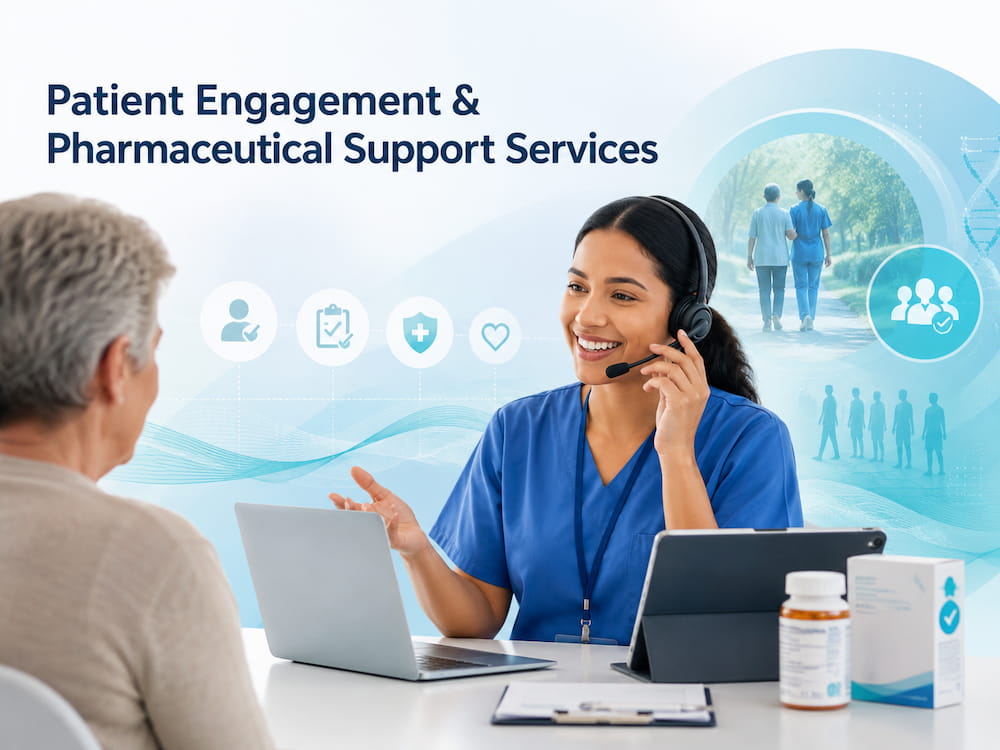
Patients rarely experience healthcare as a simple, linear process. They may need to understand a diagnosis, determine whether they qualify for a clinical trial, gather medical records, navigate insurance requirements, arrange transportation, learn how to use a medication, and stay engaged with treatment for months or years. Serva Health is one example of a specialist helping pharmaceutical companies manage these challenges. Through its 24/7, nurse-staffed global support model, the company provides patient engagement services for clinical trial recruitment and commercial programs, including pre-screening, complex referral management, retention initiatives, nurse-led patient support programs, and reimbursement assistance. Its approach to pharma hub services helps connect patients, healthcare providers, payers, specialty pharmacies, research sites, and pharmaceutical manufacturers. By combining experienced nurses, purpose-built technology, and program management, Serva Health helps pharmaceutical companies improve patient outcomes, reduce administrative friction, and manage patient programs more effectively from initial outreach through ongoing treatment.
Patient engagement is sometimes treated as a communications function—a series of reminders, educational messages, or call-center interactions. In reality, effective engagement reaches much deeper. It addresses the practical, emotional, clinical, and financial barriers that can prevent someone from joining a study, starting a prescribed therapy, or remaining on treatment.
For pharmaceutical and biotechnology companies, these services can influence clinical development timelines, commercial performance, patient satisfaction, data quality, and long-term health outcomes. The strongest programs do not merely send information to patients. They help patients move through complicated healthcare processes with fewer unanswered questions and fewer opportunities to disengage.
What Are Patient Engagement and Pharmaceutical Support Services?
Patient engagement and pharmaceutical support services are coordinated programs that help people understand, access, begin, and continue a clinical study or prescribed therapy.
The exact services depend on the product, disease area, development phase, patient population, and commercial model. A clinical trial recruitment program, for example, has different objectives from a post-launch support program for a specialty medication. However, both require accurate communication, responsive assistance, careful documentation, and effective coordination among multiple stakeholders.
A comprehensive program may include:
- Patient and caregiver education
- Clinical trial pre-screening
- Medical record retrieval and review
- Investigative-site referrals
- Laboratory and diagnostic test coordination
- Appointment reminders and follow-up
- Travel and logistical support
- Benefits verification
- Prior authorization support
- Copay or financial assistance navigation
- Medication onboarding
- Nurse-led adherence support
- Side-effect education within an approved program
- Refill reminders
- Patient relationship management technology
- Program analytics and reporting
These functions should not operate as isolated activities. A patient who receives an educational call but cannot resolve an insurance issue may still abandon treatment. A potential study participant who completes a pre-screener but waits too long for a site appointment may enroll elsewhere or lose interest.
Successful engagement requires continuity.
Why Patient Engagement Matters to Pharmaceutical Companies
Drug development and commercialization depend on more than scientific evidence and regulatory approval. A therapy must ultimately reach an appropriate patient, and that patient must be able to begin and continue treatment safely.
The U.S. Food and Drug Administration describes patient-focused drug development as a systematic approach for capturing and meaningfully incorporating patients’ experiences, needs, priorities, and perspectives into drug development and evaluation.
That principle has practical implications. Patients may value outcomes that are not obvious from a clinical endpoint alone. They may also face burdens that study sponsors, program designers, and healthcare professionals underestimate.
A treatment journey can break down because of:
- Confusing eligibility requirements
- Delayed communication from a research site
- Transportation difficulties
- Complex insurance documentation
- Uncertainty about treatment expectations
- Fear of side effects
- Financial concerns
- Language or health-literacy barriers
- Caregiver responsibilities
- Long travel distances
- Repetitive administrative requests
- A lack of follow-up after the first prescription
Patient engagement services identify and address these obstacles before they result in missed appointments, delayed therapy, medication abandonment, or study withdrawal.
Clinical Trial Recruitment: More Than Finding Interested Patients
Clinical trial recruitment is often discussed as a marketing challenge. Sponsors may invest in digital advertising, physician outreach, patient databases, advocacy partnerships, or social media campaigns to generate interest.
Generating inquiries is only the first step.
A person who responds to a trial advertisement may not understand the protocol, eligibility criteria, time commitment, travel requirements, testing process, or possibility of receiving a control intervention. Some candidates will clearly be ineligible, while others may need medical records or additional tests before a meaningful eligibility assessment can occur.
A nurse-led recruitment program can help prospective participants understand what happens next without asking research sites to handle every initial inquiry.
Serva Health’s clinical trial services include nurse-guided pre-screening, secondary screening, medical record retrieval, chart review, pre-referral testing, complex referral support, site follow-up, end-to-end patient tracking, and retention programs. Its registered nurses guide potential participants through preliminary qualification and refer appropriate candidates to investigative sites.
This process can improve the quality of referrals. Research sites receive candidates who have already completed relevant preliminary steps rather than a long list of unverified leads.
The Value of Patient Pre-Screening
Pre-screening helps determine whether a patient appears to meet basic study requirements before a full site evaluation.
A well-designed pre-screening conversation may review factors such as age, diagnosis, treatment history, current medications, laboratory results, geographic location, previous procedures, and willingness to meet study requirements.
The objective is not to replace the investigator’s eligibility determination. It is to reduce unnecessary referrals while helping suitable patients move forward.
Nurses can be particularly valuable in this stage because they are accustomed to discussing medical information with patients and caregivers. They can explain unfamiliar terminology, recognize when an answer needs clarification, and identify issues that may require escalation.
Human interaction also matters when the condition is serious, rare, or emotionally difficult. A rigid online form may collect data, but it cannot always respond appropriately when a patient is frightened, confused, or unsure how to answer.
Complex Referral Management
Referral management is one of the least visible but most important parts of clinical trial recruitment.
Consider a rare-disease study that requires genetic testing before a patient can be referred to an investigative site. The patient may need help locating a testing facility, scheduling an appointment, arranging transportation, obtaining an order from a physician, confirming insurance coverage, and ensuring that results reach the correct study team.
Without active coordination, each handoff creates another opportunity for delay.
Complex referral management can include:
- Scheduling laboratory or diagnostic testing
- Coordinating medical record collection
- Following up with physicians
- Helping patients understand required steps
- Confirming completion of pre-referral activities
- Transferring qualified referrals to study sites
- Monitoring whether the site contacts the patient
- Escalating stalled referrals
- Recording the patient’s progress in a central platform
This closed-loop approach is more effective than simply sending a patient’s contact details to a research site and assuming the process will continue.
Serva Health describes referral support as a way to reduce the burden created by increasingly complex protocols, particularly in rare-disease studies where every potentially eligible participant may be important.
Improving Clinical Trial Retention
Recruitment receives substantial attention because a study cannot begin without participants. Retention, however, is equally important.
A patient may withdraw after enrollment because appointments become difficult to manage, travel is exhausting, study instructions are unclear, communications feel impersonal, or the burden is greater than expected.
Retention cannot be repaired with reminders alone. A useful program begins by understanding what participation requires from the patient and caregiver.
The National Institute of Mental Health recommends addressing recruitment and retention during study planning rather than waiting until enrollment problems appear. Its clinical research recruitment and retention considerations highlight issues such as community engagement, study-team preparedness, informed consent, participant burden, and realistic enrollment planning.
Retention support may involve:
- Appointment and medication reminders
- Diary-completion reminders
- Transportation coordination
- Milestone messages
- Regular nurse check-ins
- Caregiver communications
- Re-engagement of patients at risk of being lost to follow-up
- Site coordination
- Clear answers to nonclinical program questions
- Escalation pathways for medical concerns
The tone of these interactions matters. Patients should not feel pressured to remain in research. They should feel informed, respected, and supported in making their own decisions.
Commercial Patient Support Programs
Once a therapy reaches the market, a different set of barriers emerges.
A physician may prescribe the right medication, but the patient could still wait days or weeks while coverage is verified. The payer may request prior authorization, step-therapy documentation, laboratory results, or proof of diagnosis. The patient may discover an unaffordable out-of-pocket cost or may not understand how to obtain the drug from a specialty pharmacy.
Commercial patient support programs, often called PSPs, help manage this journey.
These programs may support:
- Benefits investigation
- Coverage verification
- Prior authorization coordination
- Appeals assistance
- Copay support
- Patient assistance program referrals
- Specialty pharmacy coordination
- Medication onboarding
- Product education
- Nurse navigation
- Adherence outreach
- Refill reminders
- Treatment persistence
- Case documentation
- Program reporting
The support model should reflect the therapy and patient population. A self-administered medication for a common condition may require a different level of engagement from an infused biologic for a rare disease.
How Pharma Hub Services Improve Access
A pharmaceutical hub acts as a central coordination point between the manufacturer, patient, prescriber, payer, and dispensing pharmacy.
The hub does not replace these stakeholders. It helps information and tasks move between them.
For example, after receiving an enrollment form or prescription, the hub may verify insurance benefits, identify coverage requirements, alert the prescriber that additional documentation is needed, connect the patient with financial assistance resources, and coordinate the prescription’s transfer to a specialty pharmacy.
Without this coordination, the patient or physician’s office may be forced to contact several organizations independently.
A well-managed hub can make the process easier to follow by creating one case record, assigning responsibility for outstanding actions, documenting communications, and providing status updates.
This is particularly valuable for specialty therapies, where access may involve narrow distribution networks, complex administration requirements, limited insurance coverage, or significant patient costs.
Reimbursement and Prior Authorization Support
Prior authorization is one of the most common points of friction in medication access.
A payer may require the prescribing clinician to submit evidence that the patient meets specific coverage criteria. Missing documentation, incorrect forms, or unanswered requests can delay a decision.
Patient support teams may help by identifying requirements, notifying the provider, monitoring the request, and documenting its outcome. They must operate within the program’s approved responsibilities and cannot make coverage decisions on behalf of a payer.
CMS continues to promote electronic prior authorization as a way to reduce administrative burden and improve patient access to care. CMS also recognizes that pharmaceutical manufacturers may sponsor patient assistance programs that provide financial help or free products to qualifying individuals.
Reimbursement support can include:
- Benefits verification
- Estimated patient cost information
- Prior authorization status tracking
- Documentation checklists
- Coverage-denial education
- Appeal coordination
- Copay program screening
- Patient assistance program screening
- Referral to independent foundations when appropriate
- Specialty pharmacy coordination
These services should be delivered carefully and consistently. Patients need accurate information, while pharmaceutical companies need controls that support privacy, compliance, and appropriate program use.
Why Nurse-Led Patient Support Programs Stand Out
Technology can automate forms, messages, and workflow routing. It cannot replace every human conversation.
Nurses bring clinical experience and communication skills to patient support programs. They can recognize when a patient does not fully understand instructions, adapt explanations to the patient’s level of health literacy, and identify concerns that should be escalated to the treating healthcare professional.
A nurse-led PSP may help patients:
- Understand how a support program works
- Prepare for treatment
- Follow administration instructions approved for the program
- Develop questions to discuss with their clinician
- Recognize the importance of follow-up appointments
- Navigate practical obstacles
- Stay connected during long treatment journeys
Nurses working in these programs must remain within clearly defined roles. They are not substitutes for the patient’s physician, and they should not provide independent medical advice outside approved protocols.
Serva Health’s commercial model includes a nurse navigator team, access and reimbursement assistance, adherence services, treatment education, omnichannel communications, and support for rare and orphan diseases. Its commercial patient engagement center is staffed by registered nurses and is designed for pharmaceutical programs.
The Role of Technology in Patient Program Management
A patient support program may involve thousands of interactions across telephone, email, text messaging, web forms, mobile applications, research sites, prescribers, pharmacies, and payers.
Without a central technology platform, teams may struggle to determine:
- Which patients require follow-up
- Whether a referral reached the site
- Which documents are missing
- How long a reimbursement case has been open
- Whether a patient received an educational call
- Which communication permissions apply
- Whether service-level requirements are being met
- Where patients are leaving the process
Purpose-built patient relationship management technology can organize these activities into structured workflows.
Serva Health uses its ServaCore platform to support patient tracking, referral management, communications, site portals, reporting, and clinical trial recruitment and retention. The platform is described as cloud-based and designed specifically for patient engagement programs.
Technology is most valuable when it supports the care team rather than creating more administrative work. Nurses and program specialists need a clear view of the patient’s case, upcoming tasks, communication history, and escalation requirements.
Omnichannel Engagement Without Overwhelming Patients
Patients have different communication preferences. Some want telephone support, while others prefer text messages, email, secure portals, or mobile applications.
An omnichannel program allows communication to continue across approved channels without losing context. A patient might begin with a web form, speak with a nurse by telephone, receive an appointment reminder by text, and later access educational resources through a portal.
More channels do not automatically produce better engagement. Too many messages can feel intrusive, especially when several vendors contact the same patient.
Program designers should consider:
- Patient consent
- Communication preferences
- Appropriate contact frequency
- Time zones
- Language requirements
- Accessibility needs
- Caregiver involvement
- Sensitive-content handling
- Easy opt-out processes
- Escalation to human support
The goal is to make support available, not to surround the patient with automated messages.
Measuring Patient Engagement Program Performance
Call volume alone does not show whether a program is helping patients.
Metrics should connect operational activity with meaningful progress through the patient journey.
For a clinical trial program, useful measures may include:
- Number of inquiries
- Pre-screener completion rate
- Preliminary qualification rate
- Referral rate
- Time from inquiry to site referral
- Site-contact rate
- Screening appointment completion
- Enrollment rate
- Referral fallout reasons
- Participant retention
- Lost-to-follow-up recovery
- Patient satisfaction
For a commercial support program, metrics may include:
- Time from prescription to program enrollment
- Time to benefits verification
- Prior authorization completion rate
- Time to therapy
- Treatment-start rate
- Medication abandonment
- Adherence or persistence indicators
- Patient assistance enrollment
- Case-resolution time
- Nurse-contact completion
- Escalation volume
- Patient and provider satisfaction
Program leaders should interpret metrics carefully. A low qualification rate may reflect broad outreach rather than poor nurse performance. A longer call time may indicate that nurses are serving a population with complex needs rather than operating inefficiently.
Numbers should help teams investigate the patient experience, not reduce it to a dashboard.
Privacy, Compliance, and Quality Oversight
Patient engagement programs handle sensitive health, demographic, financial, and insurance information. Their processes must be designed around privacy, security, consent, documentation, and role-based access.
Depending on the program, organizations may need to address:
- HIPAA requirements
- International privacy laws
- Informed consent
- Good Clinical Practice
- Pharmacovigilance reporting
- Product complaint handling
- Adverse-event escalation
- Approved communication scripts
- Data-retention requirements
- Vendor oversight
- Training documentation
- Quality audits
- Business continuity
- Technology security
Program staff must know how to recognize and escalate information that could represent an adverse event, product quality complaint, or urgent patient safety concern.
Compliance should be built into workflows rather than handled as a final review step. Scripts, forms, call routing, permissions, reporting deadlines, and case documentation should all reflect the program’s requirements.
Choosing a Patient Engagement Services Partner
Pharmaceutical companies should evaluate more than price and call-center capacity.
A suitable partner needs the experience, staffing, technology, quality controls, and operational flexibility to support the program’s specific patient population.
Key questions include:
- Are clinical interactions handled by appropriately trained nurses?
- Can services operate globally and outside standard business hours?
- How are complex referrals tracked from inquiry to completion?
- Can the partner support both clinical and commercial programs?
- How quickly can workflows and scripts be configured?
- What reporting is available to sponsors?
- How are adverse events and product complaints escalated?
- What languages and communication channels are supported?
- How is patient data protected?
- Can the program expand when volume increases?
- How are staff trained and monitored?
- Who is responsible for day-to-day program management?
The partner should also be willing to challenge assumptions. A patient journey designed around internal departments may look efficient on paper while remaining difficult for the patient.
Building a Successful Program
The strongest programs begin with patient-journey mapping.
The team should document every step from initial awareness to the intended outcome. For a clinical trial, that outcome might be referral, enrollment, or study completion. For a commercial program, it might be treatment initiation, reimbursement approval, or long-term persistence.
At each step, ask:
- What does the patient need to do?
- What information does the patient receive?
- Who owns the next action?
- How long can the step take?
- What could cause the patient to stop?
- What support can prevent that problem?
- How will progress be recorded?
- When should the case be escalated?
The program can then be designed around real obstacles rather than a generic service list.
A successful launch also requires testing. Teams should walk through typical cases, difficult cases, urgent escalations, missing-document scenarios, language needs, after-hours calls, system interruptions, and handoffs to outside organizations.
Frequently Asked Questions
What is a pharmaceutical patient support program?
A pharmaceutical patient support program helps eligible patients access, understand, begin, or continue a prescribed therapy. Services may include benefits verification, financial assistance navigation, nurse education, reimbursement support, adherence outreach, and specialty pharmacy coordination.
What is a pharma hub?
A pharma hub is a centralized service that coordinates tasks among patients, manufacturers, prescribers, insurers, and specialty pharmacies. It may support benefits verification, prior authorization, financial assistance, treatment onboarding, and ongoing patient services.
How do nurses improve patient engagement?
Nurses can explain complex information in understandable language, respond to patient concerns within approved protocols, identify needs for escalation, and provide a consistent human connection throughout a study or treatment journey.
How does patient engagement support clinical trial recruitment?
Patient engagement teams can respond to inquiries, conduct pre-screening, retrieve records, coordinate tests, arrange referrals, follow up with sites, and help prospective participants understand the steps involved.
What is complex referral management?
Complex referral management coordinates the tasks required before a patient reaches a clinical trial site or treatment provider. This may include record retrieval, laboratory testing, transportation, appointment scheduling, and closed-loop follow-up.
Can patient engagement services improve retention?
They can reduce avoidable barriers by providing reminders, logistical coordination, nurse check-ins, education, caregiver support, and timely follow-up. Retention ultimately depends on the study, treatment, patient experience, and many other factors.
What should pharmaceutical companies measure?
Measures should include patient progress, turnaround times, access barriers, case outcomes, referral completion, treatment starts, retention, adherence indicators, service quality, and patient satisfaction—not merely the number of calls made.
Conclusion
Patient engagement and pharmaceutical support services connect the scientific and operational sides of medicine with the day-to-day realities patients face.
A promising therapy cannot improve outcomes when patients cannot access it. A clinical trial cannot answer its research question when eligible participants become lost between an advertisement, a laboratory test, and a research site. A patient support program cannot succeed when it distributes information but leaves patients alone to navigate insurance, specialty pharmacy requirements, and treatment logistics.
Nurse-led support, coordinated referral management, reimbursement assistance, retention initiatives, purpose-built technology, and accountable program management can close these gaps.
For pharmaceutical companies, the objective should not be to create more patient touchpoints. It should be to make each interaction useful. When support is timely, compassionate, compliant, and connected, patients encounter fewer administrative barriers, program teams gain better visibility, and healthcare organizations are better positioned to deliver therapies and clinical research opportunities effectively.
Did you find this helpful? Check out our other helpful articles on our website.
Read Also
- Can Outsourced Telepsychiatry Help Healthcare Organizations Keep Pace With Modern Mental Health Screening?
 Mental healthcare is changing quickly, but many hospitals, clinics, schools, correctional facilities, and community health organizations do not have enough psychiatric professionals available to turn new screening approaches into timely clinical care. Outsourced telepsychiatry offers one way to close that gap. FasPsych, for example, connects healthcare organizations with psychiatrists, psychiatric nurse practitioners, and other behavioral… Read more: Can Outsourced Telepsychiatry Help Healthcare Organizations Keep Pace With Modern Mental Health Screening?
 - Five operational checks for choking readiness in healthcare facilitiesA facility can have a choking poster on every wall and still be unprepared. Preparedness shows up when someone can recognize the emergency, call the right response, bring the right people and supplies to the room, and hand over clear information without losing time. That test belongs in operations as well as clinical education. The… Read more: Five operational checks for choking readiness in healthcare facilities
- Understanding the Demand for Correctional Healthcare ProfessionalsHave you ever wondered who cares for people when they get sick inside a prison? Many people do not realize that jails and prisons need skilled medical teams every single day. By reading this guide, you will learn why these important jobs are growing fast and how you can join this rewarding career field. Caring… Read more: Understanding the Demand for Correctional Healthcare Professionals
- Innovative Technologies in Oncology: The Future of Cancer TreatmentHave you ever wondered how far cancer treatment has come in recent years? Advances in technology are making a real difference in the fight against cancer. Today, more people are living longer and healthier lives after a cancer diagnosis. This is all thanks to new and groundbreaking medical advancements. The future of cancer care looks… Read more: Innovative Technologies in Oncology: The Future of Cancer Treatment
- Patient Engagement and Pharmaceutical Support Services: Building a Better Patient JourneyPatients rarely experience healthcare as a simple, linear process. They may need to understand a diagnosis, determine whether they qualify for a clinical trial, gather medical records, navigate insurance requirements, arrange transportation, learn how to use a medication, and stay engaged with treatment for months or years. Serva Health is one example of a specialist… Read more: Patient Engagement and Pharmaceutical Support Services: Building a Better Patient Journey
- Cloud-Based Healthcare Administration Solutions: A Guide for Payers, TPAs, and Provider NetworksHealthcare administration has become too complex for disconnected spreadsheets, aging on-premise applications, and manual handoffs between departments. Organizations need technology that can manage claims, enrollment, billing, provider relationships, and member data as connected parts of the same operation. MCSI – Visova is one example, offering a cloud-native vpaas designed to support HIPAA-compliant healthcare administration. Its… Read more: Cloud-Based Healthcare Administration Solutions: A Guide for Payers, TPAs, and Provider Networks
- Industrial Container Recycling and Waste Management Services: A Practical Guide for BusinessesIndustrial container recycling is an essential part of responsible waste management for manufacturers, warehouses, laboratories, automotive businesses, chemical companies, food processors, and other organizations that regularly handle bulk materials. A strong example is Kelly Drums, a Mid-Atlantic provider of reconditioned drums and comprehensive container management solutions. The company specializes in the pickup, recycling, reconditioning, and… Read more: Industrial Container Recycling and Waste Management Services: A Practical Guide for Businesses
- How Intelligent Invoice Processing Is Reshaping Healthcare AP WorkflowsWhat happens when healthcare invoice volumes outpace the AP team’s ability to review, validate, and route them, while cost per invoice keeps rising? That gap is pushing finance leaders past basic digitization. Supplier invoices across formats, systems, departments, and approval paths, and holding speed, accuracy, compliance, and visibility together gets harder at scale. Intelligent invoice… Read more: How Intelligent Invoice Processing Is Reshaping Healthcare AP Workflows