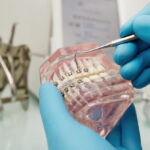
Apart from denting your image, losing teeth also affects your functionality. There’s always the dilemma of wondering if you can still eat and speak normally. Choosing upper dentures can be overwhelming, especially when you picture the age-old images of toothless sleepers placing their teeth in a glass of water beside them. The beauty of modern denture technology is that it’s less intrusive, has appealing aesthetics, is a perfect fit, and has a broader range of options.
When choosing dentures, the number of missing teeth will determine whether you will have a full or partial denture. A partial denture means replacing a few missing teeth. In contrast, a complete denture means replacing all the teeth on the lower, upper jaw or both. Here’s a guide on how to choose the best type of dentures.
Full Lower Dentures
Muscles and gums keep the lower dentures in place. That’s why you can’t have hybrid or metal dentures on your lower dentures. Your prosthetist will explain to you the benefits of acrylic lower dentures. Suppose you have a problem with full lower denture retention. In that case, your prosthetist may advise using implant-retained or snap-in dentures.
Full Upper Dentures
Complete upper dentures, or full upper plates, are held in place by suction. The entire upper plate is covered in gum-coloured acrylic that is natural looking and comes in different grades. Each grade differs by price, quality and manufacturing process. They may come in grades, but the lower-grade dentures are equally comfortable. Full upper or lower dentures are ideal for anyone without bone loss or gum sensitivity.
Implant-Retained Dentures
Dental implants are made of titanium posts fitted into the jaw to hold overdentures or implant-retained dentures. Your healthy bone density will determine whether it’s a good option.
There are minimal chances of breakdown of retained dentures since you undergo oral surgery that ensures lower jaw denture stability. Although the procedure can come at a much higher price, you have comfortable dentures that allow you to speak and eat normally.
Immediate Dentures
Just like the name, immediate dentures are inserted immediately after tooth extraction. In this case, your prosthetist conducts a preliminary examination awaiting extraction and fitting. And fortunately, you don’t have to wait with missing teeth for your dentures to be crafted. The advantage is that it assists in gum healing and mouth and gum tissue adjustment.
Partial Dentures
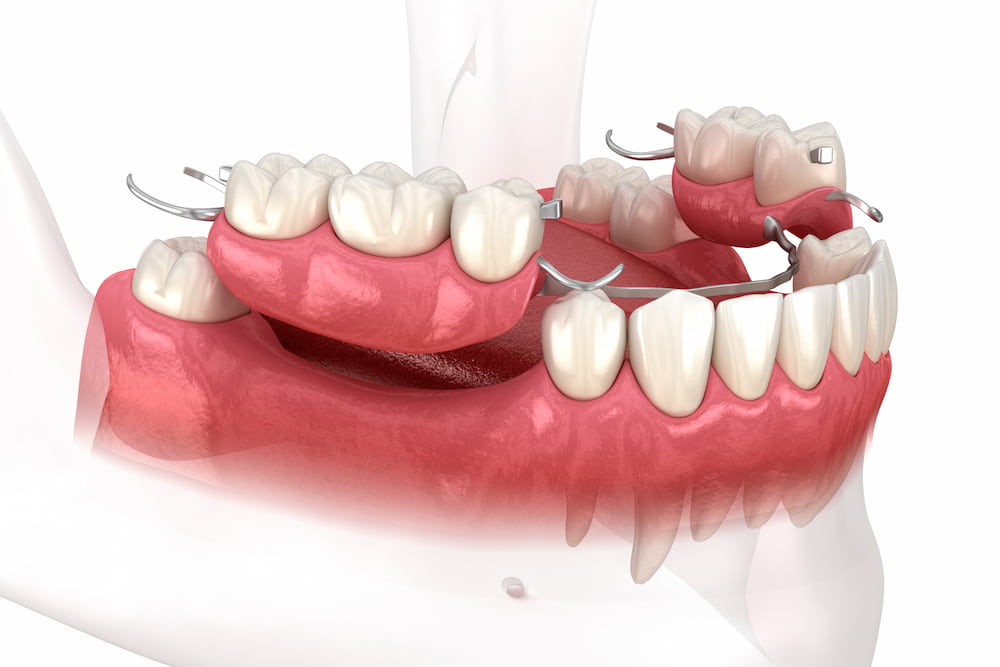
There’re many options available when it comes to partial dentures. You can choose from chrome cobalt dentures, which are very light, hybrid chrome ThermoSens or standard acrylic dentures. They’re comfortable and a great fit.
Like complete dentures, you can customise your design depending on how many teeth are missing or your preferred tooth quality. They come in different shades, some looking like 3D due to natural light reflection.
If you lose just a few teeth, a bridge will be inserted to hold the denture to your gums. Sometimes a prosthetist may use dental cement to prevent the denture from dislocation while chewing.
Custom Dentures
Custom dentures are costlier than complete or partial dentures. The difference in pricing is the material used for the dentures and the fact that it is completely customised to fit you. And you’ll pay more to ensure the final outlook is as natural as possible.
Traditional moulding techniques and digital oral scans help to ensure it complements your style and gives a natural feel to your mouth. You can view the virtual results and make any adjustments before it is crafted and fits into your gums.
Snap-In Dentures
Snap-in dentures, also called precision partial dentures, are the most stable despite their removability. Anchors fixed on dental implants or existing teeth help secure the snap-in dentures. They have locator attachments embedded on the tissue side of the denture.
They can be used on toothless patients or as partial dentures for people with missing teeth. Snap-in dentures are convenient since they are removable.
Other dentures available in the market include economy dentures, upper dentures, and overdentures. Economy dentures are generic and may not fit perfectly in your mouth, so they might be a bit uncomfortable.
Conclusion
The cost of the denture will depend on how much customisation goes into it. In short, the more customisation, the higher the price. While cost may be a limiting factor, you should note that even the less costly dentures work just as well as the expensive ones. The advantage of customised dentures is the comfort and much more natural look.
Before settling on a denture type, consult your clinician and review the pros and cons of each denture. Explain to the clinician your expectations after the procedure.
When you’re ready to get yours or would like to know other options, you can check out this family dentist in Ballwin to get started.
Read Also
- How to Incorporate Relaxation into Your Busy Schedule
 Finding balance when you have a packed daily agenda often feels out of reach. Between work duties, family obligations, and personal projects, personal rest usually gets pushed to the bottom of the list. Small, intentional shifts in daily habits can help restore calm without requiring hours of extra free time. Continue reading to discover everything… Read more: How to Incorporate Relaxation into Your Busy Schedule
 - Red Light Therapy for Skin and Wellness: Meet Vital Red Light TherapyModern wellness is not always about complicated treatments or long routines. Many people are now looking for simple, convenient ways to support their skin, recovery, and overall wellness at home. One technology getting more attention is red light therapy. Red light therapy uses specific wavelengths of red and near-infrared light to support the body’s natural… Read more: Red Light Therapy for Skin and Wellness: Meet Vital Red Light Therapy
- Managing Shock Loss After a Hair Transplant: The Financial and Clinical Imperative of Post-Op CareIn the rapidly evolving landscape of private healthcare, executive leadership within cosmetic and restorative surgery clinics faces a dual challenge: maintaining strict clinical standards while maximizing patient lifetime value (LTV) and brand advocacy. As the global medical tourism and elective procedure markets expand, clinical outcome quality alone is no longer the sole differentiator for premium… Read more: Managing Shock Loss After a Hair Transplant: The Financial and Clinical Imperative of Post-Op Care
- Transform Your Skin Health: Premier Gluta IV Therapy in DubaiThis comprehensive guide explores how modern intravenous wellness treatments can help revitalize your complexion, boost immune function, and support overall cellular health. By incorporating modern IV therapy Dubai services into a routine health regimen, individuals can achieve direct nutrient absorption for optimal results. Selecting a customized gluta IV drip Dubai treatment provides targeted antioxidant defense,… Read more: Transform Your Skin Health: Premier Gluta IV Therapy in Dubai
- The Evolution of Dental Prosthetics: Innovation in Oral HealthDental replacements have improved a lot over time. Smiling, chewing, and speaking depend on having healthy teeth. When teeth break or go missing, today’s options can restore both function and confidence. Modern techniques make these replacements feel and look completely natural. Ancient Roots Of Tooth Replacement People have tried to replace lost teeth for thousands… Read more: The Evolution of Dental Prosthetics: Innovation in Oral Health