


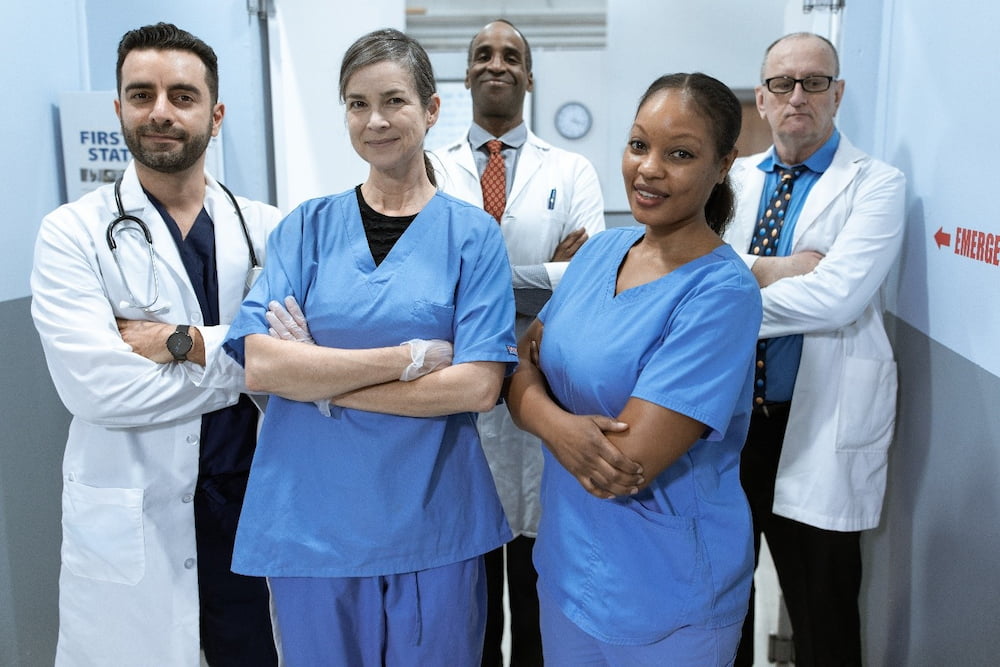
Registered nurses are an important part of our society and play a critical role in the healthcare industry. After being diagnosed and prescribed medicine by the doctor, the nurses look after the patients. Nurses act as patients’ care providers. In a typical day-to-day routine, nurses perform various tasks, from monitoring and evaluating patients, and communicating with healthcare professionals and supervisors, to ensuring that patients understand and are fully satisfied with their treatment. These are the typical responsibilities of every nurse.
However, specifically speaking, nurses’ duties depend upon many factors, such as the specialty and experience under their belt. One of the important factors which greatly influences nursing duties is the place of work.
Nurses can work in clinics, surgical centers, doctors’ offices, pharmacies, corporate offices, and senior residential communities. If they are working at hospitals, they work longer shifts, typically 12 to 14 hours, and tend to different patients at different wards in the hospital.
While in comparison, a nurse working at school stays in one place and only works during school hours. Besides this, a nurse’s duty is also influenced by the degree or diploma the nurse holds. A registered nurse with a diploma has different duties than a registered nurse with a BSN (Bachelor of Science in Nursing).
Nurses with BSN degrees are given more responsibilities alongside their typical nursing job duties because a person who possesses a higher degree has more education and reflects more competence. Therefore, they are more entrusted to perform managerial tasks and pursue leadership positions.
They also have the option to explore specialty nursing areas. They are tasked to conduct training sessions for younger nurses and are responsible for administering quality and infection control at hospitals.
They have the added responsibility that they can look after patients under reduced supervision of the attending physician. Consequently, these extended opportunities and added responsibilities result in more promotions, higher salaries, and employment rates.
Nevertheless, with the difference in setting, experience, or education, there are some consistencies in the basic responsibilities nurses face in a typical working day.
1- Maintaining Patients’ Medical Records
Nurses and doctors work in the same teams but on different shifts. Every time a nurse visits, a patient must be charted. Maintaining clear records enables doctors to understand the patient’s situation clearly.
Charting the amount of medicine administered, the patient’s condition throughout the day, pain level, or the progression or decrement in the symptoms will help the nurse and doctors in the next shift.
Nurses also take notes of patient history as it might help in diagnosing. The quality and cleanliness of the patient’s medical record reflect the standard of care and treatment given by the physician and hospital.
Taking notes and charting the patient’s condition is part of every shift. Nurses should also transfer and save this information into computers shortly after taking history while the notes are fresh in their memory. Nurses, before changing shifts, also brief the nurses coming in the next shift.
2- Patients’ Medical Cases Management
Nurses perform the task of managing medical cases in hospitals, clinics, and schools. Starting their new shift in a hospital, nurses first make rounds on their designated floors. They take blood samples, monitor vital signs, and add notes on the patients’ cases.
Nurses also note how certain medications affected the patient’s condition and write their suggestions. With the help of these notes and suggestions, nurses assist the doctors in creating a treatment plan that will positively influence the patient’s condition.
Doctors make their decision based on information provided by the nurses. Nurses are then instructed to implement the changes and notice the change in the patient’s condition.
Nurses are an important part of maintaining patients’ medical records. Registered Nurses are often the case managers in hospitals. These case managers write notes given by doctors and nurses on duty to ensure good patient care.
3- Assisting Patients
Nurses help patients when they cannot perform daily activities due to the severity of their illness or past conditions. Nurses provide support to patients for activities like bathing, washing, and changing in and out of clothes and support them in physical activities.
4- Medicating Patients
It is part of the nurses’ duty to administer medicine to patients as prescribed by the doctor. Doctor seldom gives medicine to patients.
The Doctor forwards the request for medication to the nurse, and typically a registered nurse administers the dose.
If the dose of medicine poses any potential risk, the nurse stays by the patient’s side to monitor their condition.
To improve patients’ condition and comfort, nurses must provide timely medication to hospitalized patients throughout the day and night.
As administrating medication is part of their duty, nurses must also be aware of the chances of interaction between different drugs and how they affect a patient.
If the patient shows any side effects or signs of discomfort, the nurse should note down the interaction and share it with the concerned doctor so that doctor considers it while treating the patient.
Sometimes consultations with pharmacists are also required. Nurses might have to call pharmacists to fill prescriptions on the doctors’ behalf. It is a vital part of nurses’ job to understand medication dose and their effects.
Read Also
- Can Outsourced Telepsychiatry Help Healthcare Organizations Keep Pace With Modern Mental Health Screening?
 Mental healthcare is changing quickly, but many hospitals, clinics, schools, correctional facilities, and community health organizations do not have enough psychiatric professionals available to turn new screening approaches into timely clinical care. Outsourced telepsychiatry offers one way to close that gap. FasPsych, for example, connects healthcare organizations with psychiatrists, psychiatric nurse practitioners, and other behavioral… Read more: Can Outsourced Telepsychiatry Help Healthcare Organizations Keep Pace With Modern Mental Health Screening?
 - Five operational checks for choking readiness in healthcare facilitiesA facility can have a choking poster on every wall and still be unprepared. Preparedness shows up when someone can recognize the emergency, call the right response, bring the right people and supplies to the room, and hand over clear information without losing time. That test belongs in operations as well as clinical education. The… Read more: Five operational checks for choking readiness in healthcare facilities
- Understanding the Demand for Correctional Healthcare ProfessionalsHave you ever wondered who cares for people when they get sick inside a prison? Many people do not realize that jails and prisons need skilled medical teams every single day. By reading this guide, you will learn why these important jobs are growing fast and how you can join this rewarding career field. Caring… Read more: Understanding the Demand for Correctional Healthcare Professionals
- Patient Engagement and Pharmaceutical Support Services: Building a Better Patient JourneyPatients rarely experience healthcare as a simple, linear process. They may need to understand a diagnosis, determine whether they qualify for a clinical trial, gather medical records, navigate insurance requirements, arrange transportation, learn how to use a medication, and stay engaged with treatment for months or years. Serva Health is one example of a specialist… Read more: Patient Engagement and Pharmaceutical Support Services: Building a Better Patient Journey
- Industrial Container Recycling and Waste Management Services: A Practical Guide for BusinessesIndustrial container recycling is an essential part of responsible waste management for manufacturers, warehouses, laboratories, automotive businesses, chemical companies, food processors, and other organizations that regularly handle bulk materials. A strong example is Kelly Drums, a Mid-Atlantic provider of reconditioned drums and comprehensive container management solutions. The company specializes in the pickup, recycling, reconditioning, and… Read more: Industrial Container Recycling and Waste Management Services: A Practical Guide for Businesses
- BCBA & RBT Salary by State 2026 | Behavior Analyst PayPay in applied behavior analysis is harder to pin down than in almost any other healthcare field. Two professionals with the same certification can earn $40,000 apart for no reason other than the state line between them. So before you accept an offer, ask for a raise, or relocate for a bigger paycheck, it helps… Read more: BCBA & RBT Salary by State 2026 | Behavior Analyst Pay





5- Giving Emotional Support
Nurses might have to treat patients that might be terminally ill or suffering from chronic illness, or dealing with severe pain.
These patients are frightened and in a vulnerable position. They express their emotions through irritability, anger, or vulnerability. Sometimes they might be without family, and in these difficult times, they expect moral support from their nurse.
Often patients don’t express their vulnerability through kindness. A nurse must understand the situation, treat the patient through compassion, and boost their morale.
6- Educating Patients
Part of a nurse’s duty is to teach patients how to take care of themselves. If a patient suffers from high blood pressure or diabetes, the nurse shows the correct way to monitor blood pressure and blood sugar, respectively.
Also, nurses provide educational materials on how patients can control their disease through certain practices such as a healthy diet and exercise.
Conclusion
Although these duties are similar, every day in a nurse’s life is different and filled with new challenges. They must rise to these occasions daily and be able to think critically and find solutions.
Alongside this factor, nurses are part of a growing healthcare industry that has drastically changed over the years and is continuously growing and will continue to change.
The competition for nursing positions will continue to increase as, according to the US bureau of labor statistics, the employment of registered nurses (RN) by 2030 will grow by 6%. With this projected growth and ever-changing scenario.
Nurses must be able to combat rising difficulties in their jobs, and they can only face these challenges confidently when they are highly educated. Additional education will provide nurses the benefit of being competent at their jobs and enhancing their performance in stressful situations.
