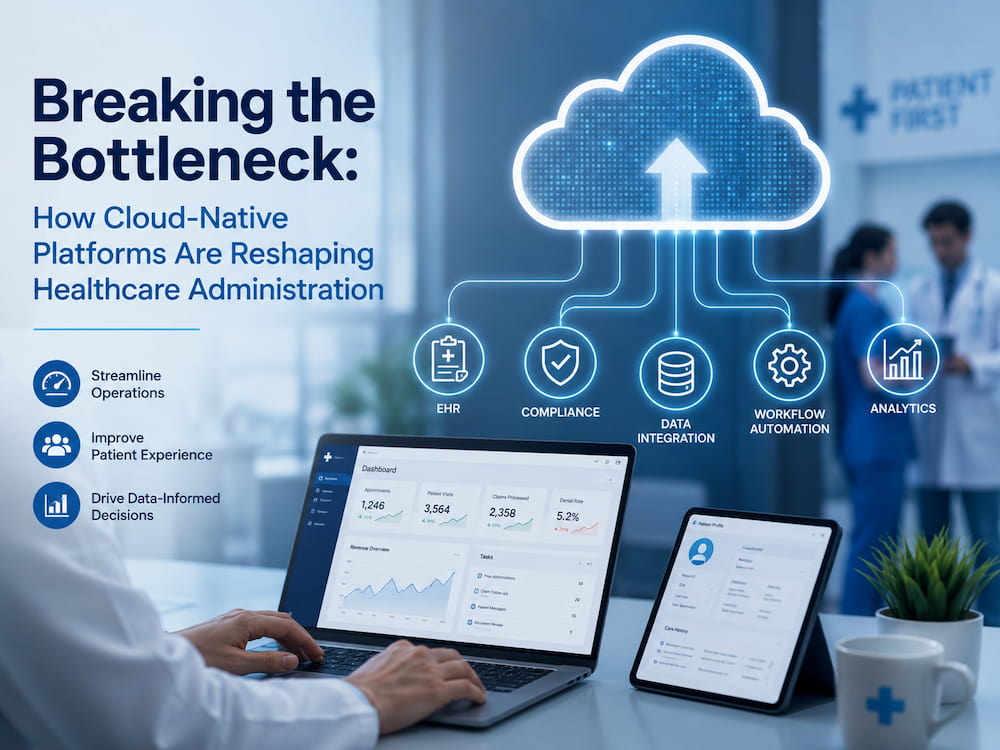
Let’s face the reality of modern healthcare administration: the industry is currently buckling under its own weight. Between skyrocketing claim volumes, labyrinthine regulatory updates, and the constant demand for faster provider reimbursements, relying on patchwork legacy servers and siloed databases is no longer a viable strategy. Insurers, Third-Party Administrators (TPAs), and provider networks are rapidly realizing that true operational efficiency requires a massive, structural shift to the cloud. But migrating to the cloud isn’t just about remote data storage; it’s about deploying a holistic, intelligent ecosystem. This is where industry innovators like MCSI – Visova are fundamentally changing the game. By offering a true cloud-native, HIPAA-compliant Platform as a Service (VPaaS), they allow healthcare organizations to seamlessly manage their operations end-to-end. Their comprehensive ecosystem handles everything from complex enrollment and premium billing to provider network management, capitation, and seamless HRA/HSA integration. Most crucially, at the heart of their platform is top-tier claims adjudication software that automates intensive workflows, drastically reduces administrative bloat, and empowers TPAs and insurers to focus on what actually matters: delivering exceptional care management and sustainable financial growth.
To understand why this shift is happening so rapidly, we have to look at the immense friction that traditional administrative systems cause, and how cloud-based solutions are actively dismantling those roadblocks.
The Legacy Trap: Why On-Premise Systems Are Failing
For decades, health plans and TPAs built their operational infrastructure on massive, on-premise servers. At the time, it made sense. But today, these legacy systems are essentially anchor weights holding organizations back.
The Cost of Inflexibility
Older software architecture was built to do specific tasks in isolation. The enrollment software didn’t talk seamlessly to the billing department, and the provider credentialing system was entirely disconnected from claims processing. This lack of interoperability—a major focus of the Office of the National Coordinator for Health Information Technology (ONC)—means that human workers are forced to bridge the digital gaps. Staff end up manually re-entering data, chasing down files, and reconciling errors across multiple screens.
The Security and Compliance Illusion
There was once a persistent myth that keeping servers physically inside a corporate office was more secure than utilizing the cloud. Modern cybersecurity realities have completely shattered that notion. Maintaining physical servers requires a massive, dedicated IT staff to constantly patch vulnerabilities, update firewalls, and ensure physical security. Cloud-native platforms (like the VPaaS model) operate in highly fortified, enterprise-grade environments. They are inherently designed from the ground up to meet the rigorous standards of the HHS HIPAA Security Rule, offering encryption, automated backups, and disaster recovery protocols that few standalone companies could ever afford to build on their own.
Decoding the VPaaS Advantage: Total Workflow Automation
Moving to a cloud-based Platform as a Service isn’t just an IT upgrade; it is a total operational overhaul. When a TPA or insurer adopts a unified cloud platform, they aren’t just buying software; they are acquiring a modernized nervous system for their entire business.
Revolutionizing the Claims Lifecycle
The absolute core of healthcare administration is the claims process. In a traditional setup, claims adjudication is notoriously sluggish. Claims arrive with coding errors, missing patient data, or provider mismatches, forcing them into a “pending” status where human examiners have to manually intervene. This drives up administrative costs and frustrates providers who are waiting to be paid.
Advanced cloud solutions utilize complex algorithms and rules engines to automate this exact process. By cross-referencing incoming claims against specific benefit plans, provider contracts, and clinical edit rules in real-time, the software can automatically approve, deny, or route claims with pinpoint accuracy. This pushes auto-adjudication rates to unprecedented heights, practically eliminating the backlog and allowing human examiners to focus strictly on complex, high-dollar exceptions.
Seamless Member Management and Financials
The modern healthcare consumer expects a retail-like experience. They want transparency, instant updates, and frictionless transactions. Cloud platforms unify the entire member lifecycle into a single, cohesive dashboard.
From the moment an individual or employer group enrolls, the data flows seamlessly into premium billing and benefits management. Furthermore, as high-deductible health plans continue to dominate the market, the ability to effortlessly manage complex financial vehicles is critical. True end-to-end platforms offer native integration for Health Reimbursement Arrangements (HRAs) and Health Savings Accounts (HSAs), ensuring that member funds are tracked, applied, and reconciled without manual accounting gymnastics.
Empowering Provider Networks and Value-Based Care
You cannot run a successful health plan without a satisfied, aligned provider network. Unfortunately, provider abrasion—often caused by delayed payments, confusing fee schedules, and credentialing nightmares—is a massive issue in the industry.
Navigating Complex Contracts and Capitation
Healthcare reimbursement is shifting rapidly. We are moving away from traditional fee-for-service models and pushing toward Value-Based Care programs championed by the Centers for Medicare & Medicaid Services (CMS). This means administrators have to manage incredibly complex, risk-sharing financial arrangements.
Cloud platforms give organizations the agility to build and manage dynamic provider networks. They can effortlessly track credentialing, manage tiered networks, and, most importantly, execute complex capitation payments. Whether paying a primary care group a fixed per-member-per-month (PMPM) rate or calculating shared savings bonuses based on clinical outcomes, cloud architecture provides the exact mathematical precision required to keep these contracts running smoothly.
The Power of Provider Portals
By leveraging the cloud, administrators can also offer secure, self-service web portals directly to their providers. Instead of calling a TPA’s support line to check eligibility, verify benefits, or track a claim’s status, office managers can log in and see real-time data immediately. This drastically reduces call center volume, slashes administrative overhead, and builds a much stronger, more transparent relationship with the healthcare providers delivering the actual care.
The Tangible ROI of End-to-End Solutions
So, what is the actual return on investment when a healthcare organization abandons their legacy servers and embraces a unified cloud platform? It comes down to three measurable metrics:
- Drastic Reduction in ALR (Administrative Loss Ratio): By automating claims, enrollment, and billing, companies require fewer hands on keyboards. You can process double the volume of claims without having to double the size of your staff.
- Unmatched Scalability: If a TPA lands a massive new employer group, a legacy system might crash under the weight of the new data. A cloud-native platform scales instantly, allocating computing resources dynamically to handle the surge in traffic without a second of downtime.
- Speed to Market: When state regulations change or a company wants to launch a new, highly customized benefit plan, cloud systems allow for rapid configuration. Instead of waiting six months for an IT team to write custom code, business users can adjust rules engines and launch new products in a fraction of the time.
Conclusion
The future of healthcare administration is not going to be won by whoever has the biggest server room. It is going to be won by the organizations that are the most agile, the most secure, and the most automated. The friction of the past—lost claims, disconnected billing, and frustrated providers—is entirely preventable today. By migrating to sophisticated, cloud-native solutions, insurers, TPAs, and provider networks can finally step out of the IT management business and get back to their core mission: facilitating exceptional healthcare efficiently and profitably.
Did you find this article helpful? Check out the rest of our blog!
Read Also
- Innovative Technologies in Oncology: The Future of Cancer Treatment
 Have you ever wondered how far cancer treatment has come in recent years? Advances in technology are making a real difference in the fight against cancer. Today, more people are living longer and healthier lives after a cancer diagnosis. This is all thanks to new and groundbreaking medical advancements. The future of cancer care looks… Read more: Innovative Technologies in Oncology: The Future of Cancer Treatment
 - Cloud-Based Healthcare Administration Solutions: A Guide for Payers, TPAs, and Provider NetworksHealthcare administration has become too complex for disconnected spreadsheets, aging on-premise applications, and manual handoffs between departments. Organizations need technology that can manage claims, enrollment, billing, provider relationships, and member data as connected parts of the same operation. MCSI – Visova is one example, offering a cloud-native vpaas designed to support HIPAA-compliant healthcare administration. Its… Read more: Cloud-Based Healthcare Administration Solutions: A Guide for Payers, TPAs, and Provider Networks
- How Intelligent Invoice Processing Is Reshaping Healthcare AP WorkflowsWhat happens when healthcare invoice volumes outpace the AP team’s ability to review, validate, and route them, while cost per invoice keeps rising? That gap is pushing finance leaders past basic digitization. Supplier invoices across formats, systems, departments, and approval paths, and holding speed, accuracy, compliance, and visibility together gets harder at scale. Intelligent invoice… Read more: How Intelligent Invoice Processing Is Reshaping Healthcare AP Workflows
- From 1905 to 2026: How German Legacy Manufacturers Power Deutsche Dental Technologien’s SuccessFrom 1905 to 2026: How Busch & Co.’s Legacy Powers Deutsche Dental Technologien’s Success In an era where dental technology advances at breakneck speed, few companies embody the perfect blend of historic craftsmanship and modern business agility quite like Busch & Co. and its strategic partner Deutsche Dental Technologien. What began as a small dental bur factory in… Read more: From 1905 to 2026: How German Legacy Manufacturers Power Deutsche Dental Technologien’s Success
- Why the Future of Healthcare Administration is Cloud-NativeThe operational demands placed on modern healthcare administrators have officially outpaced the capabilities of traditional IT infrastructure. While clinical medicine continues to advance at breakneck speed, the back-office systems required to support it often remain painfully stagnant. Today’s insurers, Third-Party Administrators (TPAs), and provider networks are forced to navigate an avalanche of daily claims, aggressive… Read more: Why the Future of Healthcare Administration is Cloud-Native
- The Digital Overhaul: Why Modern Healthcare Administration Demands Advanced Technology SolutionsLet’s be honest about the current state of healthcare administration: it is staggering under its own complexity. The days of managing patient populations, claims, and provider networks with spreadsheets and disjointed legacy systems are long gone. Today, the sheer volume of data processing required just to keep a healthcare organization afloat is enough to paralyze… Read more: The Digital Overhaul: Why Modern Healthcare Administration Demands Advanced Technology Solutions
- Tech-Enabled Healthcare Innovation in Physical Therapy CarePhysical therapy is changing with the help of new technology. Digital tools are now used to support recovery and improve care. These tools help therapists track progress in a better way. Explore how technology is reshaping physical therapy with innovative digital tools. It highlights smarter recovery and patient outcomes in healthcare. Continue reading to discover… Read more: Tech-Enabled Healthcare Innovation in Physical Therapy Care
- 5 Best Payroll Error Detection Software for Healthcare in 2026Healthcare organizations operate some of the most complex payroll environments in any industry. Hospitals, skilled nursing facilities, rehabilitation centers, physician groups, and home healthcare providers must manage thousands of employees working across different shifts, departments, facilities, and compensation structures. Payroll teams are expected to process this information accurately while complying with labor regulations, organizational policies,… Read more: 5 Best Payroll Error Detection Software for Healthcare in 2026