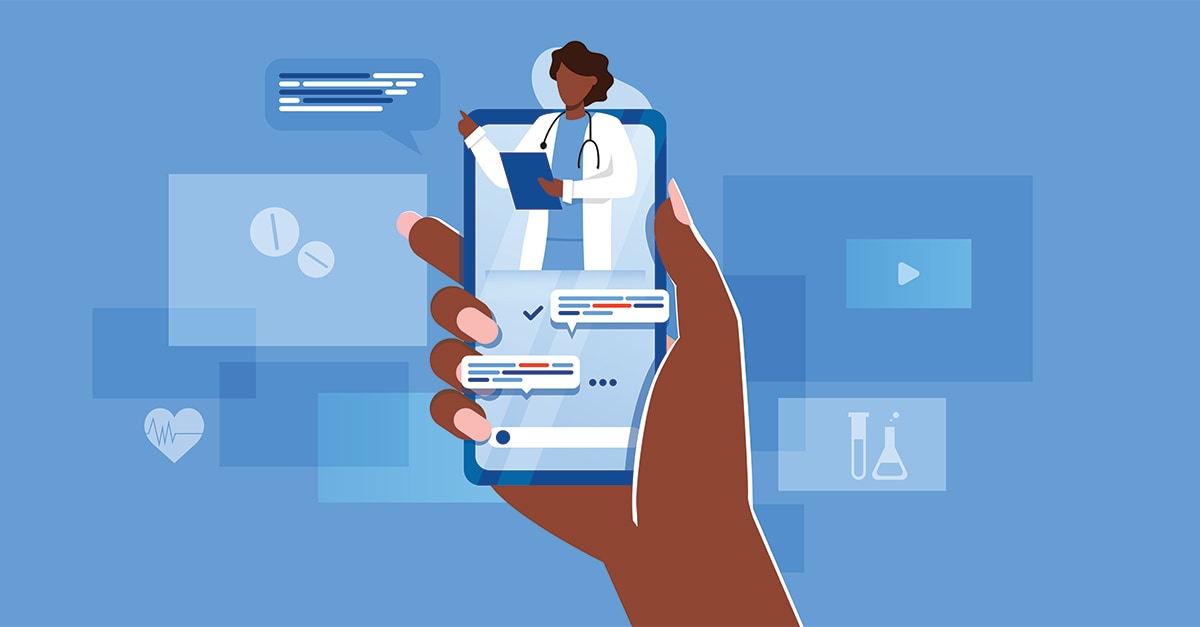
It’s no secret that the health care system in the United States is in a state of flux. With rising costs and an aging population, the number of people who rely on medical care continues to increase. Still, there is also an increasing demand for more affordable options, and it isn’t slowing down anytime soon.
As you look at your options for developing a mobile app for your customers, you may wonder: Where can I find trustworthy healthcare app developers? Where and how do I choose one? Examine these tips below!
How Do I Find and Select Dedicated Healthcare App Developers?
1. Decide on the Type of Medical App You Want
Before starting your search for mobile medical app developers, you must understand what type of app you’re looking for. Is it a simple health tracker? Or do you want something more complex, like an electronic patient record system (EPRS)?
It would help if you also considered whether or not your app will be used in an academic or commercial setting. Are there laws applicable to your project, such as HIPAA compliance requirements? These are just some questions you should ask yourself before diving into medical app development!
2. Next, Get Your Research Started
The best way to find these trusted developers is through word of mouth or online reviews. Thus, you should first check out the healthcare mobile app development companies already working with your industry. After all, they will likely appreciate your brand and understand what the innovation is all about. If you can find such a firm, you are already one step ahead of your competition.
To go about this, ask your colleagues the ones they’ve had the best experiences with. However, if you don’t know any doctors personally, search online for reviews of the companies you’re interested in.
To conduct online research, here’s what to do:
- Use a keyword research tool or Google search to find companies with similar names or services.
- You can also use a keyword analysis tool like SEMrush, which will help you determine which keywords generate the most traffic for your competitors and then focus on those terms in your search. Here’s a guide to help you:
Look at customer reviews of their apps to get an idea of their quality and customer service. If they have received excellent reviews from users with similar needs as yours, this could indicate that they’re capable of creating an app for your company.
3. Ask Questions
Once you’ve found a medical application development company that fits your needs, it’s time to figure out what type of development they specialize in mobile apps. Web-based solutions or both?
This will help determine whether or not they suit your business’s specific needs. Keep in mind that if they don’t have experience building apps specifically for healthcare providers (or other similar industries), there’s no guarantee they will be able to do so successfully.
Other questions must include:
● Cost of Service:
How much does it cost? Is there an upfront fee? Does the developer offer a free trial period?
● Proposed Timeframe
How long will it take for them to build an app for you?
● Uniqueness
Is anything special about them or their company that sets them apart from other developers?
● Location
Are they located near where you are located?
Hiring specialized medical app developers means they will be able to meet your needs and desires. So contact them directly via email or phone instead of going through an online form where they may not respond.
4. Be on a Lookout for experience During Discussions
When evaluating companies, ensure they have experience offering healthcare app development services. You should be able to see proof through their portfolio(s) that they have done this before. So look for any projects they have listed on their website or social media accounts (or even Google search results). If any of their past works include apps for healthcare professionals, they might be the right brand to hire.
Finding the right medical app developer is a challenge. As a reputable brand, you’d want to ensure that your company’s app is up to par, and don’t want to spend days trying to find the right fit; we’re here to help! Contact our team of dedicated healthcare app developers today!
Read Also
- Innovative Technologies in Oncology: The Future of Cancer Treatment
 Have you ever wondered how far cancer treatment has come in recent years? Advances in technology are making a real difference in the fight against cancer. Today, more people are living longer and healthier lives after a cancer diagnosis. This is all thanks to new and groundbreaking medical advancements. The future of cancer care looks… Read more: Innovative Technologies in Oncology: The Future of Cancer Treatment
 - Cloud-Based Healthcare Administration Solutions: A Guide for Payers, TPAs, and Provider NetworksHealthcare administration has become too complex for disconnected spreadsheets, aging on-premise applications, and manual handoffs between departments. Organizations need technology that can manage claims, enrollment, billing, provider relationships, and member data as connected parts of the same operation. MCSI – Visova is one example, offering a cloud-native vpaas designed to support HIPAA-compliant healthcare administration. Its… Read more: Cloud-Based Healthcare Administration Solutions: A Guide for Payers, TPAs, and Provider Networks
- How Intelligent Invoice Processing Is Reshaping Healthcare AP WorkflowsWhat happens when healthcare invoice volumes outpace the AP team’s ability to review, validate, and route them, while cost per invoice keeps rising? That gap is pushing finance leaders past basic digitization. Supplier invoices across formats, systems, departments, and approval paths, and holding speed, accuracy, compliance, and visibility together gets harder at scale. Intelligent invoice… Read more: How Intelligent Invoice Processing Is Reshaping Healthcare AP Workflows
- From 1905 to 2026: How German Legacy Manufacturers Power Deutsche Dental Technologien’s SuccessFrom 1905 to 2026: How Busch & Co.’s Legacy Powers Deutsche Dental Technologien’s Success In an era where dental technology advances at breakneck speed, few companies embody the perfect blend of historic craftsmanship and modern business agility quite like Busch & Co. and its strategic partner Deutsche Dental Technologien. What began as a small dental bur factory in… Read more: From 1905 to 2026: How German Legacy Manufacturers Power Deutsche Dental Technologien’s Success
- Why the Future of Healthcare Administration is Cloud-NativeThe operational demands placed on modern healthcare administrators have officially outpaced the capabilities of traditional IT infrastructure. While clinical medicine continues to advance at breakneck speed, the back-office systems required to support it often remain painfully stagnant. Today’s insurers, Third-Party Administrators (TPAs), and provider networks are forced to navigate an avalanche of daily claims, aggressive… Read more: Why the Future of Healthcare Administration is Cloud-Native