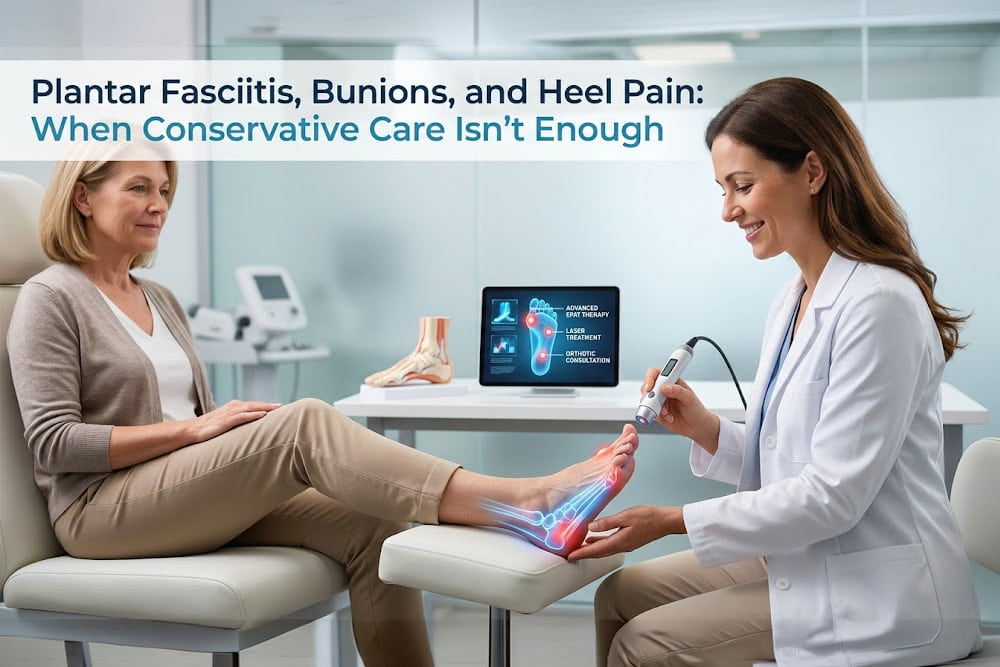
Foot pain is often dismissed as a nuisance — something to push through, stretch out, or ignore until it goes away. And in fairness, many cases do resolve with rest, better shoes, and basic stretching. But certain conditions can quietly worsen for months or years before patients seek help, by which point conservative options have run their course. Knowing when to escalate care is key to protecting both your mobility and your quality of life.
Plantar Fasciitis: Beyond the Morning Stretch
That sharp pain in the bottom of your heel when you take your first steps in the morning is the hallmark of plantar fasciitis — inflammation of the thick band of tissue running along the sole. For most people, calf and plantar stretching, supportive shoes, and over-the-counter inserts resolve symptoms within a few months.
When pain persists beyond six months despite consistent home care, it’s no longer ‘early plantar fasciitis.’ Chronic cases often involve thickening of the fascia, partial tearing, or biomechanical issues that won’t resolve without targeted treatment. At that point, custom orthotics, structured physical therapy, shockwave therapy, or in stubborn cases minor surgical intervention may be appropriate.
Bunions: A Structural Problem, Not Just Cosmetic
Bunions are sometimes treated as a vanity issue, but they’re a structural deformity — the big toe joint shifts out of alignment, often progressively. Pads, wider shoes, and toe spacers can manage symptoms in mild cases. They cannot reverse the deformity or stop its progression.
If a bunion is painful enough to limit shoe choices or activity, or if it’s worsening despite conservative measures, it’s time to discuss surgical options. Modern bunion correction is far more refined than the procedures patients remember from a generation ago. Recovery is faster, scarring is minimal, and long-term outcomes are excellent when the right technique is matched to the right deformity.
Heel Pain That Isn’t Plantar Fasciitis
Not all heel pain is plantar fasciitis. Achilles tendinopathy, heel spurs, stress fractures of the calcaneus, nerve entrapment, and even systemic conditions like rheumatoid arthritis can present with heel pain. Misdiagnosis is common when patients self-treat or when evaluations are rushed.
A specialist examination — including focused physical testing and weight-bearing imaging — sorts out which structure is actually involved. Treatment for an Achilles issue is fundamentally different from treatment for plantar fasciitis, and getting the diagnosis right is the first step.
When to Stop Self-Treating
A useful rule: if foot pain has lasted more than three months despite consistent at-home care, or if it’s interfering with walking, working, or exercising, it’s time for a specialist evaluation. The same applies to any foot or ankle issue accompanied by visible deformity, numbness, weakness, or rapid worsening.
Pain that’s reshaping your daily routine — the runs you’ve stopped, the shoes you can no longer wear, the hikes you skip — is worth addressing. Adapting around foot pain often means muscle compensation patterns that cause new problems in the knees, hips, or back.
Specialty Care in the Treasure Valley
Foot and ankle conditions sit at the intersection of orthopedics and biomechanics, which is why specialty training matters. An experienced foot and ankle surgeon in Boise Idaho can identify the exact source of your pain, lay out conservative and surgical options honestly, and tailor a plan to how you actually use your feet — whether you’re a runner, a tradesperson, or simply trying to stay active in retirement.
Don’t Let Foot Pain Become Your Normal
The longer foot conditions go untreated, the more compensations develop and the harder full recovery becomes. If you’ve been living around foot pain rather than addressing it, an evaluation is the simplest first step toward getting your mobility back.
Did you find this article helpful? Check out the rest of our blog!
Read Also
- Where to Find Reliable Mental Health Support for Teens
 Have you noticed changes in your teen’s mood, sleep, or behavior that leave you worried? Growing up can bring stress from school, friends, family, and new demands. Some teens may struggle to share their feelings or ask for help, even when they need support. Finding the right mental health support for teens can help them… Read more: Where to Find Reliable Mental Health Support for Teens
 - Top Trends Shaping the Future of Mental Health CareMental health care is moving fast to meet daily human needs. People want direct care that fits modern life. Clinics respond by creating flexible options that make healing easier to reach. Providers look past rigid habits to give people solid care. From smart tools to body wellness, these changes help people find relief when life… Read more: Top Trends Shaping the Future of Mental Health Care
- Full-Arch Dental Tourism: Why UK Patients With Severe Bone Loss Are Looking AbroadDental implants have become one of the fastest-growing segments of private dentistry. Within that market, one patient group behaves very differently from the rest: people who have been told they do not have enough upper jawbone for conventional implants. For these patients, the choice is rarely between one clinic and another. It is between a… Read more: Full-Arch Dental Tourism: Why UK Patients With Severe Bone Loss Are Looking Abroad
- Levels of Mental Health Care and When to Seek SupportMental health care can range from occasional outpatient appointments to 24-hour hospital treatment. The appropriate level depends on safety, symptom severity, daily functioning, medical needs, available support, treatment history and personal preferences. A licensed clinician should assess these factors rather than relying on a symptom list alone. Need help now? In the United States, call… Read more: Levels of Mental Health Care and When to Seek Support
- How to Choose a Shilajit Brand Based on the ResearchIn a randomized trial published in the Journal of the International Society of Sports Nutrition in 2019, 63 active men took 250 mg of standardized shilajit, 500 mg, or a placebo every day for eight weeks, and the benefit for strength retention after a fatiguing workout appeared only at 500 mg. For anyone choosing a… Read more: How to Choose a Shilajit Brand Based on the Research
- How to Incorporate Relaxation into Your Busy ScheduleFinding balance when you have a packed daily agenda often feels out of reach. Between work duties, family obligations, and personal projects, personal rest usually gets pushed to the bottom of the list. Small, intentional shifts in daily habits can help restore calm without requiring hours of extra free time. Continue reading to discover everything… Read more: How to Incorporate Relaxation into Your Busy Schedule
- Red Light Therapy for Skin and Wellness: Meet Vital Red Light TherapyModern wellness is not always about complicated treatments or long routines. Many people are now looking for simple, convenient ways to support their skin, recovery, and overall wellness at home. One technology getting more attention is red light therapy. Red light therapy uses specific wavelengths of red and near-infrared light to support the body’s natural… Read more: Red Light Therapy for Skin and Wellness: Meet Vital Red Light Therapy
- Managing Shock Loss After a Hair Transplant: The Financial and Clinical Imperative of Post-Op CareIn the rapidly evolving landscape of private healthcare, executive leadership within cosmetic and restorative surgery clinics faces a dual challenge: maintaining strict clinical standards while maximizing patient lifetime value (LTV) and brand advocacy. As the global medical tourism and elective procedure markets expand, clinical outcome quality alone is no longer the sole differentiator for premium… Read more: Managing Shock Loss After a Hair Transplant: The Financial and Clinical Imperative of Post-Op Care