


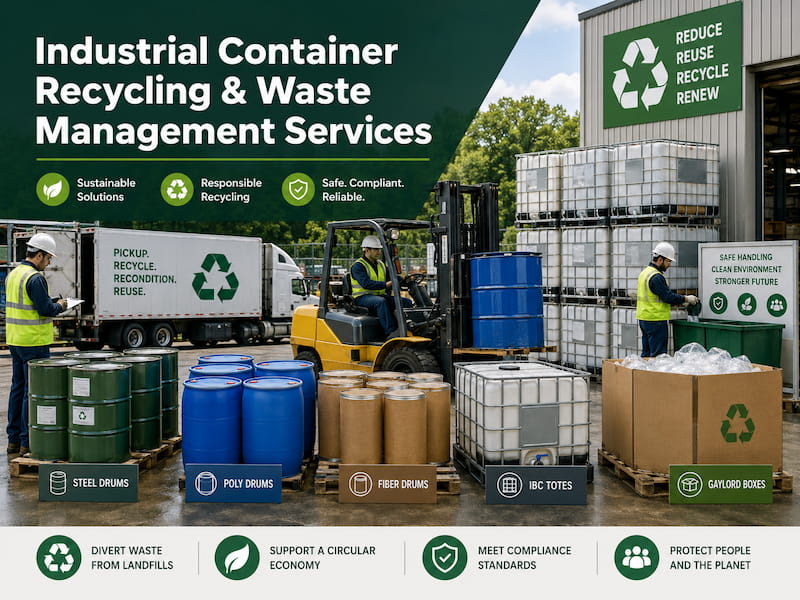
Industrial container recycling is an essential part of responsible waste management for manufacturers, warehouses, laboratories, automotive businesses, chemical companies, food processors, and other organizations that regularly handle bulk materials. A strong example is Kelly Drums, a Mid-Atlantic provider of reconditioned drums and comprehensive container management solutions. The company specializes in the pickup, recycling, reconditioning, and destruction of steel, poly, and fiber drums, as well as IBC totes and Gaylord boxes. Through these services, Kelly Drums helps industrial clients across the Mid-Atlantic region maintain regulatory compliance, manage hazardous materials responsibly, and support sustainable, environmentally responsible disposal practices.
Industrial containers are designed to withstand demanding operating conditions, but they cannot simply be placed in an ordinary dumpster when they are empty. Even a container that appears empty may contain product residue, vapors, sludge, or hazardous material that requires careful identification and handling. Choosing an experienced industrial container recycling and waste management provider can reduce these risks while helping valuable materials remain in use for as long as possible.
What Is Industrial Container Recycling?
Industrial container recycling is the process of collecting, inspecting, cleaning, reconditioning, repurposing, recycling, or destroying containers previously used to store or transport industrial materials.
Common containers handled by recycling and waste management companies include:
- Steel drums
- Polyethylene or plastic drums
- Fiber drums
- Intermediate bulk containers, commonly known as IBC totes
- Plastic and metal pails
- Gaylord boxes
- Salvage drums
- Specialty industrial packaging
The appropriate recycling method depends on the container’s construction, condition, previous contents, contamination level, and intended future use.
A structurally sound steel drum, for example, may be cleaned, inspected, repaired, repainted, tested, and returned to the market. A damaged drum that cannot be safely reused may be processed as scrap metal. Similarly, an IBC tote may be cleaned and reconditioned, fitted with a replacement bottle, or separated into plastic and metal components for recycling.
The goal is not simply to remove unwanted containers from a facility. A professional program determines the safest and most environmentally appropriate destination for each container.
Why Industrial Containers Require Specialized Management
Standard commercial waste services are not always equipped to handle industrial packaging. Drums and totes may have previously contained chemicals, oils, solvents, coatings, detergents, adhesives, pharmaceuticals, food ingredients, petroleum products, or other substances with specific handling requirements.
Several factors make professional container management important.
Residual Materials Can Create Safety Risks
A drum does not need to be full to present a hazard. Residual liquids, powders, sludge, and vapors may remain inside after normal use. Depending on the previous contents, these residues could be flammable, corrosive, reactive, toxic, or harmful to the environment.
Employees should not assume that a container is safe merely because no usable product remains. Improperly cutting, crushing, welding, compacting, or transporting a container can expose workers to hazardous substances or create the risk of fire, explosion, or chemical release.
The Pipeline and Hazardous Materials Safety Administration explains that packaging containing hazardous material residue may still be regulated during transportation unless applicable cleaning or other regulatory conditions have been satisfied. Businesses should therefore evaluate both the physical container and its previous contents before arranging pickup or transport through a qualified provider. Businesses can review the agency’s guidance regarding hazardous material residue in empty packaging.
Different Materials Require Different Processes
Steel, plastic, fiberboard, and composite packaging cannot all be managed in the same way.
Steel drums may be suitable for cleaning, blasting, reshaping, repainting, reconditioning, or metal recycling. Poly drums may require specialized washing and inspection before reuse, while damaged plastic containers may need to be granulated or directed to an appropriate plastics recycling stream.
Fiber drums and Gaylord boxes must be evaluated for contamination before their paper-based materials can be recycled. IBC totes are especially complex because they combine a plastic bottle, metal cage, pallet, valves, closures, and other components.
A knowledgeable recycler separates and processes these materials according to their condition and contamination status rather than treating all industrial packaging as general waste.
Waste Regulations Can Be Complicated
Hazardous waste obligations may vary according to the type and quantity of waste generated, the facility’s location, and applicable federal and state requirements. Under the Resource Conservation and Recovery Act, hazardous waste generators are subject to standards intended to ensure that waste is properly identified and safely managed.
The U.S. Environmental Protection Agency notes that generator requirements are based on the amount of hazardous waste generated during a calendar month. State requirements may also differ from federal requirements, making local compliance review important. Facility managers can consult the EPA’s hazardous waste generator regulatory summary when developing internal procedures.
A container recycling provider does not replace a company’s environmental or legal advisers. However, an experienced service provider can support compliance by providing suitable equipment, coordinating safe pickups, identifying acceptable materials, keeping container types separated, and supplying appropriate service records.
What Industrial Container Recycling Services Include
A comprehensive industrial container management program may include several interconnected services.
Scheduled and On-Demand Pickup
Businesses often accumulate empty drums and totes faster than expected. Without a regular pickup schedule, containers can consume valuable floor space, obstruct work areas, create housekeeping problems, and increase the chance of spills or improper handling.
A recycling provider may offer recurring collection, high-volume trailer programs, less-than-truckload pickup, or on-demand service. The best arrangement depends on the facility’s available storage space, container volume, production schedule, and material profile.
Before collection, the provider may request information such as:
- Container type and size
- Approximate quantity
- Previous contents
- Safety data sheets
- Condition of the containers
- Whether caps, bungs, valves, or labels remain in place
- Whether the containers contain residue
- Pickup location and access requirements
Accurate information helps the recycler select the right vehicle, equipment, personnel, and processing method.
Container Sorting and Inspection
After collection, containers are sorted by material, design, condition, and previous use. Each unit may be visually inspected for corrosion, punctures, severe dents, weakened seams, damaged closures, contamination, or other conditions that could prevent safe reuse.
Containers that meet the required criteria can move into a reconditioning process. Those that cannot be restored may be dismantled or processed for material recovery.
This evaluation is important because reuse should never come at the expense of safety. A container must be suitable for its intended application and meet any relevant performance requirements.
Cleaning and Reconditioning
Reconditioning extends the useful life of industrial packaging. Depending on the container, the process may involve draining, washing, rinsing, drying, removing labels, replacing closures, repairing minor damage, reshaping the container, preparing the surface, repainting, leak testing, or conducting other quality checks.
For suitable applications, reconditioned containers can provide a cost-effective alternative to newly manufactured packaging. They can also help reduce demand for virgin raw materials and the energy associated with manufacturing entirely new containers.
Not every drum or tote is eligible for reconditioning. Acceptance depends on the container’s design, structural condition, previous contents, applicable standards, and the recycler’s capabilities.
Recycling and Material Recovery
Containers that are unsuitable for reuse may still contain recoverable materials.
Steel drums can often enter a scrap metal recycling stream after appropriate preparation. IBC totes may be dismantled so their metal cages and plastic components can be processed separately. Eligible plastic drums may be converted into recyclable plastic feedstock, while uncontaminated fiber packaging may be directed to paper recycling.
Material recovery is preferable to disposal when it can be performed safely and in compliance with applicable requirements. It reduces the volume of material sent to landfills and keeps valuable resources in circulation.
Secure Container Destruction
Some businesses need containers to be permanently destroyed rather than reused. This may be necessary when packaging carries proprietary branding, confidential labels, controlled product information, counterfeit risks, product security concerns, or contamination that makes reuse inappropriate.
Destruction may involve crushing, shredding, puncturing, dismantling, or another documented process. Companies requiring this service should ask whether the provider can supply a certificate of destruction or other records confirming how the containers were managed.
Secure destruction is particularly valuable for organizations with strict brand protection, quality assurance, or chain-of-custody requirements.
The Environmental Benefits of Reuse and Recycling
Industrial container recycling supports a circular approach to material management. Rather than treating a drum or tote as disposable after one use, businesses can evaluate whether it can be safely reused, reconditioned, or converted into raw material for another product.
This approach can provide several environmental benefits:
- Reduced demand for virgin steel, plastic, paper, and wood
- Lower volumes of industrial packaging sent to landfills
- Extended service life for durable containers
- More efficient use of manufacturing resources
- Improved segregation of recyclable materials
- Better visibility into facility waste streams
- Support for corporate sustainability and waste-reduction objectives
The EPA’s Sustainable Materials Management framework encourages organizations to consider environmental impacts throughout a material’s life cycle. Within this framework, reuse and recycling generally offer more resource-efficient alternatives than immediately sending materials to disposal.
However, sustainability claims should be based on actual practices. Sending contaminated containers to an unqualified operator does not create a responsible recycling program. Businesses should verify where materials go, how they are processed, and what documentation is available.
How Container Recycling Supports Regulatory Compliance
Compliance begins inside the facility, before a recycling company arrives.
Businesses should identify the contents previously held in each container and determine whether any remaining material is considered usable product, nonhazardous waste, hazardous waste, or another regulated material. Containers should be closed, labeled, segregated, and stored in a manner appropriate to their contents and condition.
A reliable container management provider can support these efforts by:
- Clearly defining acceptable and prohibited materials
- Reviewing container profiles before pickup
- Requesting safety data sheets when necessary
- Providing collection schedules that prevent excessive accumulation
- Supplying appropriate transportation and handling equipment
- Keeping incompatible container types separated
- Directing containers to suitable reconditioning, recycling, or destruction processes
- Providing invoices, weight records, manifests, certificates, or service documentation when applicable
Documentation can be especially important during internal audits, customer reviews, environmental inspections, insurance assessments, and sustainability reporting.
Companies should maintain their own records rather than relying entirely on the recycling vendor. A clear internal trail should show what was generated, how it was classified, where it was stored, who collected it, and how it was ultimately managed.
Choosing an Industrial Container Recycling Company
Selecting a provider should involve more than comparing pickup prices. A low-cost service can become expensive if containers are mishandled, rejected, abandoned, or sent to an inappropriate destination.
Before choosing a recycling and waste management partner, ask the following questions:
What Types of Containers Do You Accept?
Confirm whether the company handles steel, poly, and fiber drums, IBC totes, Gaylord boxes, pails, specialty packaging, and damaged containers. Ask whether minimum quantities or condition requirements apply.
What Previous Contents Are Acceptable?
Provide accurate information about the materials previously stored in the containers. Ask about exclusions involving hazardous waste, pesticides, pharmaceuticals, reactive substances, highly toxic materials, unknown residues, or other specialized materials.
Never remove or alter information solely to make a container appear acceptable.
Do You Recondition Containers?
Determine whether the company reconditions containers directly, works with approved reconditioners, or only processes materials for recycling. Ask how reusable containers are inspected and tested.
Can You Provide Destruction Services?
For branded, proprietary, damaged, or unsuitable packaging, ask whether secure destruction is available and whether the process can be documented.
What Records Will We Receive?
Depending on the service, useful records may include pickup receipts, container counts, weight tickets, recycling reports, certificates of recycling, certificates of destruction, or transportation documents.
Which Geographic Areas Do You Serve?
Transportation distance affects scheduling, cost, environmental impact, and service availability. Businesses in the Mid-Atlantic region may benefit from working with a provider that already operates regular collection routes throughout the area.
How Do You Handle Rejected Loads?
The agreement should explain what happens if containers differ from the description provided, contain unexpected residue, or fail to meet acceptance criteria. Clear procedures help prevent disputes and unsafe unloading.
Building a Better Container Management Program
Businesses can improve their industrial container recycling results by creating a simple, repeatable internal process.
Start by assigning responsibility to a specific department or employee. This person should coordinate container identification, storage, vendor communication, pickup scheduling, and recordkeeping.
Next, establish designated storage areas for empty or partially empty containers. Separate containers according to material type, previous contents, and condition. Keep incompatible materials apart and protect containers from weather, vehicle traffic, and accidental damage.
Employees should receive training appropriate to their responsibilities. They need to understand that “empty” does not always mean safe, and that containers should not be opened, rinsed, punctured, crushed, or repurposed without authorization.
Finally, track performance. Useful metrics may include the number of containers collected, percentage reconditioned, weight recycled, disposal volume avoided, pickup frequency, rejected containers, and total program cost.
These measurements can reveal opportunities to consolidate pickups, improve segregation, reduce packaging purchases, and increase reuse.
Frequently Asked Questions
Can Used Industrial Drums Be Recycled?
Yes, many steel, plastic, and fiber drums can be recycled. The appropriate method depends on their condition, construction, previous contents, and remaining residue. Some drums may be reconditioned for reuse, while others must be processed as scrap material or managed through a specialized disposal service.
What Is the Difference Between Recycling and Reconditioning?
Reconditioning prepares a suitable container for reuse. Recycling breaks the container down so its material can be used in manufacturing another product. Reconditioning preserves more of the original container, while recycling recovers its steel, plastic, fiber, or other components.
Can IBC Totes Be Reused?
Many IBC totes can be cleaned, inspected, repaired, rebottled, or reconditioned. Totes with severe structural damage, unacceptable contamination, or unsuitable previous contents may need to be dismantled and recycled instead.
Are Empty Drums Considered Hazardous?
The answer depends on what the drums previously contained, how much residue remains, whether vapors are present, and which waste and transportation regulations apply. Businesses should not treat a drum as nonhazardous based only on its appearance.
Should Businesses Clean Drums Before Pickup?
Only when the process has been reviewed and authorized. Improper cleaning can expose employees to chemicals, create contaminated wastewater, or generate additional regulated waste. Businesses should follow their environmental procedures and the recycler’s acceptance requirements.
Conclusion
Industrial container recycling and waste management services help businesses solve several challenges at once. They remove bulky packaging from crowded facilities, reduce safety risks, support regulatory compliance, recover valuable materials, protect brands, and advance sustainability goals.
The most effective programs treat drums, IBC totes, and bulk packaging as managed material streams rather than ordinary trash. That means identifying previous contents, evaluating residue, selecting the correct recovery method, maintaining documentation, and working with an experienced provider.
By developing clear internal procedures and partnering with a qualified industrial container specialist, companies can transform a difficult waste stream into a safer, more organized, and environmentally responsible operation.
