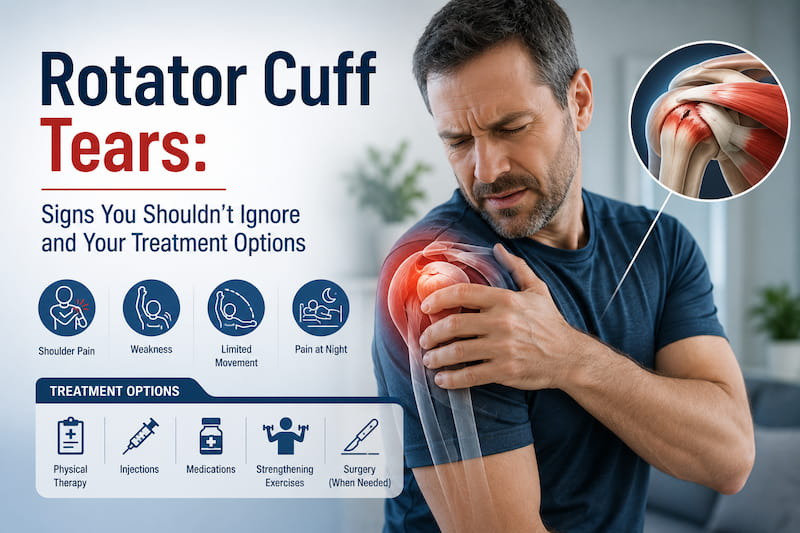
Shoulder pain has a way of sneaking into everything — reaching for a seatbelt, lifting a bag onto a shelf, even rolling over in bed. When that pain lingers and starts to limit what your arm can do, the rotator cuff is often the culprit. Knowing the warning signs of a tear, and when to have it evaluated, can be the difference between a straightforward recovery and a shoulder that never quite works right again.
What the Rotator Cuff Actually Does
The rotator cuff is a group of four muscles and their tendons that surround the shoulder joint. Together they keep the ball of the upper arm centered in its shallow socket and power nearly every overhead and rotational movement. Because these tendons work constantly and sit in a tight space, they’re vulnerable to both sudden injury and slow, age-related wear.
Signs You May Have a Tear
A rotator cuff tear doesn’t always announce itself with dramatic pain. Common signs include a dull ache deep in the shoulder, pain that worsens at night or when lying on that side, and weakness when lifting or rotating the arm. Many people notice they can no longer reach behind their back or overhead without pain, or that the arm feels like it “gives out” during certain movements.
A sudden tear — from a fall or a hard pull — may cause immediate sharp pain and weakness, sometimes with a tearing sensation. Gradual tears from wear often build slowly over months, which is why they’re easy to dismiss until they interfere with daily life.
What Causes Rotator Cuff Tears
There are two broad categories. Acute tears happen during a specific incident — lifting something too heavy, catching yourself during a fall, or a sports collision. Degenerative tears develop over time as tendons wear, lose blood supply, and weaken with age.
Repetitive overhead work or sports, poor shoulder mechanics, and bone spurs that rub the tendon all raise the risk.
Do All Tears Need Surgery?
This surprises many patients: most rotator cuff problems are treated without surgery. Rest, activity modification, targeted physical therapy to strengthen the surrounding muscles, anti-inflammatory medication, and occasionally a corticosteroid injection resolves a large share of cases — particularly partial tears and tendon inflammation.
The goal of conservative care is to restore strength and range of motion and let the shoulder compensate. For many people, especially those with lower physical demands, this is enough to return to a comfortable, active life.
When Surgery Makes Sense
Surgery becomes the right conversation when conservative care hasn’t restored function after a few months, when a tear is large or complete, or when the injury happened suddenly in an active person who needs full strength. Modern rotator cuff repair is usually done arthroscopically — through small incisions with a camera — which means less tissue disruption and a faster start to rehabilitation than the open surgeries of the past.
Timing matters here. Large tears left too long can retract and become harder to repair, so a shoulder that isn’t improving deserves a professional look rather than indefinite waiting.
Getting the Right Diagnosis Locally
Not all shoulder pain is a rotator cuff tear — arthritis, frozen shoulder, and impingement can feel similar, and the treatments differ. A proper evaluation includes a hands-on exam and imaging, usually X-rays and an MRI when a tendon tear is suspected. Working with an experienced shoulder surgeon in Meridian Idaho means you get an accurate diagnosis and a treatment plan matched to your specific tear and your goals — whether that’s returning to competitive sports or simply sleeping through the night pain-free.
Don’t Push Through Shoulder Pain
Shoulder pain that lasts more than a few weeks, wakes you at night, or comes with weakness is worth investigating. Caught early, most rotator cuff problems respond well to conservative care — and even when repair is needed, today’s techniques offer excellent outcomes. The sooner you understand what’s happening in your shoulder, the sooner you can protect it.
Did you find this helpful? Check out our other helpful articles on our website.
Read Also
- Top Trends Shaping the Future of Mental Health Care
 Mental health care is moving fast to meet daily human needs. People want direct care that fits modern life. Clinics respond by creating flexible options that make healing easier to reach. Providers look past rigid habits to give people solid care. From smart tools to body wellness, these changes help people find relief when life… Read more: Top Trends Shaping the Future of Mental Health Care
 - Full-Arch Dental Tourism: Why UK Patients With Severe Bone Loss Are Looking AbroadDental implants have become one of the fastest-growing segments of private dentistry. Within that market, one patient group behaves very differently from the rest: people who have been told they do not have enough upper jawbone for conventional implants. For these patients, the choice is rarely between one clinic and another. It is between a… Read more: Full-Arch Dental Tourism: Why UK Patients With Severe Bone Loss Are Looking Abroad
- Levels of Mental Health Care and When to Seek SupportMental health care can range from occasional outpatient appointments to 24-hour hospital treatment. The appropriate level depends on safety, symptom severity, daily functioning, medical needs, available support, treatment history and personal preferences. A licensed clinician should assess these factors rather than relying on a symptom list alone. Need help now? In the United States, call… Read more: Levels of Mental Health Care and When to Seek Support
- How to Choose a Shilajit Brand Based on the ResearchIn a randomized trial published in the Journal of the International Society of Sports Nutrition in 2019, 63 active men took 250 mg of standardized shilajit, 500 mg, or a placebo every day for eight weeks, and the benefit for strength retention after a fatiguing workout appeared only at 500 mg. For anyone choosing a… Read more: How to Choose a Shilajit Brand Based on the Research
- How to Incorporate Relaxation into Your Busy ScheduleFinding balance when you have a packed daily agenda often feels out of reach. Between work duties, family obligations, and personal projects, personal rest usually gets pushed to the bottom of the list. Small, intentional shifts in daily habits can help restore calm without requiring hours of extra free time. Continue reading to discover everything… Read more: How to Incorporate Relaxation into Your Busy Schedule
- Red Light Therapy for Skin and Wellness: Meet Vital Red Light TherapyModern wellness is not always about complicated treatments or long routines. Many people are now looking for simple, convenient ways to support their skin, recovery, and overall wellness at home. One technology getting more attention is red light therapy. Red light therapy uses specific wavelengths of red and near-infrared light to support the body’s natural… Read more: Red Light Therapy for Skin and Wellness: Meet Vital Red Light Therapy
- Managing Shock Loss After a Hair Transplant: The Financial and Clinical Imperative of Post-Op CareIn the rapidly evolving landscape of private healthcare, executive leadership within cosmetic and restorative surgery clinics faces a dual challenge: maintaining strict clinical standards while maximizing patient lifetime value (LTV) and brand advocacy. As the global medical tourism and elective procedure markets expand, clinical outcome quality alone is no longer the sole differentiator for premium… Read more: Managing Shock Loss After a Hair Transplant: The Financial and Clinical Imperative of Post-Op Care
- Transform Your Skin Health: Premier Gluta IV Therapy in DubaiThis comprehensive guide explores how modern intravenous wellness treatments can help revitalize your complexion, boost immune function, and support overall cellular health. By incorporating modern IV therapy Dubai services into a routine health regimen, individuals can achieve direct nutrient absorption for optimal results. Selecting a customized gluta IV drip Dubai treatment provides targeted antioxidant defense,… Read more: Transform Your Skin Health: Premier Gluta IV Therapy in Dubai