


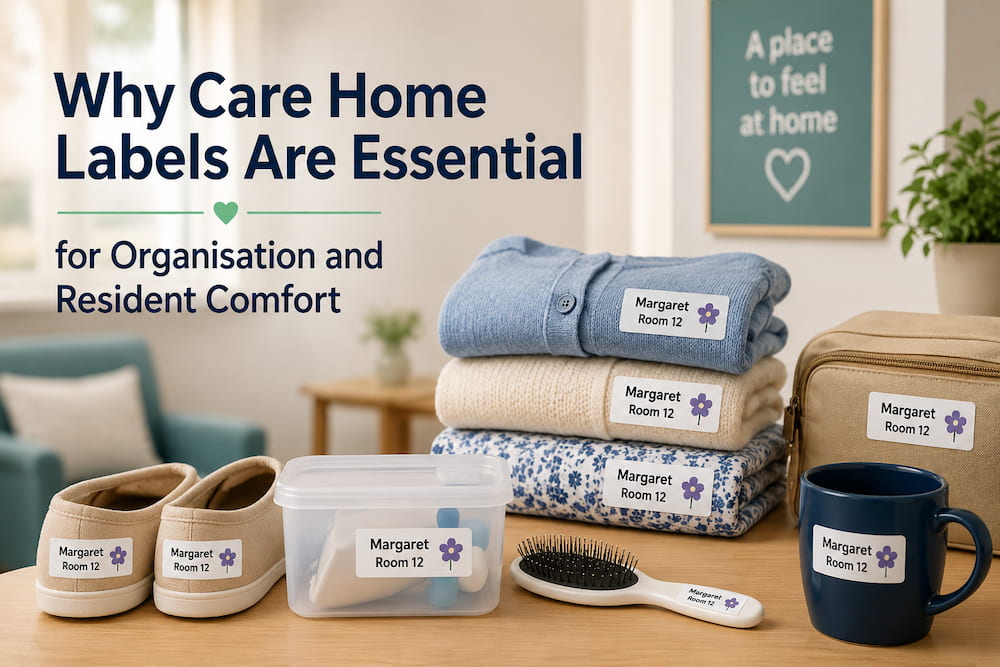
In a busy care home environment, organisation plays an important role in daily routines, hygiene, and resident wellbeing. From clothing and bedding to personal items and medical accessories, belongings can easily become misplaced when many residents share communal laundry and living spaces. Clear labelling helps care teams manage items more efficiently while giving residents and families greater peace of mind.
Care home labels are a simple but highly effective way to protect personal possessions, reduce confusion, and support smooth day-to-day operations. Whether used in residential care homes, nursing homes, assisted living settings, or respite care facilities, labels help create a more organised and respectful environment.
Why Labelling Matters in Care Homes
Care homes handle a large number of personal items every day. Without clear identification, belongings can be mixed up, lost, or returned to the wrong resident.
Protecting Personal Belongings
Residents often bring clothing, towels, bedding, shoes, toiletries, glasses cases, and other personal possessions into care settings. Labelling these items helps ensure they remain identifiable and are returned to the correct person after use or laundering.
Reducing Stress for Families
Families want reassurance that their loved one’s belongings are being cared for properly. Using reliable labels can help reduce concerns about missing clothing or misplaced items.
Supporting Care Staff
Care teams already manage many responsibilities. Clear labels make it easier for staff to sort laundry, organise rooms, and maintain accurate routines, saving time and reducing avoidable errors.
The Benefits of High-Quality Care Home Labels
Not all labels are suitable for care environments. Items in care homes are often washed frequently and handled by multiple people, so durability is essential.
Designed for Frequent Washing
Clothing and bedding in care settings may go through regular laundry cycles at high temperatures. Durable care home labels are designed to stay securely attached and remain readable after repeated washing.
Easy to Read
A good label should be clear, simple, and easy for staff to identify quickly. This is especially important in busy laundry rooms and shared accommodation areas.
Suitable for Different Items
Labels can be used on a wide range of belongings, including clothing, towels, bedding, slippers, bags, and personal accessories. This makes them useful for both everyday items and occasional-use belongings.
How Care Home Labels Improve Daily Operations
Small organisational tools can have a big impact on efficiency.
Faster Laundry Sorting
Laundry is one of the most common areas where items become mixed up. Labels help staff identify garments quickly, reducing the time spent sorting and returning clothing.
Better Room Organisation
Clearly labelled belongings make it easier to keep resident rooms tidy and ensure personal items stay in the right place.
Improved Resident Dignity
Personal possessions can carry emotional value. Keeping belongings safe and correctly identified supports resident dignity, comfort, and independence.
Choosing the Right Labels
When selecting labels for care home use, it is important to consider durability, readability, and ease of application.
Wash Resistance
Labels should be able to withstand regular washing and drying without peeling, fading, or becoming difficult to read.
Secure Attachment
Whether iron-on, stick-on, or sew-in, labels should remain firmly attached to the item during daily use.
Clear Personalisation
Names should be printed clearly, with enough contrast to ensure they can be read easily by staff and carers.
FAQ
Why are care home labels important?
Care home labels help prevent personal belongings from being lost, mixed up, or returned to the wrong resident.
What items should be labelled in a care home?
Common items to label include clothing, towels, bedding, slippers, bags, toiletries, glasses cases, and personal accessories.
Do care home labels stay on after washing?
High-quality labels are designed to withstand regular washing and drying, making them suitable for care home laundry routines.
Are labels useful for short-term respite care?
Yes. Even during short stays, labels can help ensure belongings are clearly identified and returned correctly.
How do labels support care staff?
Labels make it quicker and easier for staff to sort laundry, organise rooms, and manage residents’ personal belongings efficiently.
Conclusion
Care home labels are a practical and valuable tool for improving organisation, protecting belongings, and supporting resident comfort. In environments where many personal items are handled daily, clear labelling helps reduce confusion, save staff time, and provide reassurance for families. By choosing durable, easy-to-read labels, care homes can create smoother routines and a more organised living environment for everyone.
