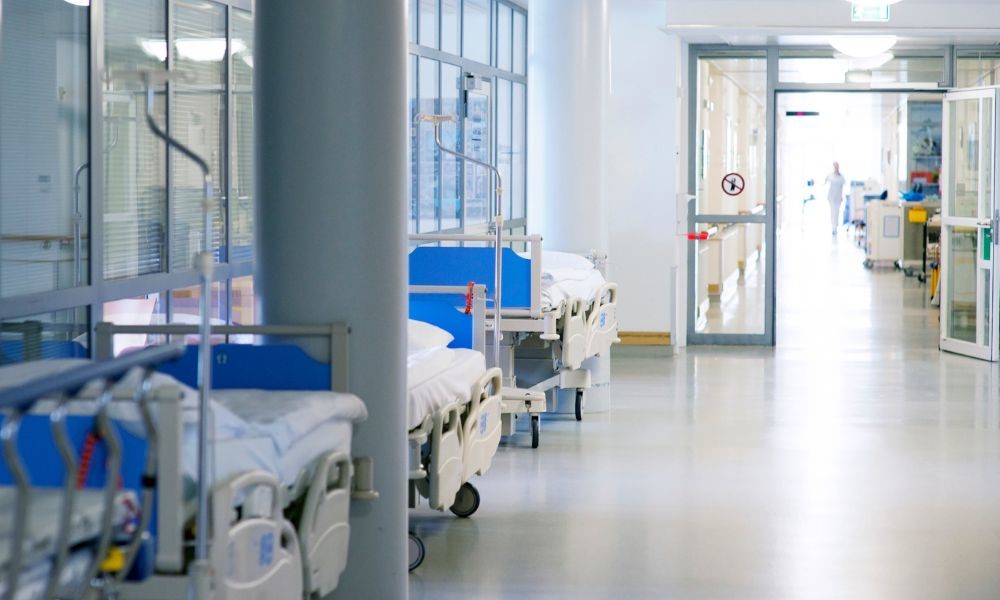
Have you ever wondered why medical environments need to be so clean? Here are some reasons why it’s so important to keep healthcare facilities clean.
People go in and out of hospitals and healthcare facilities every day. The high level of traffic in and out of these facilities puts people at a higher risk of spreading germs.
This spread of germs can result in infections and even diseases, which is something we especially want to avoid in healthcare spaces. Here are several of the many reasons why it’s so important to keep healthcare facilities clean.
Ensure Patient and Staff Safety
The first reason it’s so important to keep healthcare facilities clean is to ensure patient and staff safety.
Healthcare facilities see a lot of sick patients each day that have the potential to spread germs and bacteria. In addition, people constantly touch the same surfaces, such as door handles, sink faucets, soap dispensers, and trash cans.
If workers do not clean these surfaces thoroughly, the risk of spreading viruses, infections, and other dangerous pathogens increases.
Therefore, you must thoroughly clean every surface and space in a healthcare facility. The cleaner the environment is, the less likely you are to spread germs and bacteria, thus keeping you and everyone else safer.

Promote a Professional Appearance
Promoting a professional appearance is the second reason cleaning a healthcare facility is important. A healthcare facility is a business, and businesses need to give off an impression of professionalism.
A dirty, cluttered hospital that’s full of trash is not the kind of facility that patients will want to visit to receive treatment.
So, if a facility gives off a messy and unclean appearance, that gives a negative impression to the public.
On the other hand, if a healthcare facility is immaculately clean and well organized, patients are more likely to trust that facility as their choice for treatment and services.
You want patients to feel comfortable entering your facility and coming back again and again because they feel safe, clean, and healthy in that space.
Meet Healthcare Cleaning Standards
Keeping healthcare facilities clean also ensures they meet healthcare cleaning standards.
The Occupational Safety and Health Administration (OSHA) has mandates requiring medical facilities to meet healthcare cleaning standards.
If a healthcare facility does not meet these specific standards and requirements of cleanliness, it can receive a fine or even be closed down.
A facility can also run into serious legal issues if its noncompliance with these OSHA standards causes any health issues for patients or employees within the facility.
Therefore, it’s safer, simpler, and smarter for all healthcare facilities to follow these cleaning standards.
Now that you know why it’s essential for healthcare facilities to be clean, you can take the proper steps to ensure your facility is always clean and hygienic. In order to meet the required healthcare cleaning standards, it’s helpful to invest in the essential EVS equipment that all medical facilities should have. Help do your part to keep these environments clean so that we can keep our communities safe and healthy.
Read Also
- Can Outsourced Telepsychiatry Help Healthcare Organizations Keep Pace With Modern Mental Health Screening?
 Mental healthcare is changing quickly, but many hospitals, clinics, schools, correctional facilities, and community health organizations do not have enough psychiatric professionals available to turn new screening approaches into timely clinical care. Outsourced telepsychiatry offers one way to close that gap. FasPsych, for example, connects healthcare organizations with psychiatrists, psychiatric nurse practitioners, and other behavioral… Read more: Can Outsourced Telepsychiatry Help Healthcare Organizations Keep Pace With Modern Mental Health Screening?
 - Five operational checks for choking readiness in healthcare facilitiesA facility can have a choking poster on every wall and still be unprepared. Preparedness shows up when someone can recognize the emergency, call the right response, bring the right people and supplies to the room, and hand over clear information without losing time. That test belongs in operations as well as clinical education. The… Read more: Five operational checks for choking readiness in healthcare facilities
- Understanding the Demand for Correctional Healthcare ProfessionalsHave you ever wondered who cares for people when they get sick inside a prison? Many people do not realize that jails and prisons need skilled medical teams every single day. By reading this guide, you will learn why these important jobs are growing fast and how you can join this rewarding career field. Caring… Read more: Understanding the Demand for Correctional Healthcare Professionals
- Patient Engagement and Pharmaceutical Support Services: Building a Better Patient JourneyPatients rarely experience healthcare as a simple, linear process. They may need to understand a diagnosis, determine whether they qualify for a clinical trial, gather medical records, navigate insurance requirements, arrange transportation, learn how to use a medication, and stay engaged with treatment for months or years. Serva Health is one example of a specialist… Read more: Patient Engagement and Pharmaceutical Support Services: Building a Better Patient Journey
- Industrial Container Recycling and Waste Management Services: A Practical Guide for BusinessesIndustrial container recycling is an essential part of responsible waste management for manufacturers, warehouses, laboratories, automotive businesses, chemical companies, food processors, and other organizations that regularly handle bulk materials. A strong example is Kelly Drums, a Mid-Atlantic provider of reconditioned drums and comprehensive container management solutions. The company specializes in the pickup, recycling, reconditioning, and… Read more: Industrial Container Recycling and Waste Management Services: A Practical Guide for Businesses