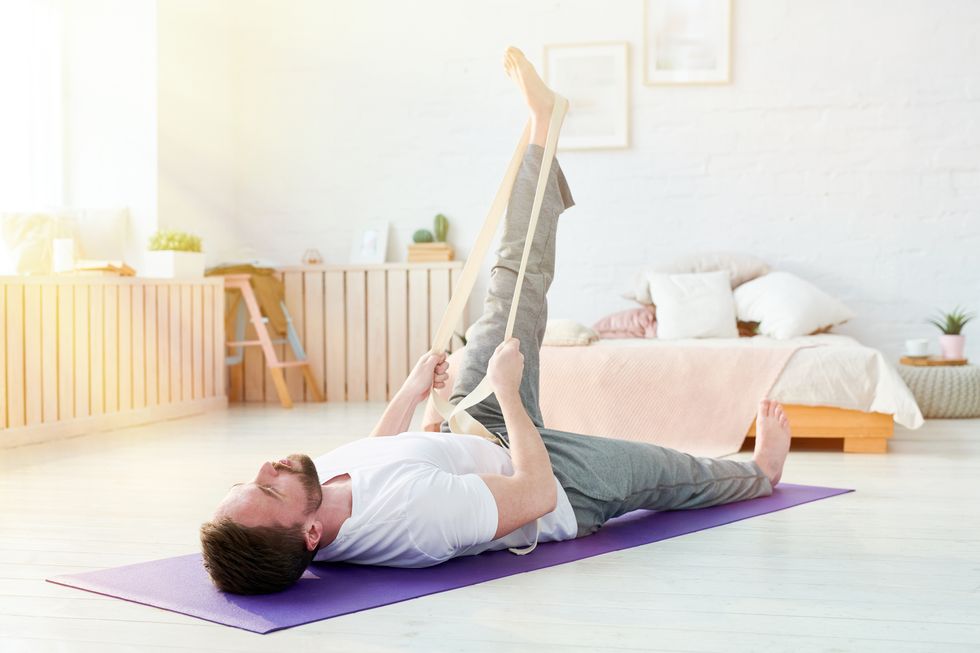
Working out regularly is very important to maintain a healthy lifestyle. But while many people workout, they dont get in the right stretches.
Prepping your body with stretches before you start any activity is essential. This helps to increase the body’s temperature, which increases blood flow throughout the body, causing the body cells and tissues to receive adequate amounts of oxygen. At the same time, stretching during post-workout helps reduce the muscle stiffness and tension that might have been caused due to the exercises performed.
So, What are the Different Types of Stretches?
Stretching before and after a workout signals the body to be prepared for the start or end of the exercise. To get your body ready, there are different kinds of stretches that you can perform:
Dynamic Stretches
This stretch is done before a workout. In this type of stretch, active movements are done without holding a position. This increases the range of motion and stretches your muscles. Examples include hip rotation circles or arm circles.
Static Stretches
Static stretch is done after a workout and requires holding a particular position for 10 – 20 seconds. It aims to make you feel comfortable post a strenuous workout. Examples include hamstring stretch or calf stretch.
Ballistic Stretches
Ballistic stretching involves bouncing movement to push your muscles beyond the normal range of motion. For example, athletes, dancers, football players, etc., use ballistic stretching, like swinging legs before performing to jump higher or dance with more energy.
Benefits of Pre-workout Stretch
Getting in a good workout on a 20-inch stride elliptical or an incline elliptical is a great idea, but stretching 5 to 10 minutes before a workout holds several specific advantages.
Increases blood flow
The first thing stretching does is increase your blood flow. Increased blood flow allows your muscles to receive better oxygen and helps eliminate the metabolic waste produced during a workout. As a result, the prepared muscles are up and ready for the oncoming strenuous activity.
Increases flexibility and range of motion
Correct stretches help loosen up the muscles and tendons in the body. Thus increasing the body’s flexibility and giving you a wide range of motion. This allows you to perform your workouts better with reduced chances of injuries.
Improves performance
As understood from the above points, stretching before a workout helps to increase blood flow, flexibility, and range of motion. All these, in turn, help to improve the overall workout performance, as the warm-up reduces muscle stiffness and allows you to perform any pulls or pain.
Benefits of Post-Workout Stretch
Imagine you got a great workout in a long stride elliptical. Your mind and body tell you to lie down or sit down, but wait. Do not do that! Even though studies have shown that exercising helps to increase serotonin levels which helps to calm your mood and reduce overall stress, it is best to allocate some time for stretching post your workout to ensure your body relaxes too.
Reduces risk of injury and pain
Muscles become tight after they have been worked out. If they stay that way, you are prone to have an injury. With stretching post-workouts, the flexibility of the muscles becomes better as they loosen up, thus reducing your chance of injury and pain.
Mind and body relaxation
It’s helpful if the body and the mind cool down gradually after any workout, as your mind is under pressure by focusing on the activity. This is exactly what stretching post workout does.
Lactic acid elimination
Lactic acid is produced in your body when you perform a strenuous activity like a power-packed workout. The deposition of this lactic acid in your muscles and joints causes you to experience a burning sensation. This can also lead to muscle ache and make you feel tired. Stretching after a workout helps your body eliminate the accumulation of lactic acid, thus relaxing your muscles.
Conclusion
If you are working out daily, you might know the benefits and have noticed how you feel after a good stretch. You can consult an expert for which types of stretches are suitable for you and your workout routine.
Read Also
- Childhood Allergies and Asthma: Signs, Triggers, and When to See a Pediatrician
 Allergies and asthma are two of the most common chronic conditions of childhood, and they often travel together. For parents, the challenge is that their signs — coughing, congestion, itchy eyes, wheezing — overlap with ordinary colds, which makes it easy to under-recognize a pattern that deserves attention. Understanding what to watch for helps you… Read more: Childhood Allergies and Asthma: Signs, Triggers, and When to See a Pediatrician
 - Newborn Care in the First Weeks: A Practical Guide for New ParentsBringing a newborn home is one of life’s great joys — and, for most parents, one of its most disorienting stretches. The first few weeks are a blur of feeding, diapering, and very little sleep, punctuated by a hundred small questions. A little grounding in the basics makes those weeks less overwhelming and helps you… Read more: Newborn Care in the First Weeks: A Practical Guide for New Parents
- Achilles Tendon Pain: From Tendinitis to Rupture and When to Get HelpThe Achilles is the strongest tendon in the body, and it takes an enormous load with every step, jump, and push-off. It’s also one of the most commonly injured — ranging from a nagging tendinitis that builds over weeks to a sudden, dramatic rupture. Understanding where your pain falls on that spectrum, and when it… Read more: Achilles Tendon Pain: From Tendinitis to Rupture and When to Get Help
- Diabetic Foot Care: Protecting Your Feet and Preventing Serious ComplicationsFor most people, a small blister or a minor cut on the foot is a non-event. For someone living with diabetes, that same small problem can become a serious one — quietly, and faster than expected. Diabetic foot care isn’t about anxiety; it’s about a few consistent habits and knowing which warning signs to never… Read more: Diabetic Foot Care: Protecting Your Feet and Preventing Serious Complications
- Weekend Warrior Injuries: When That Ache Is More Than a StrainThere’s a lot to admire about the weekend warrior — the person who spends the week at a desk and the weekend on the trail, the court, or the field. But squeezing a week’s worth of activity into two days, often without much warm-up, is exactly how injuries happen. The trick is knowing which aches… Read more: Weekend Warrior Injuries: When That Ache Is More Than a Strain
- Rotator Cuff Tears: Signs You Shouldn’t Ignore and Your Treatment OptionsShoulder pain has a way of sneaking into everything — reaching for a seatbelt, lifting a bag onto a shelf, even rolling over in bed. When that pain lingers and starts to limit what your arm can do, the rotator cuff is often the culprit. Knowing the warning signs of a tear, and when to… Read more: Rotator Cuff Tears: Signs You Shouldn’t Ignore and Your Treatment Options