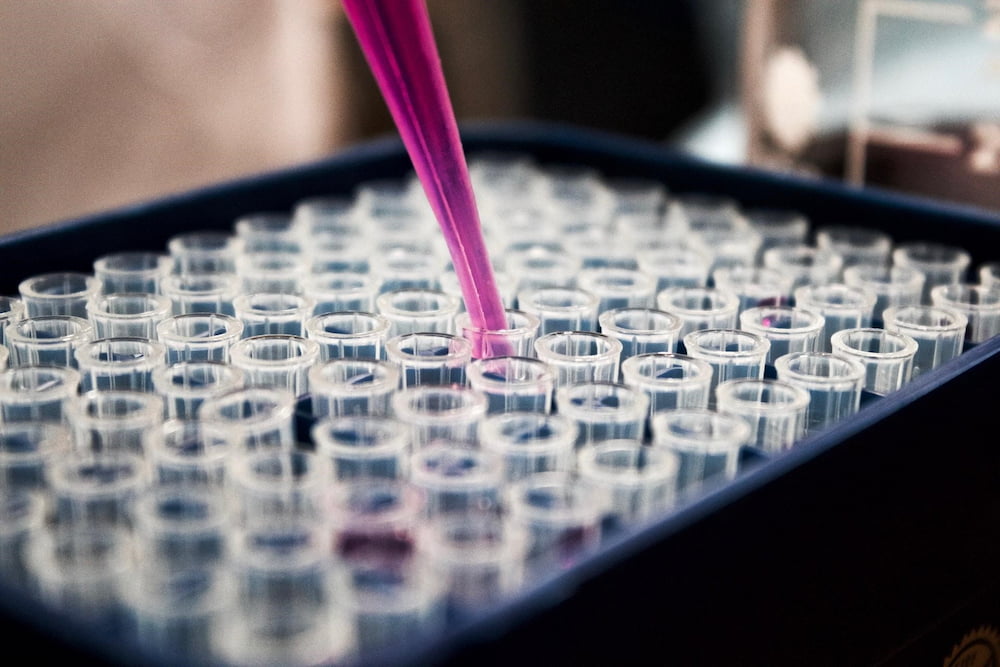
Understanding biochemical and cell-based assays is key to developing relevant and timely drug targets for pharmaceutical companies. These two assays, while related in many ways, are fundamentally different in function.
While both types of assays serve the purpose of drug development and target identification – they differ based on complexity, cost, the scope of applications, the type of results generated, and the accuracy delivered.
In this blog post, we will discuss when it’s appropriate to use biochemistry vs cell-based assays and review their critical differences as vital knowledge for developers engaging in drug discovery activities.
Typical Assay Procedure Steps
To ensure accurate results, the assay process typically requires multiple steps. Prior to each procedure, particularly for cell-based assays, lab staff must confirm that the microplates have been washed in the microplate washer. This step eliminates any leftover residue from previous assays and guarantees clear and precise results for the ongoing assay.
The initial stage towards achieving precise outcomes is to adequately prepare the sample for analysis through homogenization, filtration, or centrifugation. After that, an extractive process is done on the sample to concentrate the analyte of interest and separate it from other compounds that may interfere with its detection. Typically, this process involves chemical or physical techniques like distillation, solvent extraction, and adsorption/desorption.
The third step requires the utilization of methods and techniques to carry out a quantitative assessment and ascertain the analyte’s concentration in the sample. The results are then analyzed to interpret the concentration and determine its significance in relation to a standard or reference material.
Keep in mind that developing a complete assay can take anywhere between 6 to 24 months. Although it may seem like a lengthy process, it allows scientists to obtain precise results and conduct their research accurately.
Biochemical Assays Overview
Biochemical assays are essential tools for detecting and measuring molecules, cells, and biochemical processes in living organisms. Professionals use these assays to detect and study molecules such as proteins, enzymes, and antibodies. This enables a better understanding of cell function, disease development, and drug action. Biochemical assays are crucial for advancing our knowledge of biology in both laboratory and field settings.
Biochemical Assays Pros and Cons
Scientists use biochemical assays as powerful tools to study various biological processes. The assays are advantageous because they are highly sensitive, enabling the detection of specific molecules, even at very low levels in complex biological samples.
Although biochemical assays are beneficial, they also have some limitations. They tend to consume a lot of time and need specialized know-how. Furthermore, there could be inconsistencies in the findings due to diverse experimental conditions. Nonetheless, researchers in different areas find biochemical assays a precious resource.
Cell-Based Assays Overview
Modern biomedical research relies heavily on cell-based assays as they provide a controlled environment for scientists to observe cellular interactions and processes. These assays involve using live cells to investigate how cellular behavior is affected by stimuli such as toxins, drugs, and environmental factors.
Advanced imaging technologies and high-throughput screening techniques enable scientists to delve deeper into cell growth, morphology, and gene expression, yielding vital information on disease mechanisms and the discovery of novel drug targets. Because of these advancements, cell-based assays have become increasingly complex. As a result, they are now an essential part of drug discovery and other biomedical research fields, providing valuable information about how cells operate.
Advantages and Disadvantages of Cell-Based Assays
Scientists use cell-based assays to explore biological systems, diseases, and treatments. These assays are more accurate than traditional tests in showing how drugs work in the human body. That’s why they are particularly useful in research. Additionally, they can be used to examine intricate biological pathways and identify potential drug targets.
Even though cell-based assays are advantageous, there are certain downsides that need consideration like their higher cost, longer development period, and the need for specialized equipment and expertise.
Bottom Line
Biochemical assays and cell-based assays are both valuable laboratory methods. Determining the suitability of an assay is crucial for a research project. Biochemical assays provide data analysis that is quick and simple, while cell-based assays offer valuable information on how a system behaves in its natural surroundings. The choice of assay will vary depending on the nature of the research and the researcher’s available resources. Scientists should carefully consider all options to select the best experiment for their lab work.
Read Also
- Innovative Technologies in Oncology: The Future of Cancer Treatment
 Have you ever wondered how far cancer treatment has come in recent years? Advances in technology are making a real difference in the fight against cancer. Today, more people are living longer and healthier lives after a cancer diagnosis. This is all thanks to new and groundbreaking medical advancements. The future of cancer care looks… Read more: Innovative Technologies in Oncology: The Future of Cancer Treatment
 - Cloud-Based Healthcare Administration Solutions: A Guide for Payers, TPAs, and Provider NetworksHealthcare administration has become too complex for disconnected spreadsheets, aging on-premise applications, and manual handoffs between departments. Organizations need technology that can manage claims, enrollment, billing, provider relationships, and member data as connected parts of the same operation. MCSI – Visova is one example, offering a cloud-native vpaas designed to support HIPAA-compliant healthcare administration. Its… Read more: Cloud-Based Healthcare Administration Solutions: A Guide for Payers, TPAs, and Provider Networks
- How Intelligent Invoice Processing Is Reshaping Healthcare AP WorkflowsWhat happens when healthcare invoice volumes outpace the AP team’s ability to review, validate, and route them, while cost per invoice keeps rising? That gap is pushing finance leaders past basic digitization. Supplier invoices across formats, systems, departments, and approval paths, and holding speed, accuracy, compliance, and visibility together gets harder at scale. Intelligent invoice… Read more: How Intelligent Invoice Processing Is Reshaping Healthcare AP Workflows
- From 1905 to 2026: How German Legacy Manufacturers Power Deutsche Dental Technologien’s SuccessFrom 1905 to 2026: How Busch & Co.’s Legacy Powers Deutsche Dental Technologien’s Success In an era where dental technology advances at breakneck speed, few companies embody the perfect blend of historic craftsmanship and modern business agility quite like Busch & Co. and its strategic partner Deutsche Dental Technologien. What began as a small dental bur factory in… Read more: From 1905 to 2026: How German Legacy Manufacturers Power Deutsche Dental Technologien’s Success
- Why the Future of Healthcare Administration is Cloud-NativeThe operational demands placed on modern healthcare administrators have officially outpaced the capabilities of traditional IT infrastructure. While clinical medicine continues to advance at breakneck speed, the back-office systems required to support it often remain painfully stagnant. Today’s insurers, Third-Party Administrators (TPAs), and provider networks are forced to navigate an avalanche of daily claims, aggressive… Read more: Why the Future of Healthcare Administration is Cloud-Native
- The Digital Overhaul: Why Modern Healthcare Administration Demands Advanced Technology SolutionsLet’s be honest about the current state of healthcare administration: it is staggering under its own complexity. The days of managing patient populations, claims, and provider networks with spreadsheets and disjointed legacy systems are long gone. Today, the sheer volume of data processing required just to keep a healthcare organization afloat is enough to paralyze… Read more: The Digital Overhaul: Why Modern Healthcare Administration Demands Advanced Technology Solutions